
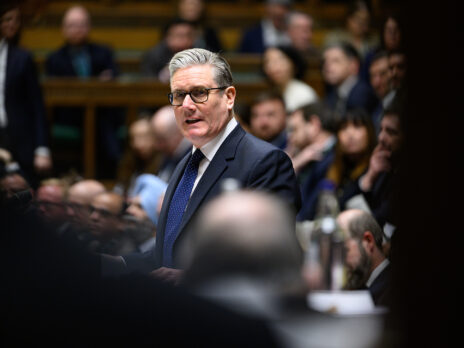
I thought Keir Starmer’s speech in Liverpool this week was excellent. The Prime Minister showed that when his back is to the wall he will fight. He produced passion and purpose, two things which he is regularly accused of lacking.
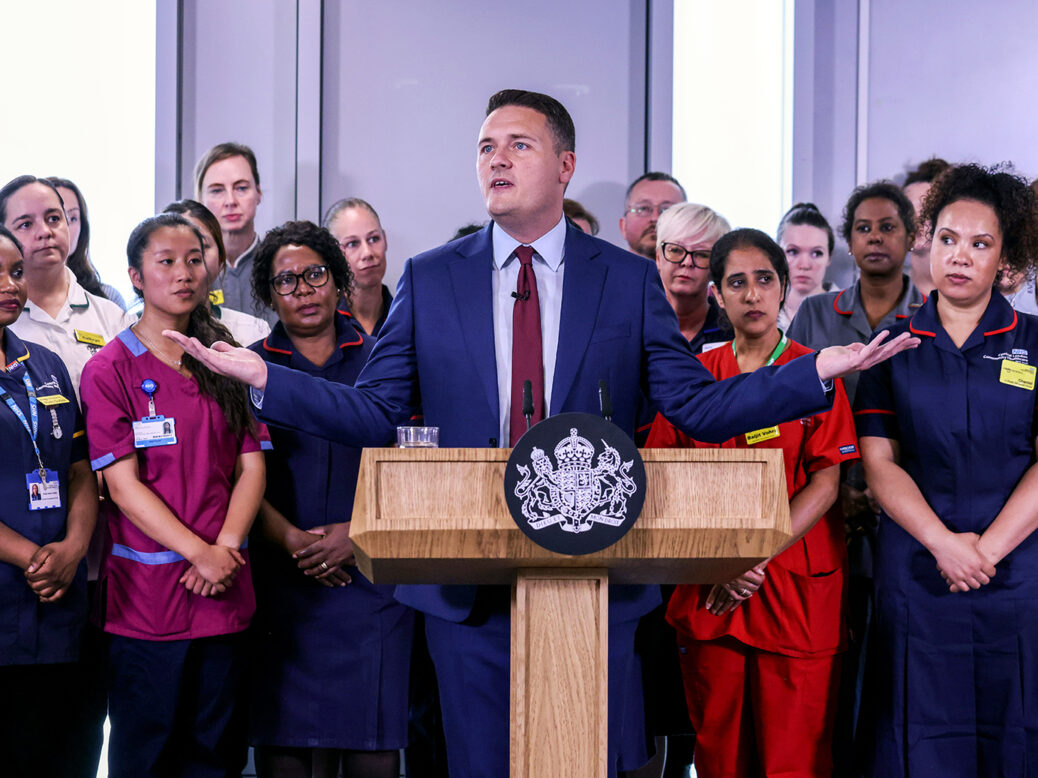
In truth, though, I thought Wes Streeting’s address to the same hall a few hours before was even better. What Starmer strives for, the Health Secretary has in spades. He is probably the closest this government has to a Blair-quality orator.
Streeting is, in my view, the most impressive politician in the Cabinet. For all the justifiable claims about Labour’s agenda lacking shape and coherence, you can’t say the same for its approach to the NHS. Streeting has been a ball of energy and reform since taking office.
Waiting lists and times are being cut, and the unions faced down. A deal has been struck with GPs that will help to end the “8am scramble” for on-the-day appointments. Local diagnostic centres are being expanded. But what is most impressive is how the English health system is embracing the digital revolution.

The NHS app has been available in England since 2018, but Streeting has put rocket boosters under it. It will now allow patients to book appointments with their GP, order repeat prescriptions and access their health record. Users can manage healthcare services for parents or spouses. In short, it makes life easier.
More is to come. There is a plan for a digital hospital service by 2027, aimed at cutting waiting times further. NHS Online will be available through the app, and have its own dedicated doctors so that assessments, check-ups and follow-up appointments can be done online. Ministers say it can deliver 8.5 million appointments and assessments in its first three years, four times more than an average NHS trust. “A new world is coming,” Starmer said, as he announced the policy.
It’s an irony that some Scottish digital companies are involved in designing the app, and that others are working with English trusts on local digital offers, because the Scottish NHS still lives in the old world. Where Streeting has brought vision, ambition and a degree of necessary risk-taking to health policy, the system north of the border languishes years behind.
There is, for example, still no NHS app in Scotland. There is a plan to launch one later this year, but only in Lanarkshire and with very limited functionality. And although the app will be made available to the population as a whole in April next year (a month before the Holyrood election, conveniently for the SNP), a full rollout won’t happen until the end of the decade.
A 12-year gap between the English NHS’s digital revolution and a Scottish equivalent is astonishing and unforgivable. The advantages of the use of technology in improving healthcare have been obvious for so long, and yet the SNP has dragged its feet. Scottish digital companies that have repeatedly offered to help speed things along say they have been given the cold shoulder.
Surely, this should have been a priority. Scotland’s population is aging faster than the rest of the UK’s, increasing the pressure on waiting lists and systemic costs. The future projections are horrifying. The nation’s health challenges are already deeper and more engrained than elsewhere – as Paul Johnston, chief executive of Public Health Scotland, puts it, “people in Scotland now die younger than in any other Western European country. People spend more of their lives in ill health. The gap in life expectancy between the poorest and the wealthiest is growing… at the moment, Scotland’s health is getting worse.”
The persistence with an analogue version of healthcare beyond any reasonable timescale is one of the SNP’s greatest failings. The NHS may be treated as a political football by all of the political parties, but the Nats have controlled the system for the past 18 years. In that time, our lives have been transformed by the digital revolution, and yet our leaders have failed to grasp the opportunities it offers – and not just when it comes to health.
Why has this been so? Is it to do with the SNP’s relentless obsession with independence leaving little space for a focus on reforming public services? Is it that change always comes with an element of risk, and the Scottish government has repeatedly shown itself to be risk-averse? Is it that anything done by the UK government must not be aped, because Scotland must always be shown to be different? It’s certainly the case that when NHS England offered to use its spare capacity to treat Scottish patients languishing on waiting lists, it was rebuffed.
The devolved administration has complete control over the NHS and education. These are the two main policy areas where it can make a difference, and yet in both the nation has been going backwards. John Swinney has now taken control of a programme of health reform, insisting it will be a key priority of his time as first minister. But Swinney is no Wes Streeting – he is still driving with the brakes on. A new world may be coming, but, sadly, it’s coming to some much quicker than others.
[Further reading: Starmer has not yet proved he can solve our quicksand politics]
Content from our partners



Related


Join the debate
Subscribe here to comment