
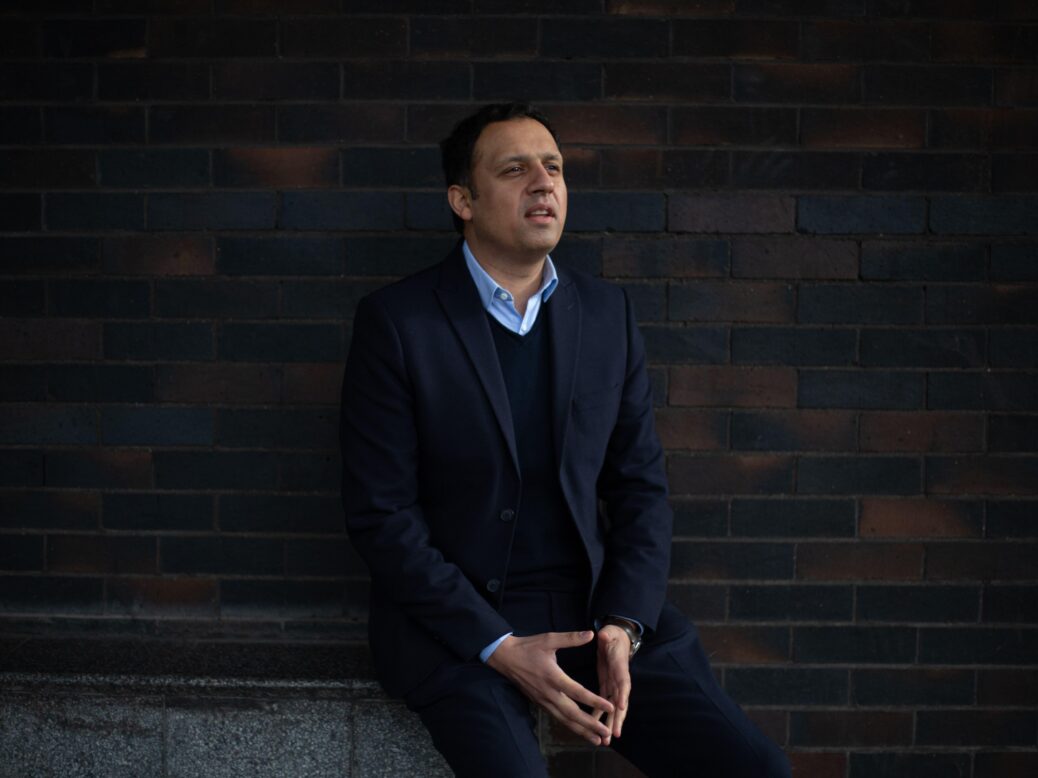
Anas Sarwar is quite taken with Zohran Mamdani. The Scottish Labour leader has been closely watching how the New York City mayoral candidate has reinvented political presentation in the digital age, and is attempting to follow suit.
Mamdani produces campaign videos that are naturalistic, human and often funny. They are brilliant, and fly online. Sarwar, looking for ways to cut through voter disaffection ahead of next May’s devolved election, has attempted to do something similar with his recent social media clips, which are ostensibly less slick and all the better for it.
A challenge faces Scotland’s mainstream political leaders: how to reach an electorate that shows every sign of being sick of the lot of them. How do you get a hearing when voters are turning a deaf ear? How do you win when punters think you are losers? It’s not a peculiarly Scottish problem, of course, but with an election just around the corner, the matter is pressing.
Presentation always matters, but it really matters at the moment. May’s vote looks like it will be a vibes election, with rising support for Reform as people seek to register their unhappiness with the usual ways of doing things. Nigel Farage’s recent press conference in Scotland, where he announced the defection of Tory MSP Graham Simpson, showed the Reform leader to be a master of communication – sharp when needed, pithy where he felt like it, inflammatory at times and mollifying at others, all delivered in fluent human. You don’t need to fancy his politics to see how he is connecting with a certain type of voter. The same goes for Mamdani.

The long Holyrood election campaign is underway. Sarwar this week marked the return of the Scottish Parliament from summer recess with a speech that aggressively targeted the political opposition and attempted to reframe Labour’s offer. He sought to position Labour on the side of the “ambitious majority” rather than the “noisy minority”. That meant that “change is coming for the council officials who throw out planning applications that promise investment because it looks too much like hard work. To the health board bosses who cover up deadly infections and would rather spend money on spin doctors instead of actual doctors. To the Nimbys that fight against the new houses we need to tackle the housing crisis. To the yobs who litter our streets, destroy our parks and disgrace our town centres and natural wonders. To the criminals and thugs whose antisocial behaviour wrecks our communities – a noisy few making life hell for the law-abiding majority.”
There are clear echoes of New Labour in this positioning, but perhaps the biggest influence is the increasing popularity of Reform and that sense that “things just don’t seem to work here in Scotland anymore”.
Russell Findlay, leader of the Scottish Conservatives, takes much the same line. It’s no longer a matter of right or left. For example, two think tank reports published this week, from opposing sides of the political spectrum, had a similar message at their heart.
The economist Mariana Mazzucato, a former adviser to the SNP government, warned in a paper for Future Economy Scotland that the administration has been “falling short” on delivery and must start “matching ambitious words with meaningful action… if the Scottish government is to close the gap between ambition and delivery, it cannot rely on making minor tweaks to the status quo or simply reheating old orthodoxies.” Her co-author Laurie Macfarlane added that “Too often the Scottish government publishes well-meaning strategies but then fails to deliver meaningful change. It is not enough to simply talk the language of meaningful change while making small tweaks to a broken system.”
At the same time, the Conservative peer and former Scotland Office minister Lord Offord released a pamphlet through the Centre for Policy Studies, warning that the dominance of the constitutional debate in recent decades has held Scotland back. “Nationalists have sought to use devolution as a stepping stone towards full independence rather than a tool with which to improve people’s lives,” he wrote. “Unionists, meanwhile, have responded by treating devolution as something to be tolerated, as a mechanism to stop nationalism from expanding, rather than an opportunity to promote the day-to-day advantages of a devolved Union.” Offord’s research showed that public spending has risen from 43 per cent of GDP when the Scottish Parliament was established in 1999 to a high of 52 per cent of GDP, “yet outcomes in health, education and the economy have deteriorated.”
There is a coalescing of a view across Scotland that Holyrood has failed to live up to its potential, that politics has become too performative and cautious, and that the Scottish Parliament simply isn’t using its considerable powers to bring about a better quality of life.
If Labour, the Conservatives and Reform are all making similar arguments, that is because they have identified the changing mood of the nation. It leaves First Minister John Swinney in a sticky spot, defending a long SNP record that doesn’t have all that much to recommend it, and still pushing the cause of independence to an electorate that isn’t very interested at the moment. He, too, must find a way to address the spirit of the times, and fast.
[See also: Nigel Farage’s march on Scotland gathers pace]
Content from our partners



Related

Join the debate
Subscribe here to comment