
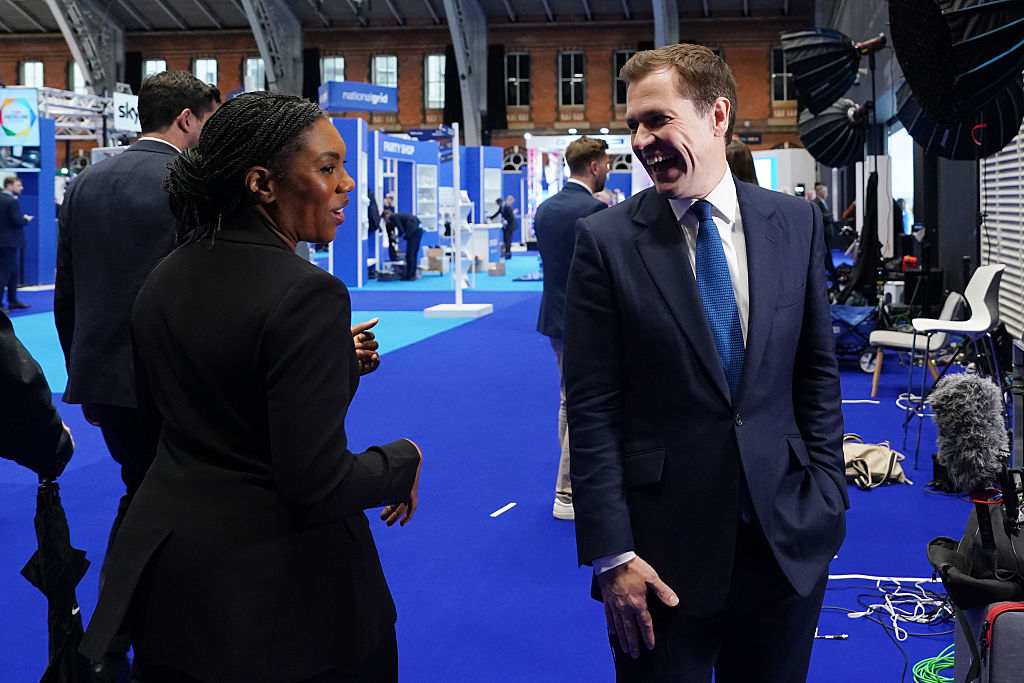
Who speaks for the Conservatives? The answer to that question is less clear at the end of the party’s conference than it was at the start. Yesterday was dominated by the fallout from Robert Jenrick’s complaint at a private dinner in March that he “didn’t see another white face” when he visited Handsworth, a Birmingham suburb.
Kemi Badenoch, the woman who Jenrick is plotting to replace, said the shadow justice secretary had made a “factual statement” and that there was “nothing wrong with making observations”. But she also commented: “I don’t think this is where the debate should be, about how many faces people see on the street and what they look like.” Mel Stride, meanwhile, remarked that “those are not words that I would have used”.
The shadow chancellor, however, has also been at odds with himself. Asked at a fringe event what he would do if he were in Rachel Reeves’ position, Stride replied: “If I were in exactly her position and I had to deal with tax, and I was down that end of the spectrum where it was really big, I would probably go for income tax on the basis that VAT would be inflationary.”
It’s a perfectly reasonable economic answer. The basic rate has stood at 20p since 2008/09, its lowest level in the postwar era. Last month, the Resolution Foundation, previously led by Torsten Bell (the man now co-writing the budget), argued that Reeves should cut National Insurance by 2p and raise income tax by 2p to achieve a net gain of £6bn.

But it was an eccentric political answer for Stride to give (witness the dismay of his colleague, shadow business secretary Andrew Griffith). Only the previous day he had championed tax cuts in his conference speech, promising the abolition of business rates and a £5,000 NI rebate for young people. By confessing that he would raise income tax, Stride has exposed the Conservatives’ official plans as illusory. “I might organise a crowdfund for Tory conference to last the whole week,” quips a senior Labour source.
As for Badenoch, sounding unexpectedly like Gordon Brown, she has announced a new “golden rule” for any future Conservative government: half of every pound saved from lower spending will be used to reduce the budget deficit, while half will go on tax cuts or other pro-growth policies.
That might sound neat, pragmatic even, but there are two big problems. The first is that the Tories are now pledging to shrink a state that they radically expanded (and are far too ambitious about their ability to do so). Reform will deride the Conservatives as hypocritical; Labour will brand them unserious. The 16 per cent of voters who still back the Tories have yet another excuse to look elsewhere.
The second problem is that, like David Cameron’s old pledge to “share the proceeds of growth”, this is an idea from a pre-crash era (when the national debt was 36 per cent of GDP rather than 96 per cent). Even if growth improves, no chancellor will have anything like £47bn to spend as they wish.
As an assessment of the UK’s future, Stride’s suggestion of raising income tax is far more credible than Badenoch’s “golden rule”. We’ll find out at the budget which path Reeves has chosen.
[Further reading: The truth about the small-boats crisis]
Content from our partners



Related

Join the debate
Subscribe here to comment