
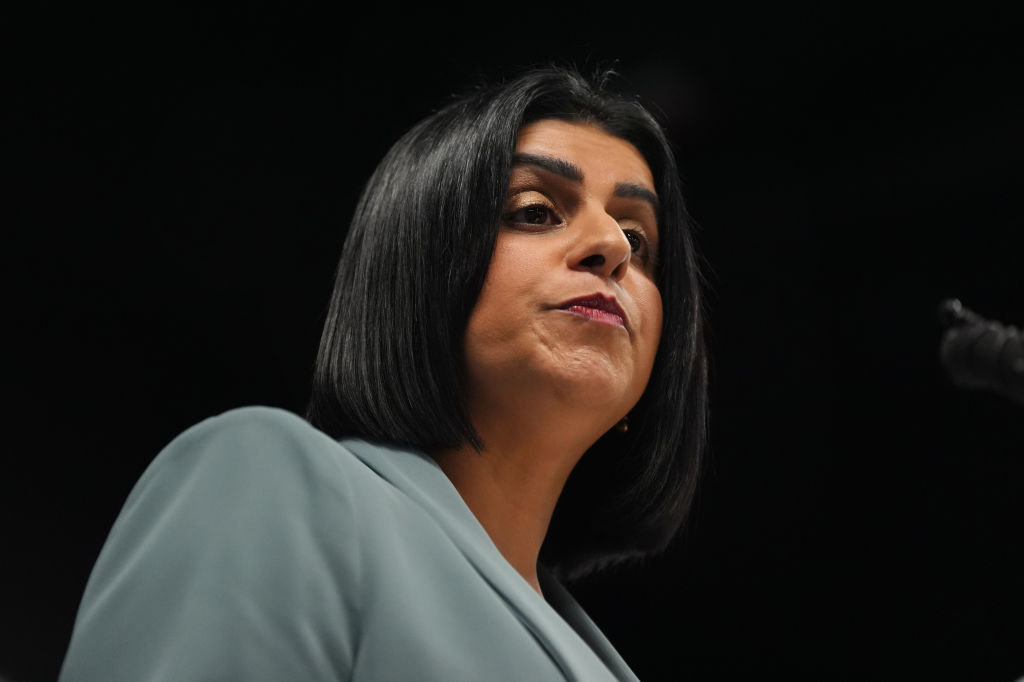
In my Lancashire constituency last Friday, a British Asian driver shouted out of his car window at me as he crawled through traffic, “Oi, Hinder! Stop the boats! You’re not doing enough – stop the boats!” A constituency surgery might have been a more appropriate setting for the conversation, but he certainly got his point across. It is patronising to suggest that those whose families arrived here legally and made their home here would not want Britain to have a secure, controlled immigration policy. This country belongs to all of us, no matter our skin colour, religion or background, and our political views are not as different as some would have us believe. It was with this in mind that I travelled back to Parliament this week ahead of the Home Secretary’s announcement.
Shabana Mahmood’s bold, overdue reforms to the UK’s asylum system have seized the political initiative like few decisions of this Labour government. Having gangsters controlling migration into our country is intolerable. It is now a genuine threat to the health of our democracy, as voters express their incandescence at politicians’ inability to enforce one of the State’s most basic functions. Twenty years of British voters telling politicians that they want low, controlled migration – and being ignored – has led us here, to immigration consistently polling as a top issue for voters. The Home Secretary understands that without public confidence, a compassionate asylum system is impossible. With tighter rules, fewer interminable appeals, more deportations of illegal migrants, a stronger focus on contribution, new safe routes, and all at reduced public cost, Mahmood has set about restoring that confidence with commendable vigour. No longer would those making the gang-controlled Channel crossings have a very high chance of staying here upon arrival, as has been the case for years.
The ordinary British voter may have been nodding along as they listened to the news bulletins, but it was clearly too much for the identitarians to handle. There has been predictable outrage from proponents of the divisive identity politics which has plagued the left for the last decade and more. Often seeing everything through the prism of race, they could not believe what they were hearing from this brown-skinned, Muslim woman. Their warped mindset dictates that if you look a certain way, have a certain background, or practice a certain religion, you really ought to have a particular set of views. After being accused in the House of Commons of taking her policies from the “fascist playbook” by that most vociferous advocate of identity politics, Zarah Sultana, the commentariat variously described her as “betray[ing] the communities that raised her”, of being a “pull-up-the-ladder political fraud”, while Labour was accused of effectively wheeling out a brown woman to do their dirty work for them. But the idea that Mahmood cannot seek to secure our border without “betraying her community” says far more about those making these claims than it does about her. Heaven forbid that Mahmood may have her own strong political convictions, which are not defined by her race or religion.
Meanwhile, a dangerous identity politics is stirring on the British right. This ethno-nationalist turn means that from the day she was appointed Home Secretary in September, Mahmood has received vitriolic and unashamedly racist abuse. It has been a striking demonstration of this burgeoning right-wing identity politics, which has been given momentum and cover by much more widespread, and entirely valid, concerns about immigration. To them, someone of Mahmood’s skin colour cannot be English, or genuinely British. Born here, lived your whole life here? To them, it does not matter – identity is everything. This extreme fringe is now confused, unsure how to react to these changes. They are being forced to contend with the reality that the boldest immigration reformer in years is the very Muslim woman whose appointment as Home Secretary they declared to be an existential threat to the country’s survival. These mirrored versions of identity politics may hate one another, but they are remarkably similar.

Happily, the vast majority of the British public sit between the two identitarian camps – and a long way from them both too. They are entirely unbothered by an ethnic minority Brit being their Home Secretary – Mahmood is our fifth, after all. They just want the country’s borders to be secure, and to see a radical politician gripping this issue like few before her. Perhaps we might one day reach a point where brave politicians like Shabana Mahmood are solely judged on their ideas, values and most importantly, actions, but there is clearly a long way to go. It would be sweet justice if it were this Home Secretary who delivers an immigration settlement that carries broad public support for the first time in a generation. In the meantime, my message to the Home Secretary? Keep going – you might just save the Labour Party.
[Further reading: Labour understands the public on immigration]
Content from our partners



Related

Join the debate
Subscribe here to comment