
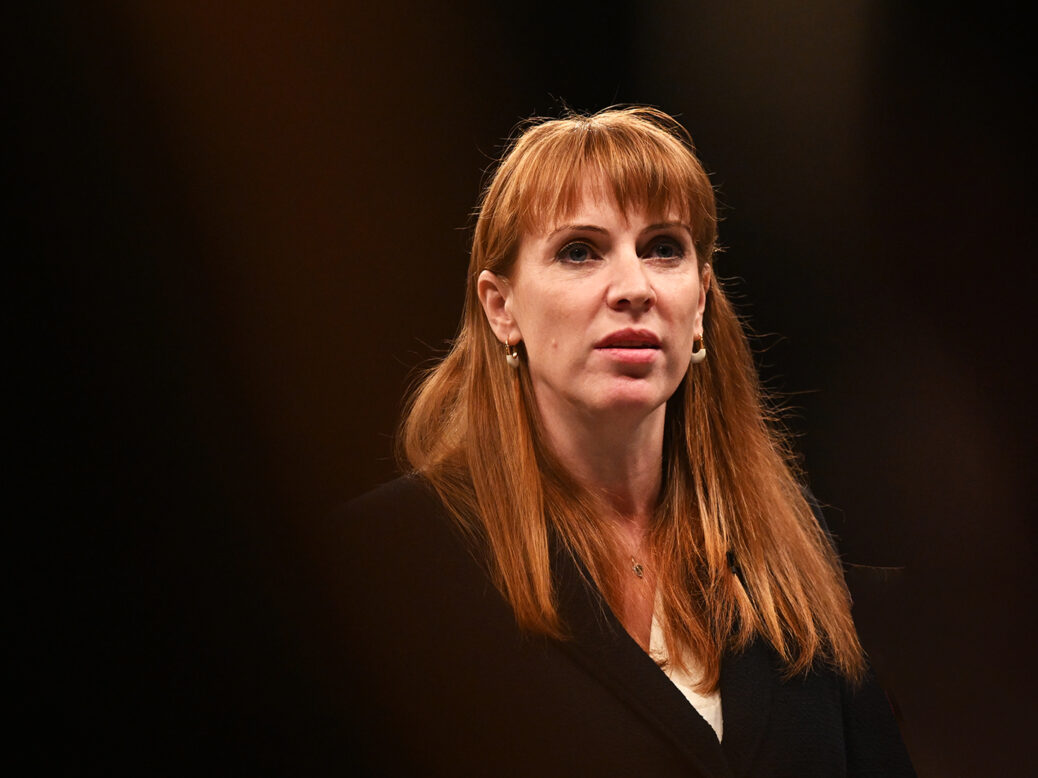
Angela Rayner’s resignation last week threw the fate of her flagship Employment Rights Bill into question. As Deputy Prime Minister, Rayner had been working on the bill – which is popular with voters – alongside Alison McGovern and Justin Madders, the then employment minister and employment rights minister, respectively. McGovern was kept on, becoming local government minister in Keir Starmer’s latest reshuffle. But Madders – widely regarded as the architect of Labour’s New Deal for Working People – was sacked from government. It’s fair to say he’s not very happy about it.
“Let’s not pretend that my departure… and Angela’s departure is not something that the business community has been cheering quite loudly for,” Madders told a fringe meeting at the TUC’s annual congress in Brighton on Monday (8 September). If passed, the bill would mark a major shake-up of workers’ rights in the UK, banning zero-hours contracts and improving protections against unfair dismissal. A recent poll by the TUC found that the measures, if publicised properly, could increase the Government’s favourability rating by up to 13 points.
But it has not been popular with businesses. In April, the British Chambers of Commerce, Confederation of British Industry, Institute of Directors, Federation of Small Businesses and Make UK warned that the bill could “damage growth and employment, undermining the government’s own goals”.
Though the government has insisted the legislation will proceed through the Commons despite pressure from businesses to water it down, Madders is clearly concerned about what his departure means. He warned that, while the bill may pass through the Commons in its current form, the government may still be able to force changes via secondary legislation – or statutory instruments. “There’s going to be about 80-plus statutory instruments implemented over the next few years,” he said. “That’s 80 opportunities for the business community to push back on.”

What could be the reason behind Madders’s sacking? When I asked him following the panel, he shrugged: “I haven’t been given a reason,” he said, “but people will draw their own conclusions.” Among the unions, concern has been rumbling over what the departure of Rayner and Madders – two staunch defenders of the bill – means for this legislation going forward. At the TUC, many have privately worried that, despite the government’s public insistences, the reshuffle may make it easier for businesses to drag their feet on implementation. Others have been more public with their criticism. Christina McAnea, the general secretary of Unison, said: “It’s very significant and worrying that [Rayner, Madders, and McGovern] have been moved.”
Ahead of a tricky budget in November, it is easy to see why the government might want to soften some of the measures in the bill. But the unions are already on the warpath – with some even threatening to disaffiliate from Labour. At such a fragile moment for the party and the wider Labour movement, can the government really afford to start this fight?
[See also: Paul Nowak: “I think Nigel Farage is taking the piss”]
Content from our partners



Related



Join the debate
Subscribe here to comment