
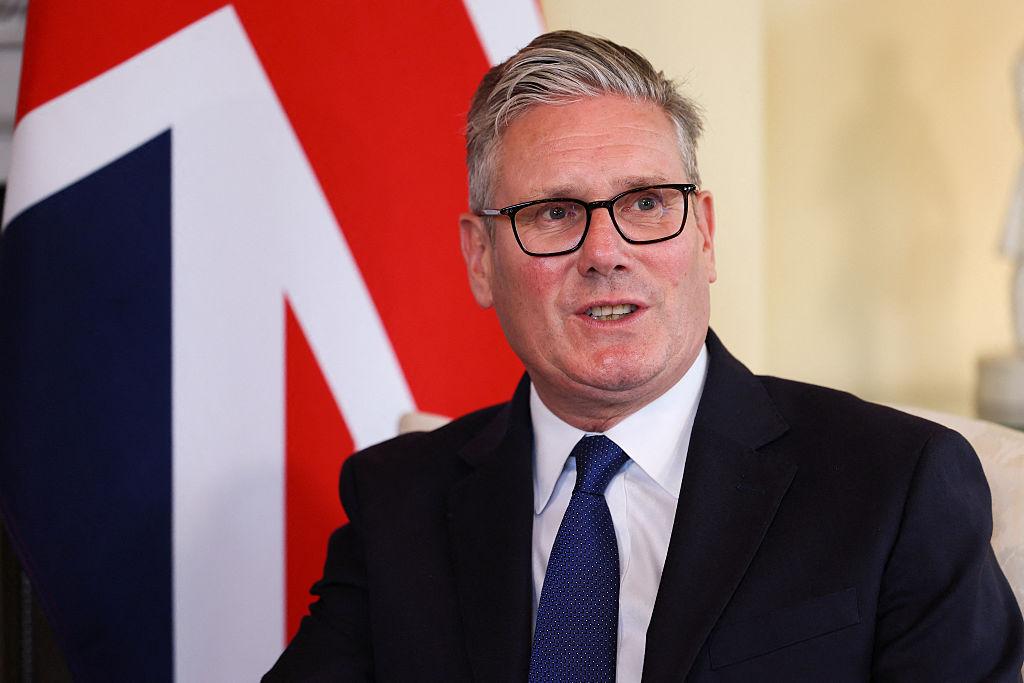
Keir Starmer’s premiership began with discord, not harmony. Just three weeks after Labour’s landslide victory, seven MPs had the whip suspended for voting in favour of a SNP amendment backing the abolition of the two-child benefit cap (something Starmer has since described in private as his personal priority).
Almost exactly a year on, and in the aftermath of the mass welfare revolt, Starmer has enacted new reprisals. Four Labour MPs – Neil Duncan-Jordan, Chris Hinchcliff, Brian Leishman and Rachael Maskell – have had the whip removed for “repeated breaches of party discipline” while an additional three – Rosena Allin-Khan, Bell Ribeiro-Addy and Mohammad Yasin – have lost their trade envoy posts (all seven were among the 47 Labour MPs who voted against the welfare bill in its amended form).
The latter move is unsurprising: trade envoys are appointed to support the government and, as such, are expected to follow collective responsibility. More contentious among MPs is the renewed targeting of backbenchers. But one Starmer ally was unrepentant: “These people were openly and publicly organising against the government whose programme they were elected to deliver,” they said (three of the four whipless MPs were elected for the first time in 2024). “Government doesn’t work unless they feel the weight of rebelling against it in the flagrant way these guys did.”
In language that enraged some inside Labour, Maskell wrote in the New Statesman: “What happened last Tuesday, on 1 July, was more significant than a policy climb-down. Power shifted. Keir Starmer’s government was forced to recognise that autocracy is no way to rule: power is given by consent and can equally be taken away.”

By acting now, No 10 has sent a warning to would-be ringleaders of anticipated rebellions over special educational needs reform, the two-child limit and the forthcoming immigration bill. But the timing – a week before the summer recess – has stunned MPs who believed Starmer had entered a more conciliatory phase of his premiership – more carrot and less stick (Downing Street has spoken of “the need to bring people with us”).
And there are at least two unflattering historical comparisons that are being made among MPs. The first is with Tony Blair who endured numerous revolts but allowed rebels such as Jeremy Corbyn and John McDonnell to retain the whip even as they broke it hundreds of times. “Both Blair and [Gordon] Brown were relaxed because they were always confident that they could win the argument and didn’t need threats,” McDonnell, who lost the Labour whip last July, told me.
The second is with Dominic Cummings. It was Boris Johnson’s strategist who in recent history pioneered the tactic of removing the whip from rebels – 21 Conservative MPs suffered this fate in September 2019 after seeking to thwart a no-deal Brexit. This was ruthlessness but for a clear purpose: removing all obstacles to the UK leaving the EU. The challenge for Starmer – after multiple U-turns – is that even sympathisers remain uncertain what his is.
[Further reading: Rachael Maskell: How to organise a government rebellion]
Content from our partners



Related

Join the debate
Subscribe here to comment