
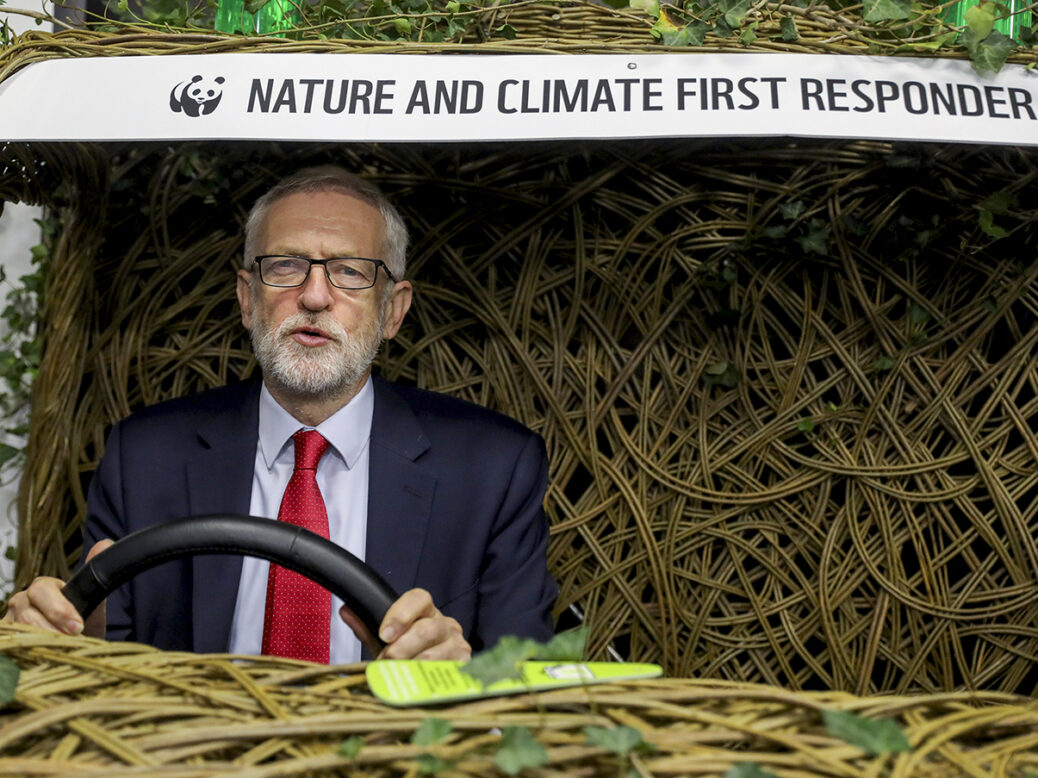
Power is shifting on the left of politics. Last week saw the half-announcement of a new party co-led by Zarah Sultana and Jeremy Corbyn, representing the most significant breakaway from the Labour party in years. But while Corbyn and Sultana enjoy a cultish national following, their journey to left-wing dominance will depend on more than mere profile. Is a new party of the left viable without the support of the Greens?
The Green Party is currently in the middle of a defining leadership election. The current co-leader, Adrian Ramsay, and fellow MP Ellie Chowns are locked in a battle with Zack Polanski, the party’s “eco-populist” deputy leader. Whichever candidate emerges at the helm of the Greens will have a defining effect on the shape any future left-wing alliance will take.
The Greens – with their existing voter base, more established party mechanisms and national organisation – are already filling the gap that a new left-wing force could intend to fill. Polling this week by YouGov found that the Green Party could win more 2024 voters than a hypothetical Corbyn-led party. (The Greens would even take 10 per cent of 2024 voters from Reform whereas a new Corbyn-led party would take 3 per cent.) Both Ramsay and Chowns and Polanski have made it clear that they would be open to working collaboratively with Sultana and Corbyn (or whoever it may eventually turn out to be) to capitalise on this gap at the next general election. But it is becoming increasingly apparent that an outright merger at the expense of the Greens is off the table.
For Polanski, it would make more sense for left-wing MPs to join the Green Party, rather than set up their own opposing force (and therefore risk splitting the vote). Shortly after Sultana’s announcement, Polanski said that while he looked forward to seeing what happened, the left would be “so much stronger and more effective” if disaffected MPs joined the Greens. Ramsay and Chowns have taken a more cautious approach. Ramsay told an upcoming episode of the New Statesman podcast (released on Sunday) that while he and Chowns are open to collaborating with any new party (and indeed parties across the political spectrum), the Green Party must “make sure that we retain our distinctive identity because that is what keeps a broad coalition of voters behind us”.

Ramsay’s comments suggest his and Chowns’s leadership of the Greens would be one which is far less likely than Polanski’s to welcome Sultana and Corbyn: they said they would not follow Polanski’s calls to “roll out the red carpet” for members of the Labour-left diaspora. And he and Polanski butted heads throughout the podcast – accusing each other of being “offensive”. At one point, Polanski said Nigel Farage’s success as a singular populist leader blew Ramsay’s argument for the merits of a co-leadership model “out of the water”. Whatever the result, Polanski and Ramsay’s working relationship is unlikely to be harmonious.
This hesitancy is likely indicative of a deeper sense of unease among Green activists and members. As one insider told me, the real block to collaboration and cooperation with a new Sultana-Corbyn vehicle would be the party membersL: seeds of resentment were sown between the Greens and the Labour left when many of those involved in the new left movement worked for Labour under Jeremy Corbyn in 2019. Informal agreements between the parties during the general election – in which Green Party candidates stood aside for their Labour opponents – were seen as exploitative by the Green cadres.
Insiders told me that Green candidates and activists felt they were being sneered at by Labour. Their stepping aside was seen as a given as the smaller party, despite proven evidence of the Greens’ ability to win traditionally Tory areas. The insider said any upcoming pact between the Greens and the left would need to be genuinely reciprocal; the Green Party’s fingers have been burned by a sense of Labourite superiority.
All of this potentially leaves the Green Party in a very powerful position. The party holds the keys to unlocking and rousing a robust force to challenge Labour from the left. According to polling shared with the New Statesman by Stack Data Strategy, Labour currently runs the risk of losing more votes to the left than to the right. The results of the August leadership election will determine what form any future alliances or coalitions between the Green Party and the new left will eventually take. What is clear, however, is that Sultana and Corbyn would be wise to consider the standing of their potential Green collaborators as their new party or movement begins to take shape. Otherwise, they could find themselves, as Starmer is likely to, dangerously exposed on the left.
[See also: The left’s losing streak]
Content from our partners


Related
Join the debate
Subscribe here to comment