
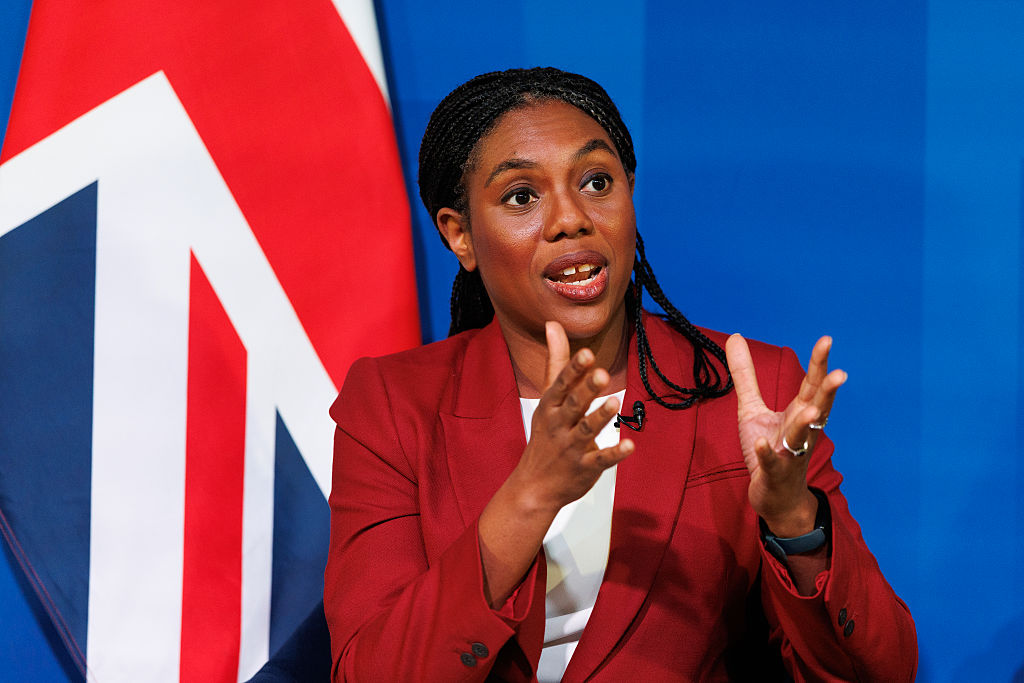
According to some estimates, Kemi Badenoch’s leadership was meant to be over by now. On 2 November her 12-month grace period elapsed, with MPs free once more to submit letters of no confidence to the back-bench 1922 Committee. In a different world, Robert Jenrick, the permanent candidate, is now ensconced at Matthew Parker Street.
Instead, Badenoch still reigns while Jenrick is being forced to deny recent Westminster whispers that he is contemplating defection to Reform. “It wasn’t very long ago that I was running to be leader of the Conservative Party so I’m not going anywhere,” he insisted.
Why has Badenoch’s position stabilised? This year’s Conservative conference, which resembled a Margaret Thatcher cargo cult, did not initially appear promising. But Badenoch closed it with a well-received speech pledging to abolish stamp duty. I asked then whether the Tories had a potential route to recovery – and that path has become clearer since.

The great challenge they faced was about their basic purpose. Labour was refashioning itself as the natural party of government, the Lib Dems were claiming the centre, and Reform was colonising the right. What space was left for the Conservatives?
Labour has helped them answer that question. An unashamedly left-leaning Budget has given the Tories new relevance as a centre-right opposition. “It’s actually true that it increased taxes to raise benefits,” remarks a Conservative aide with satisfaction.
Immigration dominated headlines during the summer recess, to Reform’s overwhelming advantage. But the return of the economy to the centre of debate, an issue on which the populist right is less trusted, has aided the Tories, says Luke Tryl of More in Common (the Conservatives, like Labour, need Shabana Mahmood to succeed in neutralising immigration).
Having fallen as low as 16 per cent, the Conservatives are now surpassing 20 per cent in some polls. Meanwhile, Badenoch’s net approval rating stands at -15, her highest level this year (compared with Keir Starmer on -47, Farage on -11 and Ed Davey on -8).
A natural audience has emerged for the Tory message that the state must shrink: the voters. Over time, public opinion tends to move in the opposition direction to government policy (a phenomenon pollsters describe as “thermostatic”). But under Labour this shift has happened even faster than normal: by 43 per cent to 31 per cent, voters now favour spending cuts over tax rises.
If Badenoch wants to be politically creative she should align herself with those university graduates who, owing to student loan repayments, face a marginal tax rate of 37 per cent on earnings over £28,470 and one of 51 per cent on earnings over £50,270 (an issue I examined back in 2021). Not only would this reinforce the Tories’ central economic message, it would align them with a group among whom they need to perform far better.
Badenoch continues to face formidable challenges: Reform is hoovering up senior Conservatives and donors (with the former Tory backer Christopher Harborne today revealed to have given the party a record £9m); the incentives to defect will only get stronger the longer Farage’s lead persists.
And Badenoch is still paying for her poor start: Labour strategists relished her failure to distance herself from Liz Truss and Boris Johnson; Lib Dem ones her near-refusal to acknowledge their existence. Until this changes, Badenoch will lack permission to be heard among many voters. But the route to Tory recovery is becoming clearer.
This piece first appeared in the Morning Call newsletter; receive it every morning by subscribing on Substack here
[Further reading: Angela Rayner is Wes Streeting’s biggest obstacle to PM]
Content from our partners



Related

Join the debate
Subscribe here to comment