
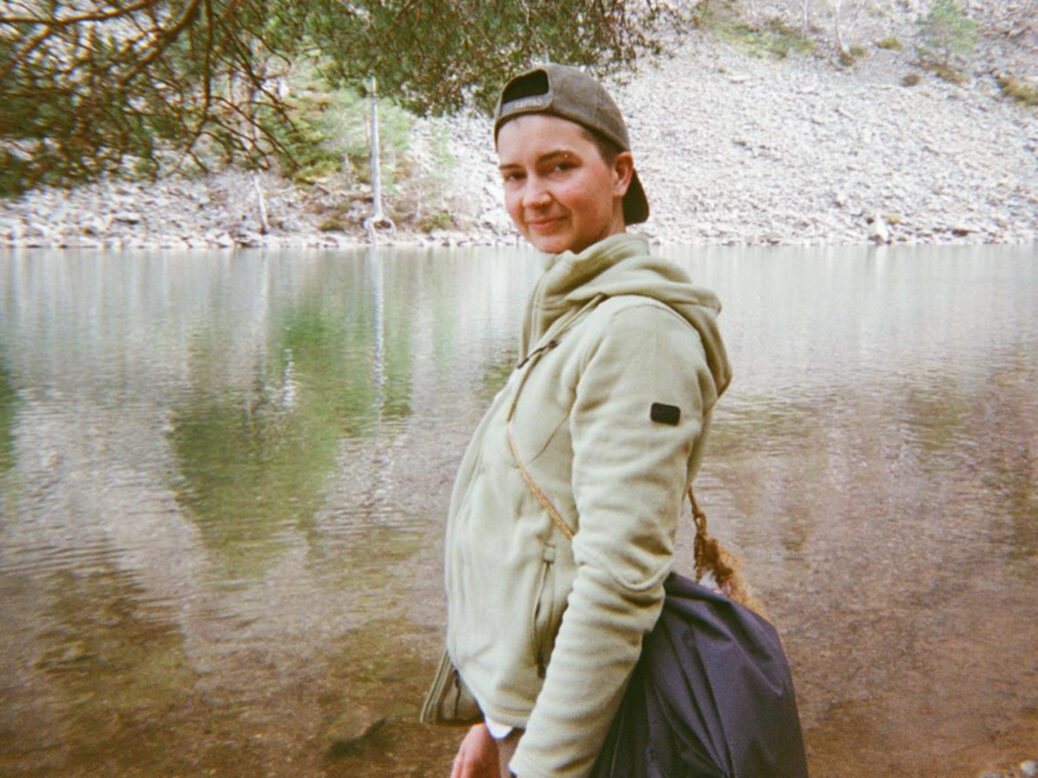
Amu Gib was in prison when the High Court ruled the Palestine Action ban unlawful in February. “I heard it on the radio, I was like, ‘Yes!’” Gib said. They were laughing hysterically. “I was like, ‘Is this how people feel if they actually care about football?’”
Despite the High Court’s judgement, Palestine Action remains proscribed pending government appeal, and more than 500 people were arrested at a recent protest against the ban. Gib, who uses they/them pronouns, is imprisoned in HMP Bronzefield in Surrey, awaiting trial for alleged Palestine Action offences. Last November Gib began a hunger strike that lasted 49 days, demanding, among other things, immediate bail and the shutting down of the Israel-based defence firm Elbit Systems’ operations in the UK.
After Gib began refusing food, seven other prisoners joined the strike; one, Heba Muraisi, lasted 73 days, longer than Bobby Sands and many of the Irish republican strikers who died in the 1980s. Gib lost around 11kg and resorted to using a wheelchair; they ended their strike after being hospitalised. Now, still on remand, Gib is standing in the May local elections to be an independent councillor for Finsbury Park, north London.
Prisoners have gone into politics before. In 1981, while on hunger strike in a Northern Irish prison, Sands ran as an MP for Fermanagh and South Tyrone “to raise public consciousness” about the republican movement. He won the seat, but died a month later, still on strike. In response, the British government introduced a law to prevent prisoners serving jail terms of more than one year from running in elections.

As Gib is awaiting trial, they are still allowed to run. But their team stress that they cannot directly compare Gib’s experience to Sands. “Bobby Sands wasn’t a British prisoner,” Gib’s friend Nida Jafri told me. Gib is a British prisoner in a British prison. “We were inspired by [Sands], but it’s different, because we don’t live in occupation… It’s a different kind of incarceration.”
Gib’s winter hunger strike provoked a surprisingly muted reaction. The media largely focused on stories about their demands for DVDs and access to Al Jazeera while in prison, and their reported £1.5m Islington childhood home. The government refused to meet any of the strikers, or concede to their demands, although when Elbit failed to win a £2bn government contract in January, the remaining strikers counted that as a victory and announced they’d begin refeeding.
It is a contrast to the panic over the mid-1970s hunger strike undergone by Irish republican sisters Marian and Dolours Price in Brixton Prison. The sisters were force-fed and, from jail, listened to “daily broadcasts about their condition”, Patrick Radden Keefe writes in Say Nothing, his history of the Troubles. Benefit concerts and regular protests were held in support of the sisters; even the loyalist Ulster Defence Association asked the British government to return the girls to Northern Ireland, as they wished, or let them die. Roy Jenkins, then home secretary, had “forebodings of menace” that if the girls did die, he might never be safe. After 208 days (they were force fed for the first 165), the sisters’ demand was granted and they were transferred to Northern Ireland.
Gib, who worked as an ambulance driver, masseuse and bike mechanic before prison, doesn’t want any kind of fame. They would prefer if the leaflets didn’t focus so much on them, Gib’s friend, Nida Jafri, told me. “They want people to vote for the ideas, not the name,” she said. “All they care about is the policy.” Gib had toyed with the idea of changing their name to “Two Bricks” before the election – referencing their abolitionist project: one brick to dismantle, one to rebuild. (They decided against it, realising it might look confusing on the ballot paper.)
I joined Jafri and Sharon Matthews, another campaigner, on a rainy Sunday afternoon in early April as they canvassed residents on the Six Acres estate to support Gib’s campaign. Two boys walked past in puffer jackets. “How are you?” Jafri called out. “I’m hungry as fuck,” one shouted back. On the estate’s balcony, they rang doorbell after doorbell. A small boy appeared and ran to get his mum. “I’m just canvassing for my friend, a prisoner for Palestine,” Jafri told her. “I’m sorry,” she replied. “I really have to rush for work.”
Jafri has a job in tech, but also DJs – although, she said, she hadn’t performed at the same level since Gib went to prison. She had been friends with Gib since they went to school together in north London. “They’ve always had a very good moral compass,” she said. “It’s really important to them that they’re still a really good friend.” For Jafri’s birthday in May 2024, she and Gib did the Camino pilgrimage in northern Spain together. For six nights, they slept in hostels, and on each stop Gib bought Jafri a different present: poetry books, a notebook, a record, a flower press.
Jafri had leaflets in English, Somali and Arabic, which she was giving out to different residents. “Prisons don’t work,” was the most controversial part of Gib’s platform, Jafri told me. Not everyone liked hearing that. She’d had more success earlier today at the farmers’ market, she said. They’d also leafletted at Gib’s old school, and at wine bars and restaurants. After the estate, we walked towards the station, stopping into corner shops and cafés. In one café, upstairs, ten Somali men were sitting together. Jafri passed around the leaflets. She told them Gib was imprisoned for pro-Palestine protests. “Unacceptable,” one man said, shaking his head.
Jafri told me that when she approached Muslim residents about Gib, they often replied: “Does Jeremy know? Does Jeremy know?” During Gib’s hunger strike, Corbyn, their local MP, went to Bronzefield to show support. “Amu, alongside the other hunger strikers, has been treated appallingly by this government, because they dared to expose Britain’s complicity in genocide, as well as the failures and absurdities in the British justice system,” Corbyn told me. “They have carried on campaigning because they know the genocide never ended. We must never give up until justice has been achieved for the people of Palestine.”
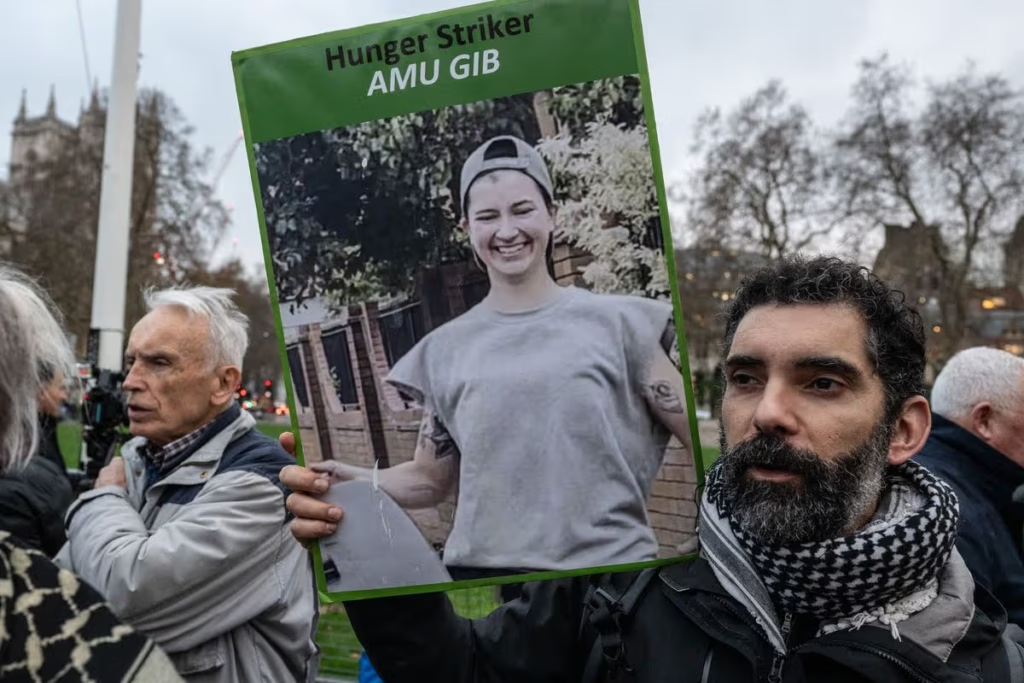
After the canvassing day, I gave Jafri questions to ask Gib over the phone. She sent me Gib’s recorded responses from prison. Gib told me they were doing a lot better than they’d expected after the hunger strike. “It’s difficult to tell while still in prison.” It was a lot easier to be a prisoner in the UK than in Palestine, they added, but it was helping them to comprehend what that might be like. “That’s the whole point of solidarity action – to deepen that understanding.”
Gib had decided to stand as a councillor on impulse, they said. They had been surprised and honoured by the support for their hunger strike and election campaign. “I hope to be worthy of that kind of support by continuing to make my life about solidarity for resistance to global systems of oppression.”
They’d applied for bail this month, but they didn’t think it would be impossible to be a councillor from prison. “I hope to just put people who need resources in touch with people who have resources,” they said. “I don’t think I personally need to start anything from scratch. There are some really amazing organisations and networks in Finsbury Park.” They mentioned groups such as Joint Enterprise Not Guilty by Association, which campaigns against harsh prosecutions, Prisoners Abroad, and No More Exclusions, a “black-led, community-based abolition grassroots coalition movement” against school exclusions.
Gib also hoped to advocate for their fellow prisoners. “When you’re in any institution, it is made really difficult to speak up on behalf of other people,” they said. They were as self-effacing as Jafri had suggested. “It’s just kind of letting things funnel through me, rather than thinking that I personally have any good ideas.” I asked what they missed most from the world outside prison. “Sea lines, shorelines, mountainscapes,” they said. “Even if I look out the window on a sunny day, and then I close my eyes, I can see the bars of the window imprinted behind my eyelids… It forces you to be so limited in what you can see and imagine.”
They were reminded of Susan Abulhawa’s 2006 novel about a family in Palestine, Mornings in Jenin. “Abulhawa describes this view that the protagonist, Amal, is looking at from these apricot orchards, towards her village,” they said. “That really brought up how much the prison limits your horizons, very physically. There’s no view you can have. There’s nowhere you can look where there aren’t bars. The architecture of the prison sticks with you.”
Sharon Matthews, who campaigned with Jafri, told me she thought people would vote for Gib because they feel “powerless” about the war in Gaza. “Apart from going on a march, or whatever,” she said. “Amu’s candidacy represents a rejection of all that. All council elections are meant to be local, but we know that they’re an expression of feeling.”
That feeling has found its expression, whether Gib wins or not. They view themselves as a conduit for a wider movement, connecting other people whose voices, they feel, deserve more attention. In December, while Gib was still on hunger strike, I interviewed their friend Ray, who repeatedly stressed Gib’s desire not to talk too much about themselves. “They are extremely aware of their resources and white privilege,” Ray told me. In a statement given while on strike, Gib lamented “a society that imprisons its conscience”. That conscience might soon translate to political power. Moral outrage over the Gaza death toll, and the British government’s perceived indifference, could propel not only Gib but a range of new candidates, with new ideas, to office in the May elections and beyond.
But for Jafri, Gib is also a school friend, one who recently came close to death. When I asked what she remembered of Gib, she told me that last summer she was living in Edinburgh, and Gib had come to visit. It was hot, for Scotland, and the pair sat in a park, reading poetry to each other and doing stick and poke tattoos. Jafri inked a circle on her arm. They were hungover. It felt amazing. “I miss them so much,” she said.
[Further reading: Inside the Palestine hunger strike]
Content from our partners



Related


Join the debate
Subscribe here to comment