
The Labour Party has had fraught conference build-ups before. In 2006, after an internal revolt, Tony Blair was forced to announce that he would stand down as prime minister within 12 months. In 2019, Jeremy Corbyn’s team sought to abolish the post of deputy leader before hastily retreating.
But this year will be remembered more than most. Andy Burnham, Labour’s king over the water, has openly declared that MPs are pressing him to challenge Keir Starmer. Then yesterday afternoon Steph Driver, the Prime Minister’s director of communications, announced her resignation, a move that enhances the sense of ravens leaving the tower. “Steph is smart, decisive, respected and liked. The government’s loss,” says one aide of Driver, who had been a near-constant presence at Starmer’s side since 2021.
It’s a series of events that leaves the Prime Minister with much to prove at next week’s conference. Starmer’s fightback began last night when he invoked the legacy of Liz Truss in response to Burnham’s declaration to the NS that “we’ve got to go beyond this thing of being in hock to the bond markets” (which some in government blame for a rise in UK borrowing costs yesterday).
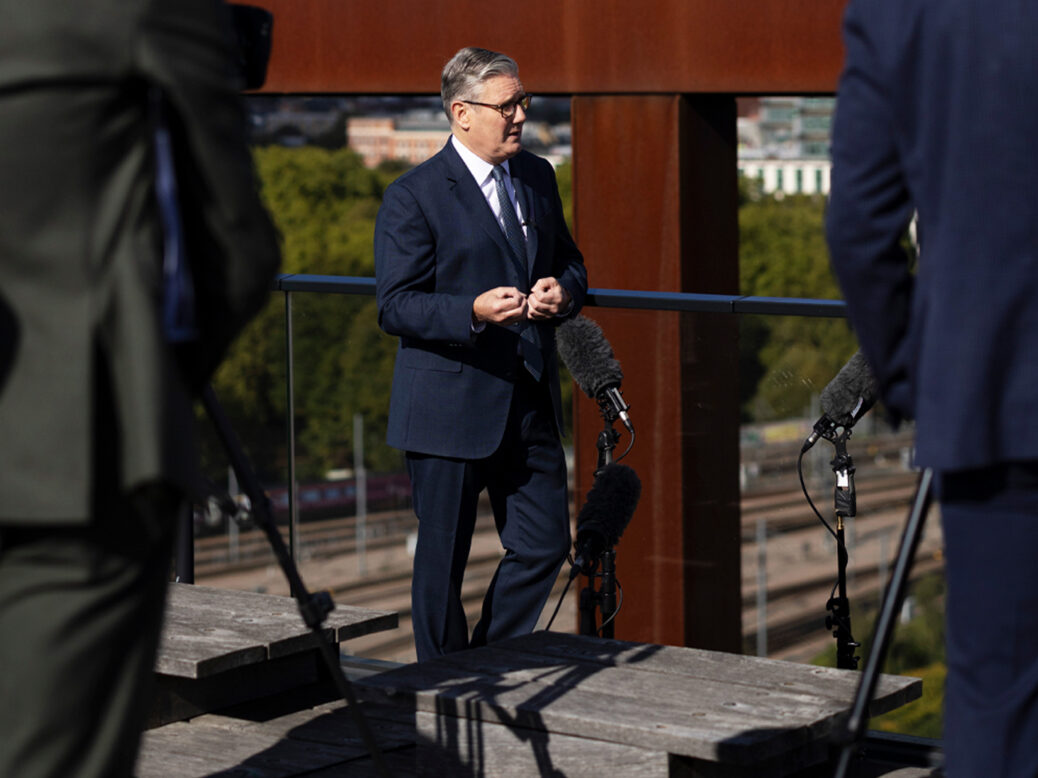
Today, Starmer will address an IPPR/Labour Together conference in London, alongside guests including Mark Carney, Anthony Albanese and Pedro Sánchez, the prime ministers of Canada, Australia and Spain, respectively. He’ll use his appearance to announce the introduction of mandatory digital IDs for British workers – a policy that has broad public support but which will attract robust opposition from Reform and civil libertarians. Yet there’s a bigger question looming over all this: can Starmer find his identity?

Ever since his May “Island of strangers” speech (a phrase he later retracted, to anger inside the government), the Prime Minister has found himself accused of pandering to Nigel Farage rather than challenging him. That’s a charge Starmer will attempt to rebut today. He will again argue that the last Labour government failed to address concerns over immigration but will also confront what aides describe as the “ethno-nationalism” of the far right. It’s a stance that echoes a line once used by the Atlantic’s David Frum: “If liberals won’t enforce borders, fascists will.”
Starmer is attempting to pull off a two-part strategy: he is essentially conceding that Farage was right in his criticism of free movement (a cause the Prime Minister once championed) and high immigration, but that he is precisely the wrong person to lead at this moment: a source of “predatory grievance” rather than “patriotic renewal”. Can Starmer, just as Carney and Albanese did, repair a fractured progressive vote in the face of the populist right? This is the question that Labour MPs are watching and waiting to see if he can answer.
This piece first appeared in the Morning Call newsletter; receive it every morning by subscribing on Substack here
[Further reading: Exclusive polling: How Burnham beats Reform]
Content from our partners



Related

Join the debate
Subscribe here to comment