
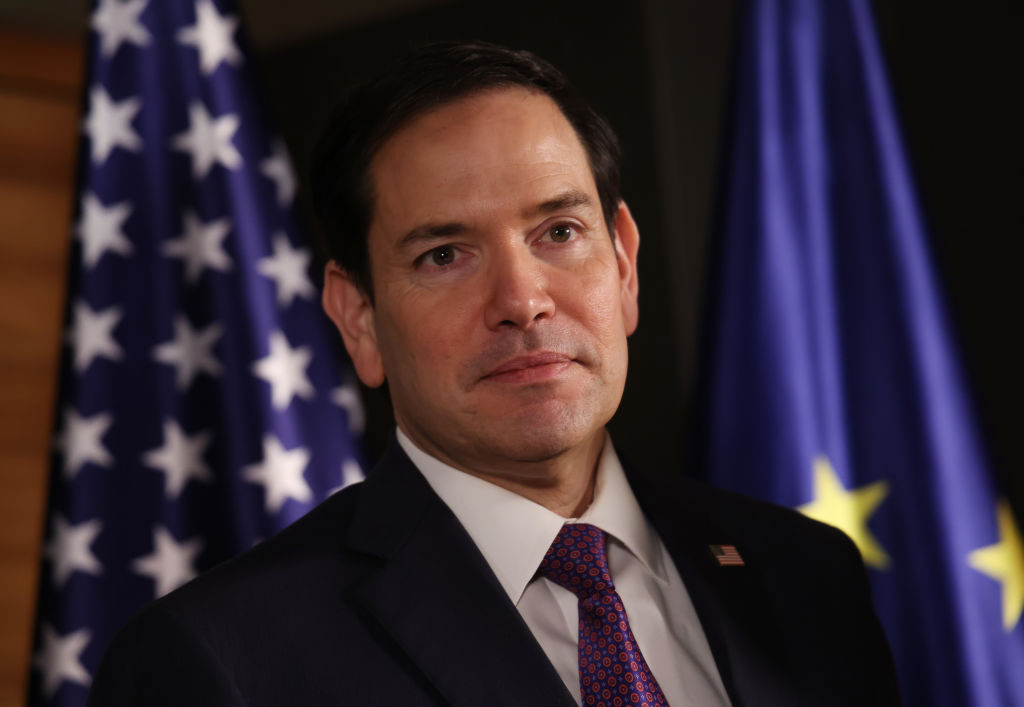
“Remember, you always need a good cop and a bad cop,” the administration official said, smiling. We were discussing Marco Rubio’s speech at the Munich Security Conference. America’s secretary of state had tried to sooth the anxious European crowd with a reminder that the US will always be Europe’s child. Rubio received a standing ovation from his audience, who were relieved they hadn’t been scolded for 20 minutes, like they were by JD Vance at last year’s conference. “Reassuring” was the word many in the room, including the German diplomat and the conference chair, Wolfgang Ischinger, used to describe the speech.
How could 12 months bring about such a change in tone from the Americans? Was this a thawing in the frosty transatlantic relationship? Of course not. Beneath the diplomatic veneer, the message was the same. Rubio was playing the role of good cop to Vance’s bad. He was being… diplomatic. He still critiqued mass migration, called for Western leaders to stop accepting their respective nation’s decline and railed against the “climate cult”. He was just less surly about it than Vance was. It is, after all, Rubio’s state department that is sanctioning former officials for attacking US tech firms. Forget America as Europe’s child, Rubio is the disappointed American parent, while Vance is the furious ex.
Even then, I’m told Rubio spends around 20 minutes a week thinking about Europe. He is happy to outsource the old alliance to his juniors. In his grand Maga foreign policy scheme, Europe simply does not rank that highly. More important to the administration is the Western Hemisphere and Asia. That the Europeans were happy to hear a message that once left them aghast when it was delivered in an amicable tone is revealing. (President of the Commission, Ursula von der Leyen, also said how “reassured” she felt.) The British and Europeans would be a lot happier, safer and more prosperous if they fixated less on tone and more on reality.
Rubio went from Munich to Budapest to see friendlier Europeans, namely Viktor Orbán, who is often seen in Maga as a proponent of European nationalism. Other nationalist parties have a slightly more complicated relationship with Trump. Reform and Nigel Farage are in the awkward position of having to agree with a foreign power that Britain’s government isn’t up to the job. Reform risks taking on a treacherous hue among British voters, because Farage, as he told me last year, “can’t detach myself and pretend I don’t know [Trump].” It’s not helped by the fact that the US administration recently stated that they will fund think tanks and charities to help get nationalists across the continent into power. This is Radio Liberty refashioned for the great battle between nationalism and globalism. What are parties like Reform to do? Denounce their patrons across the Atlantic? Pretend to offer something different to Trump? Farage’s gamble is to hope that the public’s disdain for Trump ranks lower than its despair over post-Brexit mass migration.

Everyone is asking what comes next. From DC, it’s clear some European leaders wish for this nightmare to end in 2028 with a Democrat in the White House. California governor and the media’s chosen candidate at the moment, Gavin Newsom, was an irrepressible presence in Munich. There are few opportunities for publicity that Newsom misses, even if the intended audience is always back home.
Perhaps more notable than Newsom was Representative Alexandria Ocasio-Cortez’s appearance. The left-wing populist from New York does not yet matter enough to get a standalone speaking slot. But on her panel, the moderator practically gushed with excitement at the notion that AOC might run one day for president. She almost certainly will at some point. But the question for now is whether she challenges Chuck Schumer for his Senate seat in New York or gambles with a full tilt at the White House.
In either case, Ocasio-Cortez needs to bolster her foreign policy resume. At Munich, it was clear that she was less comfortable parsing geopolitics than her usual routine of attacking the rich. Her critics were delighted when she stumbled over a question about whether the US should defend Taiwan against China. At one point, she confused the transatlantic alliance with the Trans-Pacific Partnership. Her message that authoritarianism is borne of economic inequality has whiffs of David Lammy’s “progressive realism”. But this was an initial visit, a ploy to be seen on stage, not an attempt to lay out a foreign policy manifesto. That, you might hope, will come. What happens “over there” is not the defining issue for the Democrats at the moment, especially given the shaky ceasefire in Gaza.
The European elite should not take much comfort in the prospect of Democrats taking power. Desiring the old status quo is quixotic in today’s world. This new generation of Democrats aren’t Cold War warriors like Joe Biden, residually sympathetic to old alliances and shared victories in long-ago conflicts. Trump’s heirs apparent aren’t much better. Rubio’s speech ought to disabuse Europe of the notion that he would be much different than Vance if either came to power. Instead of looking so flummoxed and ferreting through speeches to find warm words, Europe’s diplomats and policy makers must face the situation as it is. More than ever before, they’re on their own.
[Further reading: Why Ron DeSantis could (still) be president]
Content from our partners



Related

Join the debate
Subscribe here to comment