
Irony has long since died in the Russian foreign ministry, and so it was with apparent sincerity that the official response to the assault on Venezuela in the early hours of 3 January condemned the “aggressive actions by the United States”. Ignoring the fact that Russia is currently waging its own war against a neighbouring state, Moscow decried the “unacceptable violation of the sovereignty of an independent state, the respect for which is a fundamental principle of international law”.
In truth, Russia’s initial response to the downfall of Nicolás Maduro and Donald Trump’s announcement that the US will now “run” Venezuela has amounted to little more than a stream of blindingly hypocritical words. For the third time in 13 months, Vladimir Putin has proved unable or unwilling to intervene to prop up a supposed strategic partner during a moment of crisis.
First, there was the downfall of Bashar al-Assad’s regime in Syria, a long-time Russian client state, in December 2024, when Moscow offered nothing beyond a comfortable life in exile for the deposed dictator. Putin signed a 20-year strategic partnership with Iran in January 2025, but settled for criticising the US’s “unprovoked aggression” after Trump ordered the bombing of Iranian nuclear sites five months later. As the US massed its formidable armada off the coast of Venezuela in recent months, Moscow reportedly sent military advisers to Caracas, but there was never any serious prospect that Russia would intervene directly to save Maduro. The Venezuelan president was blindfolded, shackled, and transported to the US, deprived even of the opportunity to join Assad in the ex-dictators’ enclave in Moscow.
For a man who presents himself as the leader of one of the world’s undeniable great powers, Putin has evinced striking impotence in his response to recent events. Four years into his war against Ukraine – initially envisaged as a lightning assault that would render the fall of Kyiv within days – the Russian military is still making only incremental gains, at a staggering cost in casualties. (More than 1.1 million Russian soldiers have been killed or wounded since the start of the assault in 2022, according to the UK’s Ministry of Defence.) At the current rate of advance, it would take another five years, and millions more casualties, to capture the four Ukrainian regions Putin claims to have annexed, along with Crimea, which Russia has occupied since 2014.

The strain on the Russian economy is also beginning to show. GDP growth in the coming year is forecast to drop to 0.8 per cent, while military spending is rapidly accelerating, driven by the incessant need to replace lost equipment, recruit new soldiers and pay compensation to the wounded and families of the dead. Oil and gas revenues, which financed an extraordinary boom during Putin’s first two terms in office, are falling, with some Russian analysts warning of the danger of a prolonged price collapse – as was the case in the 1980s during the final years of the Soviet Union. A US takeover of Venezuela’s oil industry, if it can be realised, would only drive down prices further, exacerbating the coming crisis.
Yet Putin still seems to be confident that his gamble will pay off and that a definitive victory is within reach. That conviction will only be strengthened by Saturday’s revelation that Trump has plunged the US into another regime change operation, this time in Venezuela, apparently in pursuit of a new strategy of hemispheric dominance that the Russian leader understands all too well. If Trump wants to talk spheres of influence and the idea of dividing the world between the great powers – among which he still counts Russia – then Putin is certainly his man.
Putin’s essential calculus on Ukraine has long been that Russia will be able to withstand the mounting pain and the economic consequences for longer than Kyiv and its western allies. He views the current level of casualties as entirely tolerable; the economic fallout manageable. That confidence is buoyed by his apparent success in crushing dissent within Russia, where public criticism of the war is now punishable by a lengthy prison sentence, and the fragmented nature of the opposition movement in exile, which has failed to coalesce around a coherent message or a single figurehead since the death of Alexei Navalny in a Russian penal colony in 2024. But Putin’s greatest cause for optimism is Trump’s clear disdain for Ukraine’s president, Volodymyr Zelensky, and his open assault on what remains of the previous international order, now playing out on television in the scenes from Venezuela and the pictures of a captive Maduro.
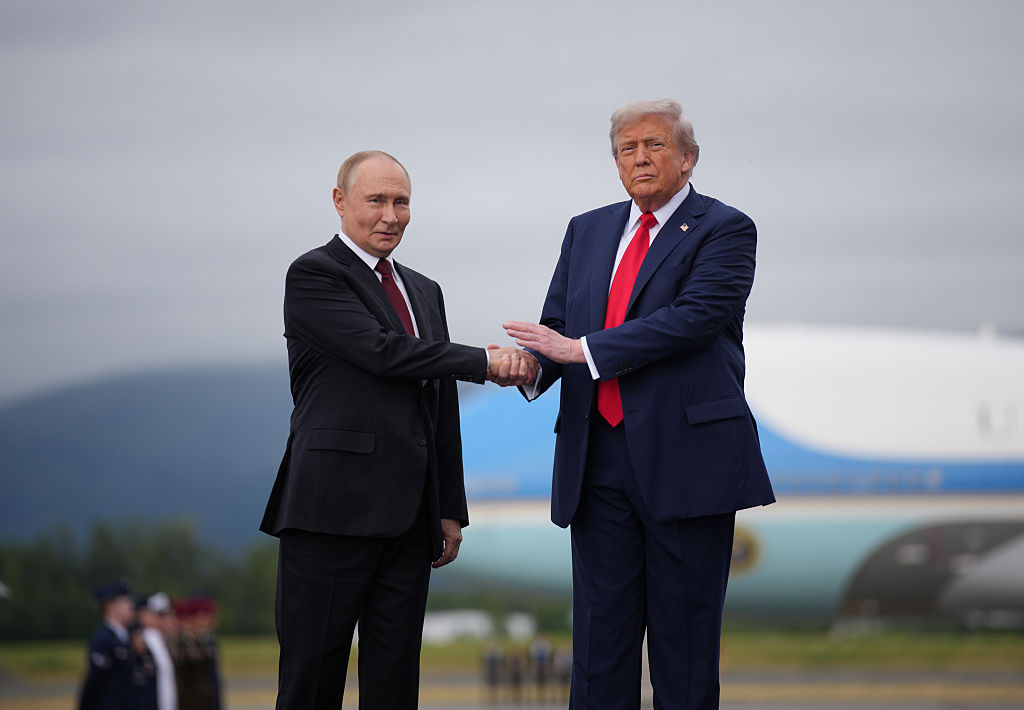
Trump has consistently courted Putin, welcoming him with a red carpet at an inexplicably celebratory summit in Alaska last year, calling for Russia to be invited to rejoin the G8, and eagerly anticipating the lucrative business deals that might follow if only the two powers can move beyond this war. In contrast to Joe Biden’s repeated vows to stand with Ukraine for “as long as it takes,” even if the reality was more complex, Trump is advertising his impatience to wash his hands of Kyiv as soon as possible. (Beyond, that is, securing a share of the proceeds from any future mineral ventures or reconstruction projects that might emerge.) Unlike Biden, and during his own first term, Trump’s latest national security strategy makes no mention of the danger of Russian revisionism, and the hybrid war Putin is already waging in Europe. Instead, he insists that the greatest threat the continent faces is “civilisational erasure”, which appears to mean becoming less white.
Ukraine’s ongoing domestic corruption saga, which led to street protests last summer and forced Zelensky’s powerful chief of staff, Andriy Yermak, from office in November (he denies any wrongdoing), along with the military’s worsening manpower shortages, has also strengthened Putin’s belief that his opponent is faltering and will ultimately submit to his will.
So it is not exactly surprising that Putin has so far rebuffed the Trump administration’s frenzied efforts to deliver a peace deal. Instead, the Russian president has made clear that he is holding out for the terms he laid down in 2024, which includes Ukraine ceding not just the entirety of Donetsk, with its strategic “fortress belt” of defences, but also the regions of Luhansk, Kherson, and Zaporizhzhia, the latter two of which are only partially under Russian control. Lost in much of the Washington discussion over which territories Kyiv might have to surrender to secure peace, is Putin’s repeated insistence that the “root causes” of the war are also resolved – by which he means putting an end to any prospect of an independent, western-oriented Ukraine. European leaders, Kyiv and Washington have effectively been negotiating with themselves in recent weeks over the terms of security guarantees and a putative peace deal that Moscow was never going to accept. As Russia’s deputy foreign minister, Sergey Ryabkov, put it in an interview on 26 December: “We would like to see a Ukraine that would be friendly to Russia, and I think Ukraine will eventually become [a friendly nation].”
Russian diplomats will now be able to invoke the US attack on Venezuela and Trump’s insistence on dominating the “Western hemisphere” to bolster their argument. Moscow is merely asserting the same right in its own sphere of influence, they will argue, to ensure that a strategic territory does not come under a rival power’s control and is led by a “friendly” government.
The key to Putin’s strategy over the next 12 months will be to project unwavering confidence – to convince Trump, and his own domestic audience, that victory is inevitable, that Ukraine can either accept the terms of its subjugation at the negotiating table, or at the cost of many more lives on the battlefield. Expect more televised visits to command centres in uniform, more swaggering assertions of territorial gains and Ukraine’s looming defeat, more overt appeals to Trump’s apparent admiration for Russia’s military strength. After last May’s “Victory Day” military parade in Moscow, according to the New York Times, Trump told aides: “They look invincible.” Perhaps this year he will be invited to witness Putin’s annual display of military might up close.
His ultimate aim will be to convince Trump that Ukraine under its current leadership is a lost cause, and that it is Kyiv, not Moscow, that is the real impediment to peace, and his prospects of winning the Nobel prize. Against all logic, this argument seems to be gaining traction with Trump, who has repeatedly marvelled at the “hate” Zelensky has for Putin. During a joint press conference with the Ukrainian president in Florida on 29 December, Trump insisted that Russia, which had launched a series of massive missile and drone attacks on Ukrainian cities over Christmas, “wants to see Ukraine succeed”. Zelensky, alongside him, could not keep a straight face.
Of course, Putin is more than capable of overplaying his hand and making catastrophic strategic mistakes. Invading Ukraine mortgaged the future of the Russian economy and plunged his country into a needless war that will soon outlast both the First World War and the Soviet involvement in the Second World War, known in Russia as the Great Patriotic War. By refusing to entertain serious concessions and engage with Trump’s clear, if fitful, desire to end the war, he may eventually exhaust the US president’s patience and end up, not with a seat at the reconfigured G8 table, but with further sanctions on the Russian energy and financial sectors.
As with his decision to launch this invasion in the first place, it is not clear that Putin is getting an accurate picture of the situation on the ground in field reports. Asked to summarise the latest developments during a meeting of senior officials at the Kremlin on 29 December, for example, Valery Gerasimov, the chief of the Russian general staff, assured Putin that Russian troops were “advancing along almost the entire front line. Military units and formations are defeating the enemy and advancing deeper into its defences.”
“Mr Belousov, would you like to add anything?” Putin asked his defence minister, Andrei Belousov, at the end of the briefing. “Yes,” Belousov replied. “Everything is proceeding according to plan and at a fast pace.”
Heading into 2026 and the fifth year of this war, Putin clearly believes he has reason to be confident. What he has so far been unable to achieve on the battlefield, he hopes to secure through other means: convincing Trump that Ukrainian resistance is futile and the US abandonment of Kyiv cannot come soon enough. He will dangle the prospect of the great business opportunities that lie ahead once Russia is freed from the shackles of the current sanctions regime, and appeal to Trump’s belief that the world should, as in centuries past, be divided into spheres of influence between the great men of history. That would be more than sufficient consolation for the loss of Russia’s junior partner in Caracas.
This does not mean that a Russian victory in Ukraine is inevitable. Far from it. Instead, it will be for Kyiv and its European allies to prove that Putin’s confidence is misplaced – that he has underestimated the resolve of his opponents, and that, in the 21st century, it is not only the great powers that get to reorder the world.
[Further reading: Donald Trump is remaking a hemisphere in his image]
Content from our partners



Related
Join the debate
Subscribe here to comment