
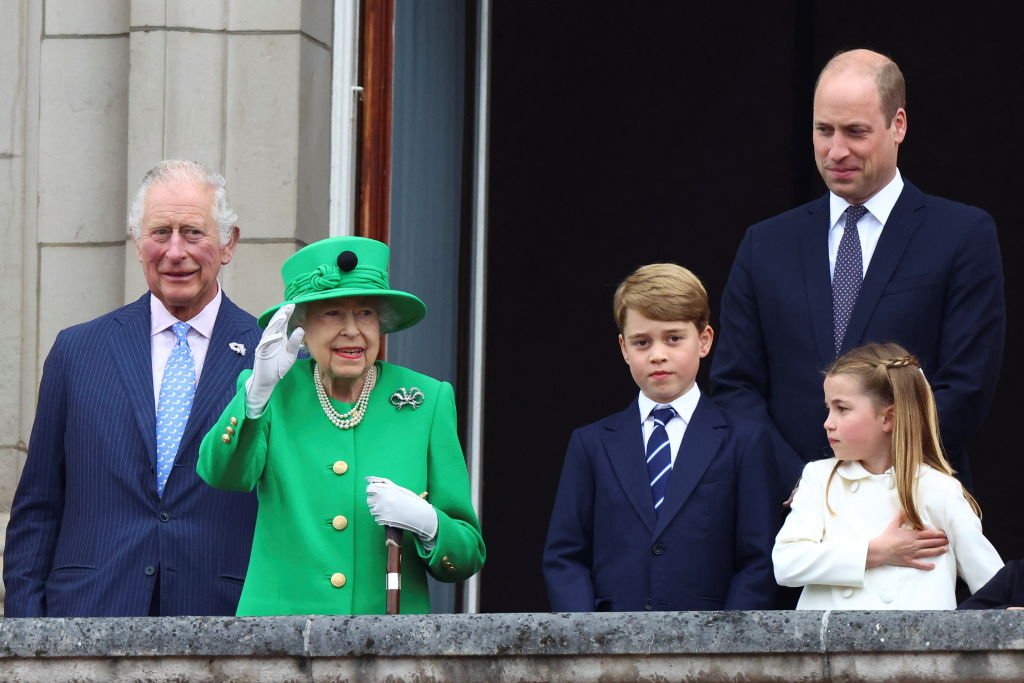
“Are we right, or are we mad?” So Alexander Chancellor responded, in the Telegraph, to the emotions of the British public at the 1986 engagement of then Prince Andrew to Sarah Ferguson. Chancellor was giving a voice to the anxiety that intelligent conservatives occasionally feel about their monarchism, but always squash (“…rather mad, but I can see no great harm in it,” Chancellor continued). Is this vast, moth-eaten anachronism really decorous, dignified, magical (all those mysterious words)? Or is it bunkum, woo-woo, deranged?
Something similar is prompted by the BBC’s Queen Elizabeth II: Her Story, Our Century, broadcast to mark what would have been her 100th birthday. It makes for a warm, Whiggish hour, the Queen portrayed as our steadfast national pilot, weathering the storms of modernity and change. There’s a strong and official cast of commentators – Lady Glenconner, Helen Mirren, Tom Jones, Gyles Brandreth. And they remind you that, as with all affairs of the heart, on royal matters the British must be permitted to behave bizarrely. But the programme’s claims to mark the passing century do incite deeper questions – not so much about Elizabeth, but something we can vaguely call an “Elizabethan” age.
If the documentary has a major narrative theme, it’s the gradual but unstoppable concession the Royal Family has made to media scrutiny and public opinion – in effect, to democratisation. This began with the televising of the coronation, and accelerated with the behind-the-scenes documentary Royal Family (1969), which saw the royals buttering sandwiches and buying ice cream. The Queen later banned it from being broadcast for whatever it had revealed. The process reached its climacteric phase in the Nineties, when the Queen announced her “annus horribilis” (1992) – the daughter of the King-Emperor, begging her subjects for sympathy over the shenanigans of her children – and when, standing by the cairns of flowers left for the dead Diana (1997), mourners started to use words like “disgraceful” and “disgusting” to describe the Queen and her chilly response. “People might almost storm the gates of the palace,” Kirsty Young remembers. Forced by public demand to make a national broadcast, the Queen and her family became not a monarchy but something more like, in Matthew Parris’s phrase, a “hereditary presidency”. During the jubilees of 2012 and 2022, we saw the Palace use the James Bond and Paddington Bear cinematic universes to pep Her Majesty’s public image.
The programme’s account of recent decades is affectedly rosy. In this telling, 2011 isn’t the year that saw Prince Andrew photographically linked to Virginia Giuffre in the Mail on Sunday or the end of his “special” trade role. No, 2011 is the year of Prince William’s wedding to Catherine Middleton, the peak of the British monarchy in its “modern”, post-Nineties complexion. It’s also the year of the Queen’s state visit to Ireland, when, it is patronisingly implied, she seduced the Republic by mangling a few words of Irish in a speech (ask any Irish person if this worked). The Andrew “business”, as Palace officials no doubt describe it, is covered later, in two minutes and six seconds, with the Queen praised by Brandreth for realising “something had to be done” (realising so decisively that she left her heir the job of exorcising Andrew completely).

Covid, and the farewell Diamond Jubilee, are used to restore a sense of uplift. And as the Queen’s 2020 “we’ll meet again” broadcast replays, it’s striking how much the Second World War feeds into her personal mythos – which is ultimately only a mirror for the national mythos. Here we are reminded, as I have been as long as I can remember, that the Queen “did her bit”, driving Land Rovers and handling wrenches as a “Second Subaltern ATS”. While she didn’t quite command a century, Elizabeth did personify something about the “postwar”. Its passing, and hers, is having scary, solvent effects on the national mood and its assumptions. The Good War is just one of the national myths that began to decay just as she did, tearing at the roots of post-imperial British nationalism. No one can honestly say things have gone well since she died. And who can honestly say she didn’t matter, when the actions of her and her family can make us feel so mad?
[Further reading: The crumbling Crown]
Content from our partners


Related

Join the debate
Subscribe here to comment