
The first of October was my first day as president of Marylebone Cricket Club (MCC), succeeding Mervyn King. I was interviewed by Mike Atherton for the Times and Tim Wigmore for the Telegraph, two perceptive and analytical writers on cricket. After discussing MCC matters, the bait was set for me to wade into current England selections (four years after I finished as a selector).
Atherton wondered what I thought of the approach of England’s captain and coach – Ben Stokes and Brendon McCullum – because it seemed so different from mine (the implication being that I was “data-led”). In the next conversation, Tim asked if I would rather have been selector today, given that the current thinking seemed so in sync with mine (the implication being that I enjoyed risk and adventure). A question: does the gap between the two questions constitute a compliment? Or not?
About 15 years ago, when I wrote more about cricket, an editor showed me a data map of the readership. Predictably, this was mostly in the Commonwealth, particularly India. But there was one major exception: California, especially Silicon Valley, where a significant proportion of tech professionals had an Indian background. This made me optimistic that cricket would return to prominence in America (in the 19th century, before baseball’s land grab, cricket was America’s favourite team sport).
The Indian-Californian axis is now taking a seat at the table closer to home. Tech Titans, a consortium of mostly West Coast investors, acquired a 49 per cent stake in the London Spirit (the MCC’s “Hundred” franchise) for the price of £145m. The consortium, led by Nikesh Arora of Palo Alto Networks, encompasses the CEOs of some of the largest companies in the world, including Google and Microsoft.

That means the MCC now has a majority stake in a professional cricket franchise set on a global trajectory. Most reports have focused on the consortium’s valuation, setting an enterprise value of £295m on the London Spirit. But I predict the greater part of the story will turn out to be their ambition and expertise. And a keen interest in winning.
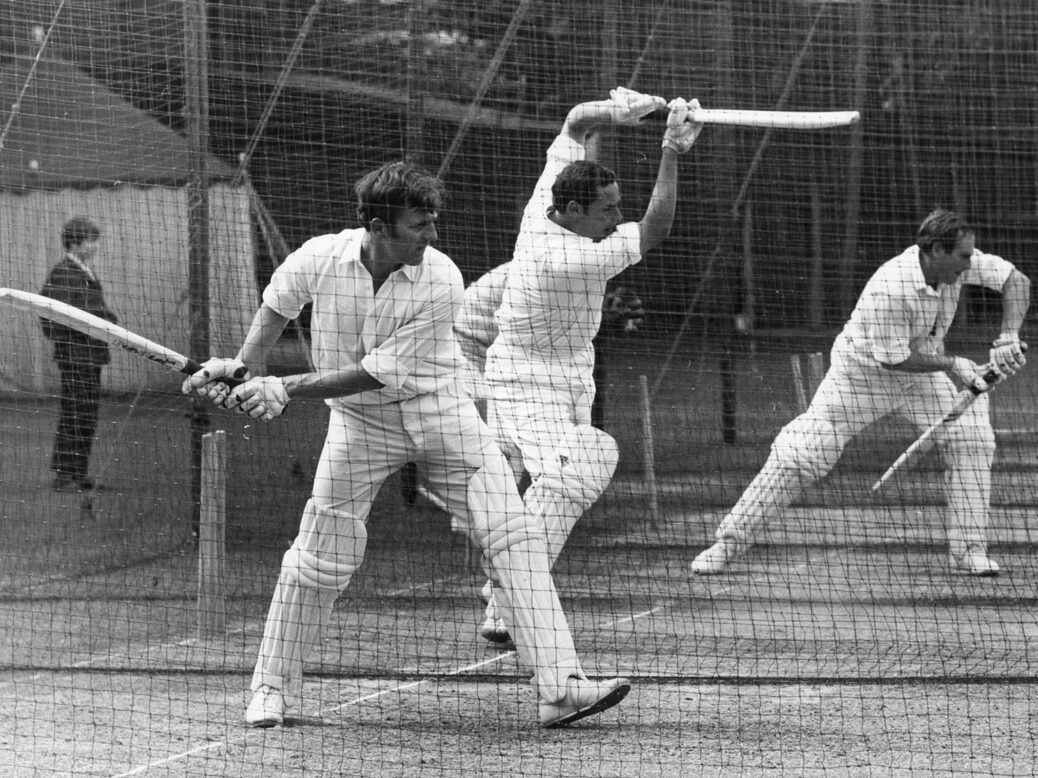
Even the term “franchise”, with its American heritage, provokes irritation among some traditional cricket fans. In fact, the word is a synonym for “freedom”. That was certainly the effect T20 cricket had on my own batting when the new format was invented in 2003: the shortest form of the game demonstrated that cricketing inhibition was often unexamined and inherited. We were just brought up that way.
And yet the corresponding assumption that T20 and “white ball” cricket would ruin batting techniques has proved wide of the mark. The best way to bat is to get the middle of the bat on the ball most often. Leading modern players start with that premise. Instead of a divergence between history and innovation, modern cricket has benefitted from convergence
MCC commitments prevented me from attending a conference to mark the publication of Sport and the British, a revised version of Richard Holt’s classic history first published in 1989. Since then, sport and sports history have expanded massively. Holt anticipated both.
I turned to his sections on the MCC. They included this insight on sport’s startling growth in the 19th century: “It was the interaction of moral and material forces that shaped the ‘amateur’ revolution in sport.” That’s still true today: sport is business; but sport is never only business. The co-existence of “moral and material forces” – often portrayed as being in conflict – also generates creative interaction. History is the study of “compound effects” more than “mixtures”.
Perhaps for that reason, I am looking forward to throwing myself into two current MCC priorities. First, supporting the London Spirit partnership. Second, helping the brilliant work of the club’s charitable arm, the MCC Foundation. Its mission is to transform lives around the world through cricket – from leading cricket programmes in refugee camps in Lebanon to launching new competitions to boost cricket in English state schools.
When I was a child, my mother (an art teacher) used to take me to the National Gallery on trips to London. In those days you entered through the main portico on Trafalgar Square, instantly crossing a threshold into a distinguished place. You arrived with a bang, through a great front door. I couldn’t help missing the feeling when I popped in last week. Today’s more oblique arrival is via the Sainsbury Wing, which has just been renovated. But once inside, I found myself distractedly looking at my watch and deciding I didn’t have time after all.
It is a primary question, how a great building faces the world, how it connects and interacts with the wider community. Get that right and everyone wins: the visitor, the casual passer-by and the institution itself. I know it is something my colleagues are thinking through at Lord’s. Galleries aren’t just for art lovers and Lord’s isn’t just for cricket fans. Open up the beauty and the grandeur, and the gift isn’t just to the game, but to the whole city.
[Further reading: Has Kemi Badenoch actually read Terry Pratchett?]
Content from our partners



Related


This article appears in the 08 Oct 2025 issue of the New Statesman, The truth about small boats
Join the debate
Subscribe here to comment