
“Take one boy from a modest background. Scrub well. Sieve through an IQ test. Stir in a dash of ambition. Marinate in a well-aged institution. Mix with richer ingredients. Infuse with self-confidence. Allow to rise.”
For two or three decades after 1945, this was the recipe for what was sometimes misdescribed as “social mobility” but more properly classified as “elite recruitment”. The eleven-plus examination funnelled a little over 20 per cent of each year group into selective grammar schools, thereby consigning more than 70 per cent into secondary modern schools, which were inevitably felt to be second best. Of the grammar school intake in the 1940s and 1950s, a minority stayed on to the sixth form to do A-levels, and of those only a limited number progressed to university (around 5 per cent of the total age cohort by the late 1950s, but that included those who had attended fee-paying schools). A miniscule subset of that group went to Oxford and Cambridge, the bulk of whose intake still came from public schools. For the vast majority of the population, education mirrored and re-enforced class hierarchies rather than challenging or changing them.
It can be difficult, even at this distance, to make a steady appraisal of the personal gains and societal losses entailed by this system, as Melvyn Bragg, one of its classic products, fairly recognises. Elements of myth and romance have coalesced around the idea of boys of ability being given an opportunity to develop their talents regardless of class origins. (It is striking how heavily the mythology has concentrated on “the scholarship boy” even though girls were, in the second half of the 20th century, fast becoming the majority of those in higher education.) For a few individuals the opportunities were indeed life-changing; for so many others, the sound of a door being slammed shut at age 11 echoed through their lives.
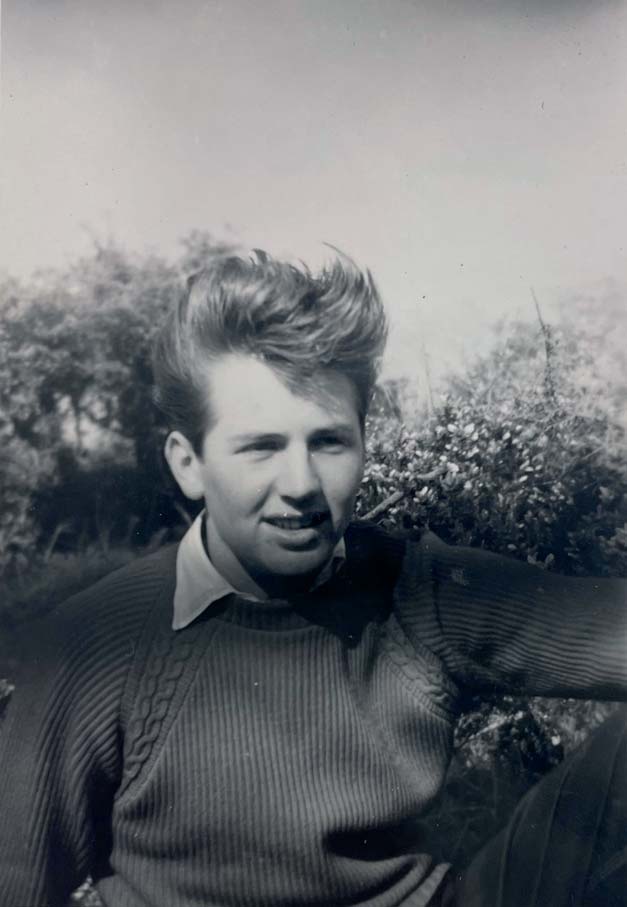
Bragg was born in 1939 to a working-class family in Carlisle and raised in the small town of Wigton, in what is now Cumbria. His father, after a series of manual jobs, eventually became a publican, while his mother had worked as a seamstress in a local tailoring business until her marriage. In his first memoir, Back in the Day, published in 2022, Bragg celebrated what he experienced as the warmth and closeness of the small community in which he grew up. He reported how, success in the eleven-plus having taken him to the local grammar school, a supportive teacher urged him to apply for a scholarship to Oxford (the role of an inspiring and encouraging teacher is a staple of this genre of life story). Another World begins with the young Bragg boarding the train for Oxford in autumn 1958, the beginning of a journey that has led to his being considered, in his eighties, something of a national treasure – garlanded with honours, the doyen of cultural broadcasting, described as “the David Attenborough of the arts”.

That opening scene, in which he is waving goodbye to his home-town girlfriend, both of them confident their relationship will continue and probably lead to marriage, touches on another constant theme of this genre: namely the way educational and social selection leads to sexual selection, too, as the young male hero outgrows his calf-love and mates with a more sophisticated partner. In this case, it seems to have been much to the credit of the early girlfriend that she was the one who, realising that Bragg’s trajectory was leading her into worlds in which she did not feel at home, initiated the ending of the relationship. Writing some 65 years later, Bragg attempts to recreate his distress at this decisive upsetting of his emotional apple cart, although it is noticeable that, through a combination of buoyancy, boldness and charm that may have served him well throughout his career, he soon teamed up with an unconventional art student of partly aristocratic French descent. His memoir ends with them sailing, literally and metaphorically, into the future after their wedding.
Looking back on our lives, most of us are prone to attribute so much of what has happened to chance – happily so if things have turned out well, with lasting regret and even bitterness when chance seems to have played a malign role. For those, like Bragg, who have gone on to be outstandingly successful despite their humble origins, it is almost mandatory to emphasise how so much of what has happened to them has been a matter of luck. But what passes as “luck” is so often the product of favourable circumstances that have impersonal or structural sources. Returning to his Oxford college after gate hours, Bragg happened to climb in through the window of a chap who knew a chap who could get a chap invited to write for Cherwell, the Oxford student magazine widely recognised as a launchpad for careers in journalism and the arts. It was a time when European auteur-led films, with Ingmar Bergman to the fore, were challenging Hollywood’s saccharine star-led offerings; soon the young Bragg, who had become a great Bergman enthusiast, was writing two film reviews a week during term.
More generally, it was a time when radical anti-establishment attitudes were coming into favour: Dennis Potter and Ken Loach were among Bragg’s contemporaries at Oxford. When, after graduation, Bragg applied for a coveted BBC traineeship (only three were available each year), his interview panel included (as a last-minute replacement for a member who was unavailable) Martin Esslin, a European emigré who promoted avant-garde work and thought it important to “break the cultural class system”. “I got in,” concludes Bragg, his prose modestly fluttering its eyelashes. And a good thing too, we may now all chorus, given Bragg’s list of subsequent broadcasting achievements, while reserving the thought that even the most talented are as much the pawns of history as the rest of us.
History was the subject he was supposed to be studying at Oxford (or, in the argot of the times, “reading”), though we hear rather little about the intellectual content of the course. Bragg’s main tutor was the distinguished early-modern historian Lawrence Stone, who was kind to his pupil and is here rewarded with several set-piece speeches musing on the elusive character of the education the university then offered. But for the majority of undergraduates, Bragg included, what mattered more were the attempts to “find the conditions to kickstart a career on the back of a degree”. That degree itself, a “good Second” in his case, seems to have been of lesser importance: extra-curricular activities, useful connections and the aura of the ancient name played a more determining role in paving the way for later success. “Apart from inheritance,” he reflects, “Oxford was next to winning the birth lottery, the best guarantee of a rewarding future you could wish for.”
The working-class world in which Bragg grew up was evoked with sympathy and tenderness in Back in the Day, prompting the familiar question of why the volumes or sections of autobiographies that deal with the subject’s early life are nearly always more successful than the narratives of later adult achievement. Partly this is precisely because the later story can be too emphatically about achievements, never the most endearing mode, and perhaps partly because the child’s-eye view of the world is suffused with much more unregulated emotion and imagination, not yet entirely subject to image-mongering and expectation management. It is also noticeable, incidentally, that a high proportion of those autobiographers who went on to become writers or scholars turn out to have been only children. Bragg is again representative here, reporting on how his early taste for solitary reading put him in good stead when it came to the steeplechase of exams that eventually led him far from the way of life so fondly evoked in Back in the Day.
Another World is described as a “memoir” of Bragg’s Oxford years, a historical record, seemingly unfussed by the notorious deceptions of memory with its cherry-picking, its role as creator and shield of a preferred conception of the self. The fact that there are pages and pages of dialogue, presented with the fullness of a polished work of fiction, should alert us to the novelistic artifice at work throughout (Bragg has published over a score of novels). Many scenes seem dramatised and stage-managed rather than recalled. The account of a slightly uncomfortable visit to Oxford by his father to see his Gauloises-smoking son ends with: “My father pulled out his packet of Capstan. ‘Have one of mine for a change,’ he said. ‘It’ll do you good.’” Cue strong emotion struggling for expression as worlds collide. Still, if we can suspend our scepticism about the historical status of such scenes and speeches, the result is a relaxed, engaging reading experience that carries us along as the author, now smiling ruefully at his younger self, tells a tale of good fortune cheerfully borne.
Another World: The Oxford Years
Melvyn Bragg
Sceptre, 272pp, £22
Purchasing a book may earn the NS a commission from Bookshop.org, who support independent bookshops
[Further reading: John Bew: Don’t let Britain decline]
Content from our partners


Related
This article appears in the 11 Mar 2026 issue of the New Statesman, The Great British Crisis
Join the debate
Subscribe here to comment‘A miniscule subset of that group’ – Come on, NS! The word is spelt ‘minuscule’