
After the death of her husband in the winter of 1861, Queen Victoria commissioned photographs of Prince Albert’s corpse. Lying on his deathbed in the Blue Room at Windsor Castle, the prince’s body appears covered by bedsheets; a bandage is wrapped around his head to hold his jaw closed, his pale face serene. The Victorians excelled at the practice of memento mori (“remember you must die”), and the development of the photograph gave them a strikingly modern means of venerating the dead.
Photography offered a way to preserve faces more precisely than previous mediums, such as portraiture, and it would ensure that identity was firmly attached to a body. As 19th-century society became more mobile and anonymised, there emerged an anxiety that not only might one’s property be stolen, but one’s very self. In attempts to counteract this fear, the face became the primary anchor of identity, and the camera a bureaucratic tool to document it.
That the face marks who we are is the central tenet of cultural historian Fay Bound-Alberti’s new book, The Face, an expansive exploration of the human face and the extraordinary burden it has been made to carry. Bound-Alberti argues not only that faces matter, but that they have come to matter too much. People’s faces have always been used to deduce their health, intelligence and trustworthiness – a practice Bound-Alberti calls “face-reading”. The face shapes our ideas of moral character, social hierarchy and psychology as well as revealing the biases that inform our everyday lives.
This is something novelists have always known – in Dickens, for instance, evil is often denoted by thin lips. But Bound-Alberti argues that face-reading has serious consequences; she chronicles how our interpretation of faces has moved from idle theory to becoming the basis of decisions about education, employment, imprisonment and immigration for millions of people. Before the invention of photography, facial distinctiveness didn’t matter to most of the general population; identity was not invested in the face. But the camera made recognisability a civic requirement, and our faces became embedded in our passports and driving licences. Now they unlock our phones.

To the Victorians, Bound-Alberti says, “seeing was believing” and so they prioritised sight over all other senses. Photography seemed to offer an objective truth; it captured whatever was there. But what was represented in the photo was never neutral; meaning was deduced on the basis of who was being shot, by whom, what circumstances facilitated the picture’s existence. Technology appeared to be impartial, but our cultural adoption and integration of it has allowed for bias to be institutionalised, automated and scaled without appearing ideological – a historical throughline that connects to the built-in prejudices we see today in biometric systems. “With white faces still primarily seen and prioritised as standard,” Bound-Alberti writes, “digital technology struggles to identify darker skin tones.” In 2015, Google’s face-recognition system captured images of black people as “gorillas”.
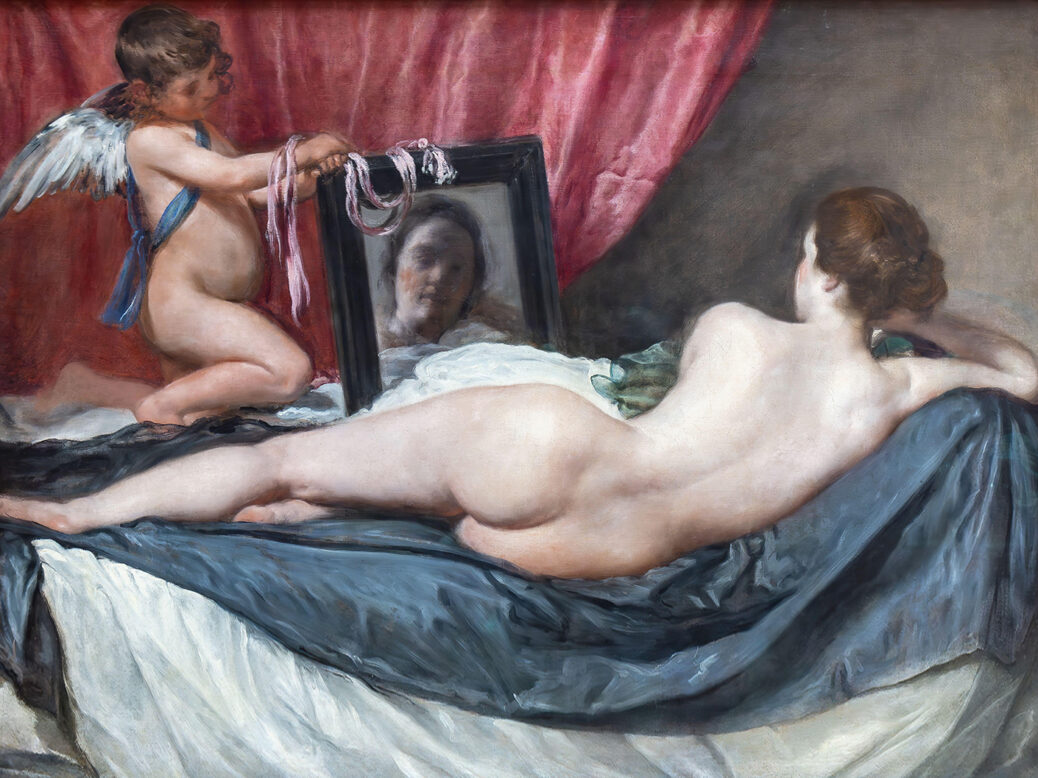
One technology that seems to offer an unbiased reflection is the mirror. Made from Murano glass – a product so important to Venice’s tax income in the 1500s that “glassmakers were not permitted to leave the island or share the secrets of production” – mirrors eventually became luxurious tools that allowed for, and encouraged, self-surveillance, Bound-Alberti writes. When faces became more than a canvas on which to display beauty and expression, “the mirror was essential not only for checking your appearance but for ensuring your face was sending exactly the right message”.
In the mirror, Bound-Alberti argues, we find both problem and solution: “we see our flaws and imagine how they might be fixed.” But again, sight is not neutral. Who is the subject? And who is the object? Invoking the art critic John Berger, she asserts that men act, and women appear. While men look at women, the inverse is not true. Women watch themselves being looked at and so internalise the oppressive male gaze. This has resulted in the face’s transformation into a project to commodify, maintain and improve.
Such logic finds itself most literally articulated in the history of plastic surgery. It is a practice that dates as far back as Sushruta, the so-called father of surgery in ancient India, but it wasn’t until the First World War that what had previously been a medical practice started to transform into the cosmetic industry it is today. “Surgeons learned to work quickly, developing new techniques to treat a huge amount of injuries,” she writes. But when the war ended, a problem emerged: highly specialised surgeons with few patients.
The onset of medical consumerism accelerated both the pathologising of distress and the emergence of a new cosmetic market. In addressing whether a patient’s psychological need was sufficiently pressing to justify surgery, the industry “found powerful allies in the newly emergent specialisms of psychology and psychiatry”. The first breast enlargement using silicone became possible in 1962 because small-breastedness had recently been classified as hypomastia, a condition associated with depression and low self-worth. The profession that has developed over the years speaks to our patriarchal history: over 90 per cent of plastic surgery patients are female (both in the UK and the US), but only 20 per cent of plastic surgeons in the UK (and even fewer – 15 per cent – in the US).
But Bound-Alberti is keen to stress the social and cultural implications, rather than condemn individuals. To be a young person with a visible difference – one that does not conform to social standards of what is deemed desirable – is to be three times more likely to be bullied than other children, and three times more likely to have their image circulated without consent.
The book reveals how historical biases continue to affect the marginalised, particularly non-white people. In one chapter, Bound-Alberti recalls how Microsoft Azure was unable to recognise people of colour, while in another she details how black babies are more likely to develop sickle cell disease than white babies due to a geographic distinction. (“Their ancestors originated from areas where evolutionary responses were developed to protect them from malaria.”) African-American babies are twice as likely to die in their first year than non-Hispanic and Euro-American babies due to poorer living standards and discrimination by medical systems. “Sometimes,” she notes, “what looks like a biological difference is a cultural one.”
For a text that is so committed to being grounded in the historical, to providing data so that feelings around exclusion and bias can be examined objectively, it is a shame that The Face veers, chapter by chapter, into the abstract. Bound-Alberti does pose some interesting philosophical and legal questions, such as how much we need to be able to see a face in order to empathise with it and subsequently feel compelled to give it rights. Her discussion around prosopagnosia – facial blindness, a rare condition that affects roughly 3 per cent of the global population – flirts with the limits of theoretical abstraction.
The concluding chapter, on face transplants, is the weakest. This procedure represents, for Bound-Alberti, the same commodification of the face documented throughout the book, but “taken to its logical extreme”. For much of The Face, Bound-Alberti devotes herself to speaking to the very real experiences that people live through, the social biases they must endure; it seems incongruous, then, to want to use a procedure that has been performed only 50 times to explore these ideas. The surgery is exceptional, experimental, rare; the questions it raises – would someone still be themselves after receiving another person’s face? – are intriguing but, for most people, too remote from reality. After hundreds of pages documenting how ordinary faces are judged, sorted and punished, the book suddenly fixates on an edge case.
Still, The Face is a meticulously researched and unsettling book, and Bound-Alberti’s overarching message is poignant. Could it be that the face we seek, the one we believe will make us acceptable and therefore loveable, might not exist after all? And is it really a better face we want, or a better world, one in which we are not judged so brutally for the face we already have?
[Further reading: In Vegas, Elvis performed for himself alone]
Content from our partners


Related

Join the debate
Subscribe here to comment