
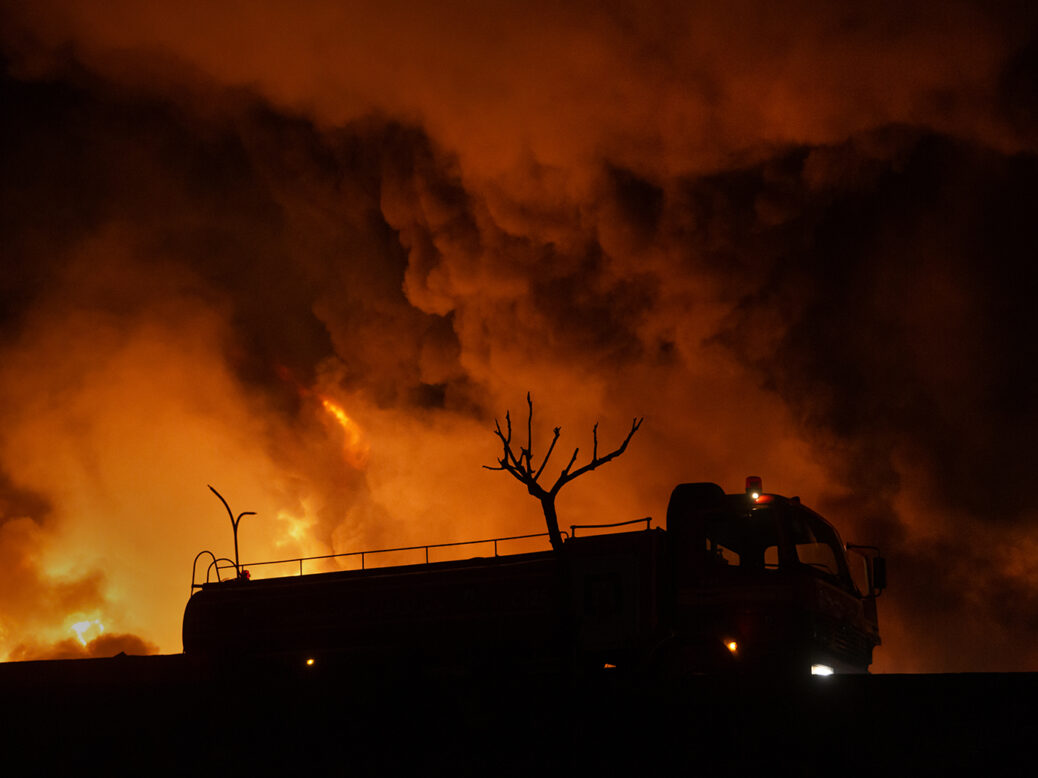
While the news of political decisions and war developments travel around the world at the speed of a tweet, the oil market moves very slowly. For more than a month, Iran blocked the Strait of Hormuz, effectively putting a kink in the garden hose of the global fuel industry. Though the two-week ceasefire agreed by the US and Iran on 7 April could see an increase in traffic through the strait once again, the effects of that closure won’t disappear. In Asia, price hikes and fuel rationing has already begun – and this will very soon hit the shores of Europe and beyond.
Importing nations across Europe and North America have not yet felt the full impacts of the closure of this vital passage, through which a fifth of global trade in crude oil and other fossil fuels once travelled. These nations have continued to receive shipments that left the strait before 28 February, delaying the inevitable shock.
These nations will only start to feel the pain of that inevitable supply loss once the last ship from Hormuz docks on their shores with no more to follow. And that is happening now. Southern Europe will feel the effects before northern Europe, which is why Italy has recently started to ration jet fuel. The longer traffic through the Strait of Hormuz remains stifled, the worse the crisis will get. If the war resumes, it will get much worse.
This growing economic problem can be resolved with the snap of one man’s finger. Israel and Iran have their own agendas but the common refrain of this war, that “it takes three to Taco” – Trump always chickens out – cheapens the extraordinary influence that Donald Trump has. The single person who remains most important in deciding when this war permanently ends is the US president. Still, even if the strait opens up fully tomorrow, we’re going to be feeling the cascading supply chain issues for months and possibly even years to come. By my estimate, there are roughly 13 million barrels a day of liquid fuel production shut in, meaning that upstream wells are not currently producing crude oil or natural gas liquids, such as propane, derived from the region’s vast gas industry due to the disruption. It will take weeks or even months to get that production back online once it’s possible to do so.

Additionally, we’ve seen missile and drone attacks on refineries and other fuel facilities across the Gulf. The most extreme example is Israel’s attack on the Iranian South Pars natural gas field, the largest in the world, on 18 March. The Iranians then responded by attacking Qatar’s Ras Laffan, the world’s largest liquefied natural gas (LNG) export facility. The CEO of QatarEnergy told Reuters that the attack would reduce Qatar’s LNG export capacity by 17 per cent for up to five years. We still don’t know the full extent of the durable damage and how this will impact the industry.
As bad and unsustainable as this crisis is, there’s still ample room for it to get much, much worse. Prior to the ceasefire, Trump’s threats grew more erratic by the hour while Iran has made it very clear that there is appetite and capacity for escalation. Whether that’s attacks on Saudi Arabia’s Abqaiq oil field or activating the Houthis in the Red Sea to cause disruptions in the Bab el-Mandeb Strait off the coast of Yemen, any such escalation would make the crisis more durable and far more difficult to unwind.
No energy supply shock – including the most recent one in 2022 following Russia’s full-scale invasion of Ukraine – have so firmly crystallised the feeling of energy insecurity across many parts of the world. Over the past decade in Europe and North America, the conversation around energy has often centred on the climate emergency and the moral imperatives to move away from fossil fuels. Chequebook issues, such as a cost-of-living crisis and rising inflation, have increasingly eclipsed the urgency of climate change in governments’ priorities.
Now, this crisis is likely to further reorient the conversation towards issues of energy and economic security. Ironically, the next year or two is likely to bring an overall increase in our consumption of oil as nations both desperately try to rebuild their depleted strategic stocks and further bolster commercial stocks to better cope with more frequent supply disruptions. But, longer term, the world – especially Asia – will almost certainly consume less petroleum products in 2035 than we would have predicted before the war.
In parts of Asia, that framework of energy security has already taken hold. China became the world leader in electric vehicles not out of a sense of altruism for the rest of the planet but out of a deeply rooted concern about their own economic and national security. This crisis will only reaffirm that view and spur new investments in renewables across the world.
We don’t yet know if the ceasefire will hold, when unencumbered traffic through the Strait of Hormuz will resume or what the ultimate damage wrought by the weeks of tit-for-tat facility strikes across the Gulf will be. Most optimistically, we’ll exit the Iran war with acutely depleted inventories and discombobulated supply chains, meaning higher fuel prices for longer. The worst-case scenario, however, is further escalation leading to more significant damage to oil and gas infrastructure, prompting rampant inflation and outright physical shortages of critical fuels, chemicals and other feedstocks for years to come.
Rory Johnston is a Toronto-based oil market researcher. He is a lecturer at Toronto’s Monk School of Global Affairs and Public Policy, and the founder of Commodity Context. See commoditycontext.com
[Further reading: Colm Tóibín’s sounds of silence]
Content from our partners



Related


This article appears in the 08 Apr 2026 issue of the New Statesman, The Fall
Join the debate
Subscribe here to comment