
Who could have foreseen that the enormous bucket of shit that was placed on the edge of Keir Starmer’s desk in December 2024 might have tipped over and ruined the carpet? The bucket had, after all, only tipped over twice before in full public view. The deeply unpleasant nature of its contents could only have been known by people who had access to a newspaper, a library, the internet or the opinions of almost any other adult British human. And so it came as a real shock when a distant explosion – later identified as being caused by some files being opened in another country – caused a tremor that led the bucket to dismount the table, and now it’s all over everyone’s shoes.
For any normal group of people, to be splashed with noxious effluent might be considered a nadir, but this is British politics we’re talking about. The overturning of the bucket was only the beginning of an even less dignified argument about whose fault it was.
Yesterday, Keir Starmer told parliament that it certainly wasn’t his fault that the bucket – which in case it isn’t clear, is a clever metaphor for Peter Mandelson’s career – had spilled over into the public conversation. In the Commons yesterday, Starmer told MPs he was absolutely fuming that the civil service had not communicated to him that in their official assessment of his decision to place the bucket of shit right on the very edge of his desk – the edge that people are always bumping into because it sticks out into a busy corridor, you know, the edge with the wobbly leg – they had put a cross in the red box which indicated it was a potential carpet-ruiner.
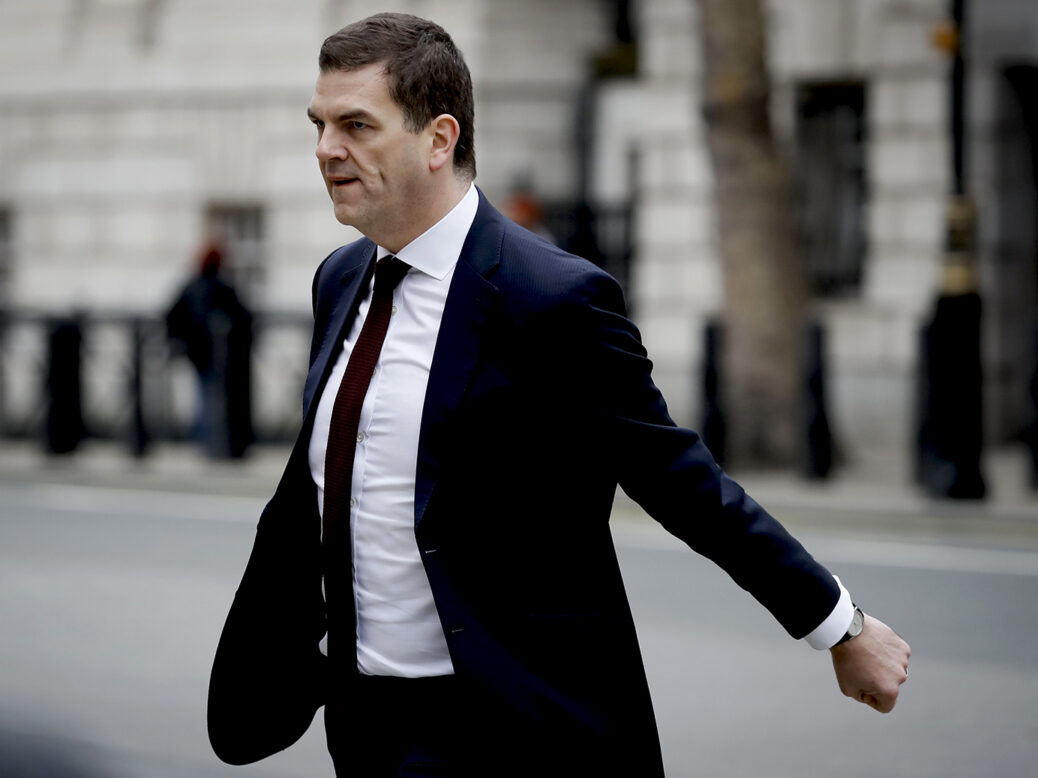
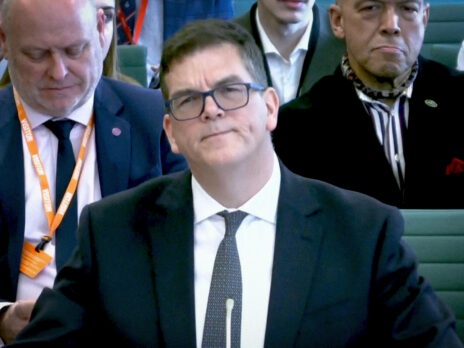
This morning the latest person to be sacked for this decision, the former permanent secretary at the Foreign Office, Olly Robbins, appeared in front of the MPs of the Foreign Affairs Select Committee. It was Robbins’ job to discuss the concerns raised by United Kingdom Security Vetting (UKSV) during the “developed vetting” of Peter Mandelson’s appointment as ambassador to the United States. Most of all it was his job to explain why, upon learning these concerns, he didn’t go running into Keir Starmer’s office, shouting: “Prime Minister! There is a suggestion that the professional lobbyist and widely reported associate of the world’s most notorious paedophile – that’s right, Prime Minister, the man who has for decades been referred to in British political discourse as ‘the Prince of Darkness’ – there’s a suggestion his record might not be entirely clean!”

But as Robbins explained, he didn’t see the special piece of paper with the cross in the red box, either. He also explained that it’s not UKSV’s job to deny clearance – this is the job of the Foreign Office. Mandelson did not, as has been reported, “fail security vetting” as performed by UKSV, which told Robbins that it was “leaning towards recommending against, but accepted it was a borderline case”.
Most people would think twice about appointing someone to fly a helicopter or perform surgery or to provide childcare if an official assessment concluded they were a “borderline case” for approval, but the process for appointing Britain’s most important diplomatic post was different. Robbins told MPs that there was a great deal of pressure to approve the appointment from the Cabinet Office, which he said took a “dismissive attitude to [Mandelson’s] vetting clearance” amid “an atmosphere of pressure”. There was, he said, “constant chasing” from officials asking: “has this been delivered yet?” The source of the pressure, he said, was the No 10 private office.
Emily Thornberry checked that Robbins’ phone, on which these calls were received, had been handed in and would be available for investigation. “It certainly will,” he said with a smile, pleased to confirm that his phone, unlike that of Morgan McSweeney – who is reported to have encouraged officials to sign off Mandelson’s clearance by asking: “just fucking approve it” and has already resigned over the Mandelson scandal – has not been stolen.
One key reason for the pressure to appoint this seems to have been that Sneaky Pete, as Mandelson is apparently known in Washington, was seen as a Trump whisperer. The agrément between the UK and US on the posting of a new ambassador was reached on the last day of the Biden administration, which considered the UK to be a sovereign nation and an ally. The announcement had already been made. Had the UK changed its mind after that point, Donald Trump might have decided it was now his decision. In 2016, Trump declared that Nigel Farage should be the UK’s ambassador to the US; perhaps this time he’d have picked Andrew Mountbatten-Windsor, or Russell Brand.
However, Robbins revealed that it was not only Mandelson whose appointment was pursued by No 10. Robbins said he was also asked by No 10 to find a diplomatic post (as a “head of mission”) for Matthew Doyle, Starmer’s former director of communications. He said he was given “strict instructions not to discuss” the appointment with the Foreign Secretary. Fortunately, after finding it “hard to find something I thought might be suitable”, Robbins was off the hook: Doyle was given a life peerage instead. A few weeks later Doyle was suspended from the Labour Party after it was revealed he had campaigned for a known sex offender to be elected to local government. With friends like these, Starmer hardly needs enemies, although obviously he has plenty of those too.
The real question for Robbins, as committee chair Emily Thornberry put it, was: “where’s the note?” By this she meant that most people in Westminster would understand that any civil servant, having received pressure from someone in No 10 – some mysterious, unnamed, Sweeney McMorgan in a meeting room somewhere – would write a note saying “thanks for a great meeting, I will now hand a plum job to a notoriously suspicious person about whom we have doubts, as you instructed me to do”.
But Robbins explained that this would have gone against the process that he holds in reverence. The vetting process depends on every part of it being wholly confidential, because if it wasn’t, the people being vetted wouldn’t admit all their darkest secrets. He could not send a note, he could not puff a single cheek or raise a single eyebrow, in regard to Mandelson’s appointment without straying outside the channels of the process. When Thornberry quoted to him the guideline on his duty not to be influenced by improper pressure from others, he nodded and told her there are two texts he holds in his memory: the Book of Common Prayer and the Civil Service Code.
This, perhaps, is what Starmer will have found heartbreaking about Robbins’ appearance. Not the class and magnanimity he showed after having been sacked – he maintained that in regard to the appointment, “the Prime Minister did the right thing” – but his dedication to the proper following of process. Starmer – “director-general of the United Kingdom, permanent secretary of the British state” – once believed that simply following all the correct procedures would be enough. But the people around him had other ideas, and the dream of a competently managed country has once more been dispelled.
[Further reading: Olly Robbins reveals “constant pressure” from No 10 over Peter Mandelson]
Content from our partners



Related
Join the debate
Subscribe here to comment