
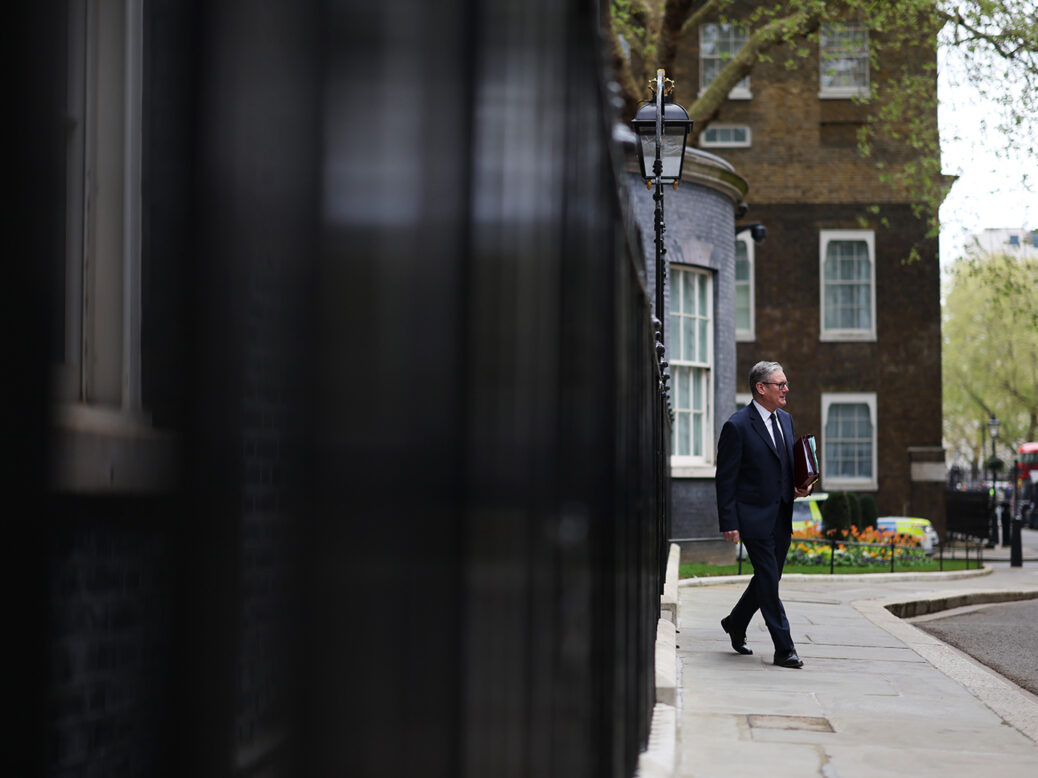
The Prime Minister will update the House of Commons this afternoon after the latest revelations about Peter Mandelson’s appointment as British ambassador to the US. He will tell MPs that he was not aware Mandelson had failed security vetting even though, in previous months, he said to the House and the public that the proper process for the appointment had been followed.
Over the weekend, the PM continued to profess his anger at Whitehall officials – namely, the now sacked Foreign Office permanent secretary Olly Robbins – for not informing him about the vetting process. He told the Sunday Mirror he was “furious that I wasn’t told”. But as his critics in the Commons will no doubt point out today, the root of all this was Starmer’s decision to appoint Mandelson despite the counsels of those who thought it was a bad idea.
As the row continued over the weekend, No 10 made the peculiar decision to publish some ad-hoc legal advice stating that “no law stops civil servants from sensibly flagging UK Security recommendations”, in an attempt to further inculpate Robbins, who is reportedly considering legal action over the manner of his removal.

The former cabinet secretary Gus O’Donnell, nicknamed GOD for his initials and for his once omnipotent and omniscient position in Whitehall, has questioned the sacking of Robbins in an article for the Times. He warns it would have “a chilling effect” on the civil service, essentially because senior mandarins will be wary of taking decisions if there is a precedent of being the fall guys for choices that originated in Downing Street.
Starmer also faced criticism from Ciaran Martin, who, like Robbins, is another senior mandarin associated with the Whitehall reign of GOD and the late Jeremy Heywood. It is extraordinary that Starmer – a former permanent secretary himself as director of public prosecutions, and supposedly a stickler for the rules – has triggered such a crisis in relations between politicians and officials.
The argument from his supporters will be that this is not some defect in the Prime Minister’s character or a late-in-life change of temperament, but that it’s the Whitehall system which is broken – and this row is the latest evidence.
This feels like a delayed reckoning. In the early period of this government there was a radical zeal in No 10 about civil service reform. That culminated in Starmer’s December 2024 speech about mandarins happily soaking themselves in “the tepid bath of managed decline”. After a backlash, Starmer pulled away from the confrontation and has, ever since, limited his governing reforms to tinkering, for example the creation of the chief secretary to the Prime Minister role in No 10.
This afternoon, when he stands in the House of Commons, Starmer can finally have it out with the officials whose work he is so dissatisfied with, as he tries to blame the Mandelson affair on one of the country’s longest-serving and most respected civil servants. But, thanks to his earlier retreat, the circumstances of this battle are not of his own choosing and he is in a much weaker position.
This piece first appeared in the Morning Call newsletter; receive it every morning by subscribing on Substack here
[Further reading: Should Keir Starmer resign?]
Content from our partners



Related



Join the debate
Subscribe here to comment