
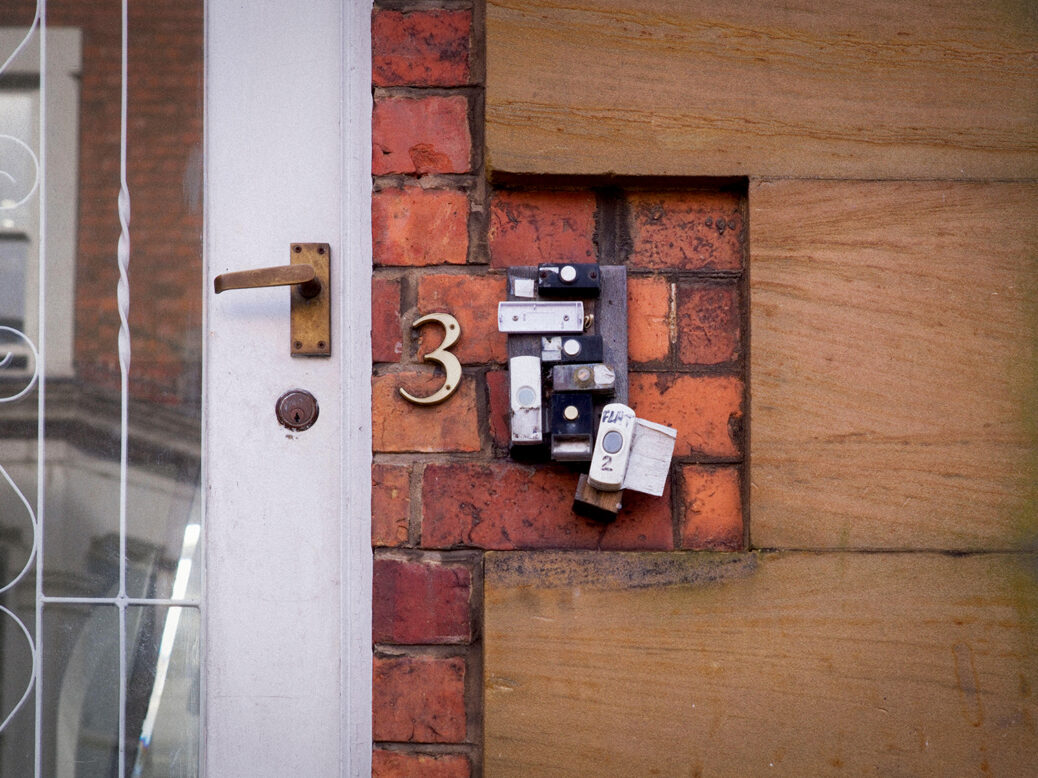
In neighbourhood group chats across Britain, the HMO (House in Multiple Occupation, or housing with more than three occupants who aren’t from the same family) is the local villain of choice. For those living inside, a labelled shelf in the fridge and a strict bathroom rota are daily irritants. For their neighbours, overflowing bins, strangers ringing doorbells in the early hours, crowded parking spaces and a rotating cast of young professionals on rolling contracts are sources of endless discontent.
Yet their number keeps ticking up relentlessly. If you want a vision of the future, imagine countless British streets where every home has been sliced and diced by landlords into multiple flats. Licence applications across England rose 40 per cent between 2018 and 2024, from 41,162 to 57,725. West Lancashire alone saw a 900 per cent increase.
The Times’ conclusion this week is that landlords have been squeezed by higher taxes and tightening regulation, and are switching to HMOs to protect their margins. This is rational, as the average landlord with a standard family tenancy might expect around £60,000 a year. The same property, converted into an HMO, can return closer to £120,000. The maths is not complicated.
The root cause, however, is less simple. Firstly, HMOs are, in fact, more regulated than standard private rental properties. They require mandatory licensing, have had minimum room sizes since 2018, and, in theory, are subject to proactive local authority inspections, even if enforcement is patchy.

Secondly, what has changed is not the burden of regulation but the size of the available market. Wider economic conditions and an inflated housing market mean tenants are now willing – or have been forced – to accept shared accommodation further up the income spectrum, further into their lives, and at far higher cost than before. Landlords have responded to that demand. More bedrooms mean more rental income, and more rent attracts a concentration of those drawn by yield rather than by any particular interest in being a good citizen landlord.
This is why the areas with a large rise in HMO applications are also those with localised housing crises. Edinburgh had the highest number of HMO applications in 2024, at 5,156. Oxford was second, Bristol third, Southwark fourth. These are among the most expensive, most constrained rental markets in the country – where graduate retention, population growth and chronic undersupply have combined to push rents to levels that make a single-person tenancy unaffordable for most, while landlords can up costs accordingly.
Dwelling in a cramped flat with 5 strangers has historically been a rite of passage reserved for students and money-conscious recent graduates. Over the past decade, however, the number of over-65s searching for rooms in flat and house shares rose by 970 per cent. Meanwhile, only a third of adults currently in shared accommodation could afford to rent a property on their own, and just 12 per cent could afford to buy. Families are stuck too, with the 1.3m households on the social housing waiting list being pushed into private rented properties never designed for their needs.
Industry spokespeople have claimed that HMOs create “a sense of community and shared living that can help tackle the growing crisis of social isolation.” The six people eating separate meals in the same kitchen in Sandwell may feel differently.
The standard defence of HMOs – beyond a nebulous idea of “community” – is that they offer renters a cheaper entry point than solo letting. In the narrow sense, this is true. But the expansion of HMOs has not made renting more affordable; average room rents in London have still increased to around £985 a month, consuming close to half the net income of someone on a £30,000 salary – which has been estimated as the new minimum required to afford a room in shared accommodation at all. UK room rents have risen 28 per cent over five years. HMOs have not brought rents down insofar as morphed into the default of renting.
The conditions that produced all of this were built over decades. House prices have risen at twice the rate of wages over the past 20 years: in 2023, the average English home cost 8.6 times the average annual income, against 4.4 times in 1999. Real wages displayed no meaningful growth across the 2010s and early 2020s, the longest such stretch since the Victorian era, leaving only half of private renters any savings at all to put towards a deposit.
In parallel, the social housing stock that had once absorbed those priced out of ownership steadily decreased. Over two million homes have been privatised by Right to Buy since 1980. At the New Economics Foundation, we found that 41 per cent of them are now in the hands of private landlords. This was, in part, by design. The deregulation of the private rented sector in the late Eighties was explicitly intended to make property an attractive asset class for investors, and the buy-to-let mortgage – introduced in 1996 – drove up the private rented sector to more than double in size over the following two decades.
Before deregulation, private renters spent around 11 per cent of their income on rent; by 1993 that figure had climbed to 29 per cent, where it has broadly remained. The people who might have rented those homes at social rents are, in many cases, now paying double or more for an HMO room, in a property that was once designed to house a single family. At the same time, housebuilding has fallen, making the government’s 1.5 million home target seem rather unlikely.
Incoming regulation of the sector is welcome. The Renters’ Rights Act, which comes into force on 1 May, strengthens repair standards in the private rented sector and removes the no-fault eviction that has kept so many tenants silent about conditions they should not have to tolerate. Enforcement is improving too, with council inspections of HMOs up 83 per cent since 2018 and formal enforcement actions up 180 per cent.
However, tinkering doesn’t touch the arithmetic that made HMOs the rational outcome for a growing share of British adults. You cannot regulate a supply crisis out of existence. Until there are enough homes, at rents people can actually afford, more and more of Britain will eat dinner at a hob they share with strangers, and be assured this is their lifestyle choice.
[Further reading: Is Omaze too good to be true?]
Content from our partners



Related



Join the debate
Subscribe here to comment