“I am a Leninist. Lenin wasn’t afraid to dirty his hands. If you can get power, grab it”

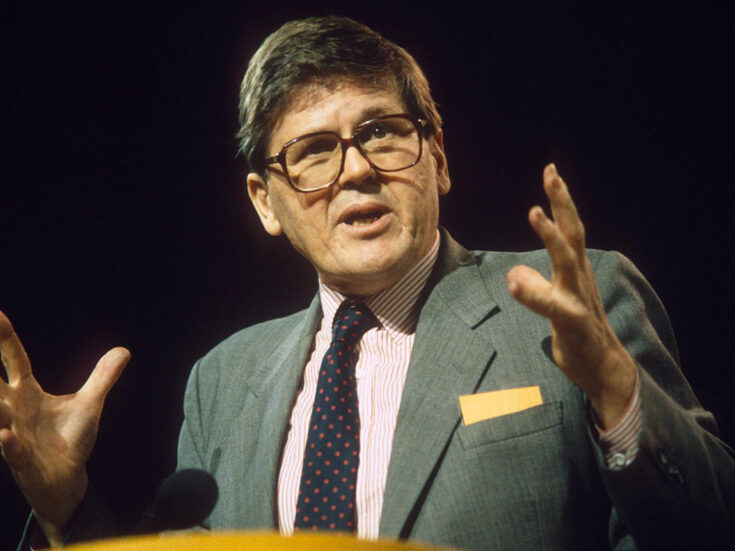
The eminent thinker Slavoj Žižek tells Jonathan Derbyshire why he rejects mainstream political theor

The Times Literary Supplement called him an "intellectual rock star". For the New York Times, he is the "Elvis of cultural theory". And the New Yorker, wittily conflating his unfashionably intransigent left-wing politics with his taste for Hollywood classics, has dubbed him "The Marx Brother".

Slavoj Žižek, the Slovenian philosopher and political theorist, happily colludes in these journalistic caricatures. His work routinely contains more jokes than is customary in academic political philosophy - his new book, First As Tragedy, Then As Farce, an analysis of the current global crisis, is no exception - and he has been the star of two documentary films, Žižek! and The Pervert's Guide to Cinema. In the former, he allowed himself to be filmed in bed, shirtless, expounding on the nature of philosophy. And in the latter, he navigates his way across California's Bodega Bay in a motor launch, in homage to Tippi Hedren in Alfred Hitchcock's The Birds. (Hitchcock, along with Lenin and the French psychoanalyst Jacques Lacan, is one of Žižek's heroes, and a frequent subject of his crypto-Marxist cultural analyses.)

All of which makes him sound like a benignly eccentric, mittel-European buffoon. (One American magazine profile observed that he speaks English at "high speed", in an accent rather like that of the character played by Andy Kaufman in the sitcom Taxi.) And yet, in the eyes of the critic Adam Kirsch, writing in the New Republic under the title "Deadly Jester", Žižek is nothing less than the "most dangerous philosopher in the west". Kirsch was indulging in hyperbole when he wrote that, but his description of Žižek does get at something important - that is, his contempt for mainstream political thought, an animus so complete as to lead him sometimes to appear to be "glorifying", as Kirsch put it, "totalitarianism and political violence".

Whether or not Kirsch's now notorious criticisms of Žižek were justified, it certainly is the case that the Slovene's avowedly "Leninist" provocations, and his hand-waving in the direction of the Jacobin Terror and Mao's Cultural Revolution, are intended to unsettle and to question the sort of liberalism that dominates political theory in the west - especially in the English-speaking world. The recent fruits of his prodigious output, including a book on violence and a defence of "lost causes", all tend in this direction.

When I spoke to Žižek on the telephone from New York, where he'd been giving a series of talks on the financial crisis and Barack Obama's healthcare plan, I asked him what relation he thought his work has to the mainstream of normative, liberal political theory done in British and American universities.

He took the example of arguably the most influential work of political philosophy written in English in the past 40 years, John Rawls's A Theory of Justice. Central to Rawls's argument in that book is something he calls the "difference principle", according to which inequalities in the distribution of goods can be justified so long as they benefit the worst off. In Žižek's view, "Rawls's model works on one fateful condition: that there is no resentment . . . Rawls doesn't take into account the irrationality of envy. In capitalist relations today, envy is crucial. Never underestimate the power of envy. Although Rawls and other egalitarian liberals want to be 'no-bullshit' analysts, the ultimate image of the human being on which their accounts are based is way too naive and utopian."

Žižek is equally unforgiving of those further to the left of Rawls. "I've noticed how many of the people who consider themselves to be more radical than the liberal standard do not work in political theory proper but, as it were, hide themselves as literary critics or philosophers. It's as if their radicalism is an excess which requires them to change genre."

But what's most significant about the academic left, in his view, is its abstract moralism, which he denounces as utopian, much as Marx and Engels denounced the early French socialists as utopian. "This excess of radicality concretely art­iculates itself in some kind of general moralistic outrage. You get a kind of abstract, moralistic politics in which you ­focus on groups which are obviously underprivileged - other races, gays and so on - and then you explode in all your moralistic rage. This has to do with what you might call our cultural, post-political capitalism, in which the most passionate struggles are cultural ones. A large majority of the left doesn't question liberal democracy and capitalism as such. In the same way that when we were young we wanted socialism with a human face, what a large part of today's left want is capitalism with a human face."

It's precisely Žižek's readiness to question the "liberal democracy" to which he thinks many western leftists are prem­aturely reconciled that so unsettles his critics, Adam Kirsch included. He agrees when I suggest that he is not especially interested in the questions about the nature of legitimate political authority that concern most mainstream theorists. "Yes, legitimate power is not the topic I focus on. I don't despise democracy, but for me, although democracy, in the formal sense, is precious, it is not in itself a measure of ­ult­imate truth or authenticity. We shouldn't fetishise democracy - after all, you can have democratic elections where the majority votes for a rightist populist, and when it does, you have the right to treat the government as illegitimate. I don't think that this formal electoral procedure should be taken as equalling legitimacy."

Žižek attributes this insight to Marx. And in the wake of the financial crisis, which has not yet elicited any serious "counter-proposals" from the left, beyond the sort of warmed-over Keynes-ianism propounded by economists such as Paul Krugman and Joseph Stiglitz, he thinks we need Marx more than ever. "Despite the crisis, we have not had a serious leftist attempt to deal with what in old Marxist terms we called the 'critique of political economy'. The basic Marxist insight was that politics is not just politics - politics is in the economy. We should rehabilitate this."

What implications does such an account have for the actual practice of politics? "I am a Leninist. Lenin wasn't afraid to dirty his hands. If you can get power, grab it. Do whatever is possible. This is why I support Obama. I think the battle he is fighting now over healthcare is extremely important, because it concerns the very core of the ruling ideology. The core of the campaign against Obama is freedom of choice. And the lesson, if he wins, is that freedom of choice is certainly something beautiful, but that it only works against a background of regulations, ethical presuppositions, economic conditions and so on. My position isn't that we should sit down and wait for some big revolution to come. We have to engage wherever we can. If Obama wins his battle over healthcare, if some kind of blow can be struck against the ideology of freedom of choice, it will have been a victory worth fighting for."

And it is the job of philosophers and intellectuals to engage in that ideological struggle. In other words, theory matters. Žižek tells me a story about a friend of his going to meet Noam Chomsky, the "most influential public intellectual" in America. "My friend told me Chomsky said something very sad. He said that today we don't need theory. All we need to do is tell people, empirically, what is going on. Here, I violently disagree: facts are facts, and they are precious, but they can work in this way or that. Facts alone are not enough. You have to change the ideological background.
“I'm sorry," Žižek says, ending the anecdote with a cackle. "I'm an old-fashioned continental European. Theory is sacred and we need it more than ever."

“First As Tragedy, Then As Farce" by Slavoj Žižek is published by Verso (£7.99)

Jonathan Derbyshire is culture editor of the New Statesman.

Read a full transcript of the interview .

13 comments

123Thesomething123's picture

No, there is a genuine difference between what Chomsky refers to as 'theory' and what zizek does. Zizek could be more specific, but essentially Chomsky believes theory should be applied pragmatically - in specific fashion to specific problems. Zizek believes that this undermines our ability to fight a system because it functions within the same indeological framework.

I do appreciate your post, however. It could have been clarified.

123Thesomething123's picture

No, there is a genuine difference between what Chomsky refers to as 'theory' and what zizek does. Zizek could be more specific, but essentially Chomsky believes theory should be applied pragmatically - in specific fashion to specific problems. Zizek believes that this undermines our ability to fight a system because it functions within the same indeological framework.

I do appreciate your post, however. It could have been clarified.

Camus's picture

'Lenin was right' about what? Seems to me that Zizak is playing his old game of provocation Isn't it true that all power-seekers whoever they may be fail? Or can you name one leader who achieved what he said he would do?

Vivat's picture

"crypto-Marxist cultural analyses"??

I'm fairly sure 'crypto-Marxist' means someone that is Marxist or making a Marxist analysis, but trying to hide it.

I'm also fairly sure Žižek isn't trying to hide it.

Red Shift's picture

Abstract categories can be dangerous!

And its hardly socialised medicine they're introducing in America. To see if it makes any difference we'll have to check the mortality and morbidity figures: Facts in fact.

Luddite.'s picture

Lenin good god the left do really need to move on.

pbecke's picture

'Žižek tells me a story about a friend of his going to meet Noam Chomsky, the "most influential public intellectual" in America. "My friend told me Chomsky said something very sad. He said that today we don't need theory. All we need to do is tell people, empirically, what is going on. Here, I violently disagree: facts are facts, and they are precious, but they can work in this way or that. Facts alone are not enough. You have to change the ideological background.

“I'm sorry," Žižek says, ending the anecdote with a cackle. "I'm an old-fashioned continental European. Theory is sacred and we need it more than ever."'

Keynes was evidently in full agreement, although, it sounds as if, Chomsky, like himself, and indeed, Nassim Taleb, may have had the absurdly inappropriate invocation of mathematical models at the back of his mind, as the bugbear of economics. As Keynes put it:

"Too large a proportion of recent "mathematical" economics are mere concoctions, as imprecise as the initial assumptions they rest on, which allow the author to lose sight of the complexities and interdependencies of the real world in a maze of pretentious and unhelpful symbols."

Essentially, economics is about human greed and hence grows organically from the limited purview of the human spirit blinded by its worldly appetites. It can never be a discretely autonomous sphere of study, since it is fretted through with considerations of morality of one kind or another, whether or not they are recognised.

Charlie Brooker's picture

Zizek seems bent on misquoting Chomsky. (This is the second time in a matter of weeks - previously he claimed that Chomsky labelled Obama as "a white man blackened by a couple of hours in the sun" - somehow, inexplicably confusing Chomsky with Berlusconi).

I'm sure this is unintentional - or at least I can't imagine why Zizek would do this intentionally - but it unfortunately indicates a certain laziness on his part. There is an ample record, in print, of Chomsky's views.

If anyone looks at this record for even a minute they will easily discover that Chomsky has never said "we don't need theory." His views on the matter are perfectly clear, as expressed in this interview:

"QUESTION: Do you think intellectuals should free themselves from theory, from visions, such as Zapatistas, and Marcos?

CHOMSKY: Marcos's own thoughts were interesting, but there is no such thing as an "absence of theory", I mean, you always have a commitment to some set of beliefs, goals and visions and so on, or to some kind
of analyses of society. That is true whether you are expressing your views on torture, or freedom of speech, or in fact any issue beyond the most utterly superficial."

Zizeks own views are a matter for himself, but one hopes in the future he is a little more careful when describing the views of others.

antelope1's picture

I think this Chomsky text explains the view which Zizek
is opposing:
http://www.cscs.umich.edu/~crshalizi/chomsky-on-
postmodernism.html

But, then again, I think Zizek and Chomsky might
agree on more than either of them would admit. It wold
be great to see the two in conversation that's for sure.

antelope1's picture

Also, this quote from the full transcript shows in what way Zizek means we need theory in a way in which Chomsky opposes: "Many leftists say: we know what is wrong - capitalism, imperialism. We just don't know how to mobilise people; the problem is political. But I think we don't know what's going on."

Latest tweets