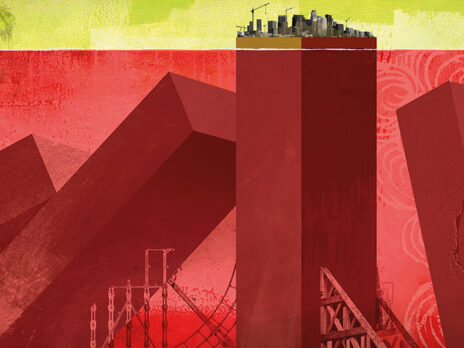
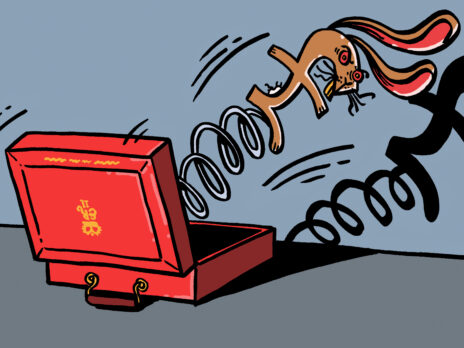
Politics 7 May 2013 Student loans in Britain are basically taxes – and universities want to raise them Pulling the rug out from under students. Print HTML The Guardian's Anna Fazackerley reports that there is a growing push on the part of university vice-chancellors to increase the speed with which students pay back their loans. She writes: Backing them up is Nicholas Barr, professor of public economics at the London School of Economics and one of the leading experts on student loans. This, he argues, is a no-brainer. At present, graduates have to start repaying their loans when they earn £21,000 or more, but Barr is adamant that this should drop to £18,000. "The problem with the current arrangement is that the repayment threshold is so high that far too many graduates do not repay the loan in full," he says. "Of course, the National Union of Students and some posturing politicians would say lowering it to £18,000 was hitting graduates, but let's get this in proportion. It would only add £22.50 a month to repayments." He adds: "The purpose of student loans isn't to help the poor – there are much better ways of doing that. Politicians claiming that they have changed loan repayments to help poor people are just playing political games, or showing total economic illiteracy." The problem with hurling around accusations of economic illiteracy is that Barr is using some sleight-of-hand himself. The tuition fee system is, from the point of view of the student, an odd beast (it's almost as odd from the point of view of the university, but that's not the end under discussion here). Although it's sold as a "loan", it actually bears very few similarities with any other borrowing a graduate might do throughout the course of their lives, for one major reason: the loan gets wiped out. Current graduates stop paying 30 years after they become eligible to repay; the lucky ones who took out loans between 2006/7 and 2012/13 stop paying even earlier. That, combined with the fact that the new loans charge interest rates 3 per cent above inflation – currently an eye-watering 6.6 per cent – means that a sizeable proportion of graduates will never pay off their loans. If you earn the UK average wage, of £26,500, from the year you graduate (and then get pay rises exactly in line with inflation), you will never pay it off. In fact, a few back-of-the-envelope scribbles show you need to earn almost £30,000 a year before you even start paying it down quicker than the interest increases it. And you'd need a wage of over £36,000 before you actually pay it off in the 30 year time limit. Of course, most people's lives involve them earning more the older they get, so the rough calculations don't bear all that much relation to the real world. But it's enough to point out one thing: lowering the threshold at which people start "repaying" their loans doesn't mean they pay it off earlier; it means they pay more. That graduate on £26,500 for life would pay off a little under £15,000 of their £27,000 loan if the threshold was at £21,000, but they'd pay off almost £23,000 over the following 30 years if the threshold was dropped back down to £18,000. All of which is to say that for a vast number of graduates, the "student loan repayment" is a tax, plain and simple. And that's OK (sort of): if you're going to make people pay for education, doing it through a tax isn't much different to doing it through a warped state-backed loan. But it does mean that mucking around with the thresholds like this isn't "hastening repayment", it's a tax increase on graduates. The idea of a "generational conflict" comes up relatively frequently around conflicts like this, and one reason why the young are often on the losing side is that older Brits have the language of expectations and promises on their side; so it's "fair" to cut benefits in a way pensions never would be, because the elderly were promised those pensions. But this is one where the promises were made to the young. When today's students went to university, they were promised that they would pay back their loans with income over £21,000, and that that would be uprated with inflation. Breaking that promise to deal with the fact that the government didn't cost its higher education plans properly would be disastrous. How are vice-chancellors dealing with that? Subterfuge: The head of one modern university says: "There is quite a lot of evidence that students and parents don't really understand the new financial system, so you could play around with it quite easily." If there's a better justification for teaching yourself the basics of finance, I haven't seen one. › Windows 8 has upset a lot of people Alex Hern is a technology reporter for the Guardian. He was formerly staff writer at the New Statesman. You should follow Alex on Twitter. More Related articles The Autumn Statement was positive, despite the Treasury's pessimism The cost of Brexit: a decade of slower export growth and you'll be £1,000 worse off a year Philip Hammond’s sleight of hand Subscription offer 12 issues for £12 + FREE book LEARN MORE Close This week’s magazine
Show Hide image Brexit 29 November 2016 Ken Clarke: Angela Merkel is western democracy’s last hope The former chancellor on how anger defines modern politics, and why Jeremy Corbyn makes him nostalgic for his youth. Print HTML Ken Clarke is running late. Backstage at the Cambridge Literary Festival, where the former chancellor is due to speak shortly, his publicist is keeping a watchful eye on the door. Just as watches start to be glanced at, the famously loose-tongued Tory arrives and takes a seat, proclaiming that we have loads of time. He seems relaxed, his suit is loose and slightly creased, and his greying hair flops over his somewhat florid face. His eyes look puffy and slightly tired – the only obvious sign that at 76, retirement is not far off. Despite his laconic demeanour, the former chancellor says he oscillates between being “angry and depressed at the appalling state politics in the UK has descended into”. After 46 years as an MP for the Nottinghamshire constituency of Rushcliffe, he will not stand for re-election in 2020. His decision was announced in mid-June, just before the Brexit vote. Europe has in many ways defined his long career. He feels sharply the irony that the cause that drew him into politics was the 1961 campaign by Harold Macmillan's government for Britain to gain access to the European Economic Community, as it was then. Now, he will be bidding farewell to Parliament while the country prepares to exit the European Union. “The only consolation I have is that the UK has derived enormous benefits for being in the EU. . . I hope future generations don’t suffer too much with it coming to an end.” Clarke is here to promote his memoir, A Kind of Blue, for which he received £430,000 – a record for a British politician who has not served as prime minister. The apt title reflects his own status as a Tory maverick as well as his love of jazz hero Miles Davis. He seems to enjoy the attention that book promotion brings – joking with the former Labour home secretary Charles Clarke, who happens also to be speaking at the festival. Beneath his good humour lies a deep unease about the rise of populist, far-right forces that are rampaging through western liberal democracies from the US to France. “It’s resistance to change, resistance to the modern world and a desire for simple solutions to very complicated political problems,” he says. “The manner in which the political debate is publicised has changed, the mass media is hysterical and competitive and social media is taking over with short soundbites. It has thrown politics into complete confusion.” Although he cites coverage of the New Statesman’s recent interview with Tony Blair as an example of media hysteria, he is positive about Blair’s intervention: “My understanding [of the interview] was that Tony only wants to play a part in trying to reform centre-left politics, and that’s a good thing . . . I want to see the sensible social democrats win the argument in the Labour party.” Aware this might sound surprising, given that Labour are his political opponents, he justifies it by stressing the need for a credible opposition capable of putting pressure on the government. Jeremy Corbyn might make him “nostalgic for my youth when there were lots of Sixties lefties”, but it is clear he holds his leadership at least partly responsible for the “total collapse” of the Labour party, which has seen it lose “almost all of its traditional blue-collar base in the north and north midlands to reactionary, prejudiced, right-wing views”. He is equally scathing of Corbyn's praising of the late Fidel Castro as a “champion of social justice”, after news of the communist dictator's death broke late on Friday night. “[Castro] is a historical throwback to a form of simplistic ultra left-wing orthodoxy . . . He achieved some things in health and education but combined it with an extraordinary degree of cruelty and a denial of human rights.” Clarke still has one political hero left, though: the German Chancellor Angela Merkel, who recently declared she would run again for a fourth term in 2017. He describes her as the only politician succeeding in keeping the traditon of western liberal demcoracy alive. “She is head and shoulders the best politician the western world has produced in the last 10 to 20 years,” he says. If successful, the Christian Democrat would equal the record of her mentor, former chancellor Helmut Kohl, and provide some much-needed stability to European politics. Less of a hero to him is Theresa May, who he famously referred to as a “bloody difficult woman” in July during an off-camera conversation with Malcolm Rifkind, the former foreign secretary, which Sky News recorded. The clip caused a sensation. “I brought great joy to the nation,” he says, chuckling. “My son rang me up laughing his head off, and said it was the first time in my life I’d gone viral on YouTube.” Today, however, he expresses some sympathy for the tortuous political situation the Prime Minister finds herself in, saying she must have been “startled by the speed” at which she suddenly ascended to the role. He is prepared to give her time to prove that, “she has the remarkable political gifts which will be needed to get the politics of the UK back to some sort of sanity”. Later, during his talk in the historic debating chamber of the Cambridge Union, a more sentimental side slips out. His wife, Gillian, died 18 months ago. His book is dedicated to her. He rarely discusses his grief, preferring to keep that side of his life private. But when asked to recall his fondest memory of his student days at Cambridge University, he says simply meeting her. “Let me give a corny answer, it is going across to a girl at a [disco], picking her up, getting on quite well and staying married to her for over 50 years,” he says, his voice slightly trailing off, before he recovers, shakes his head, and pours his energy back into politics once more. Serena Kutchinsky is the digital editor of the New Statesman. More Related articles If you want a good deal out of Brexit, first, understand that there are other politicians in the EU than Angela Merkel Theresa May is making the same mistake that Syriza did Travelling to Pakistan, fighting face-blindness and getting cross with myself