
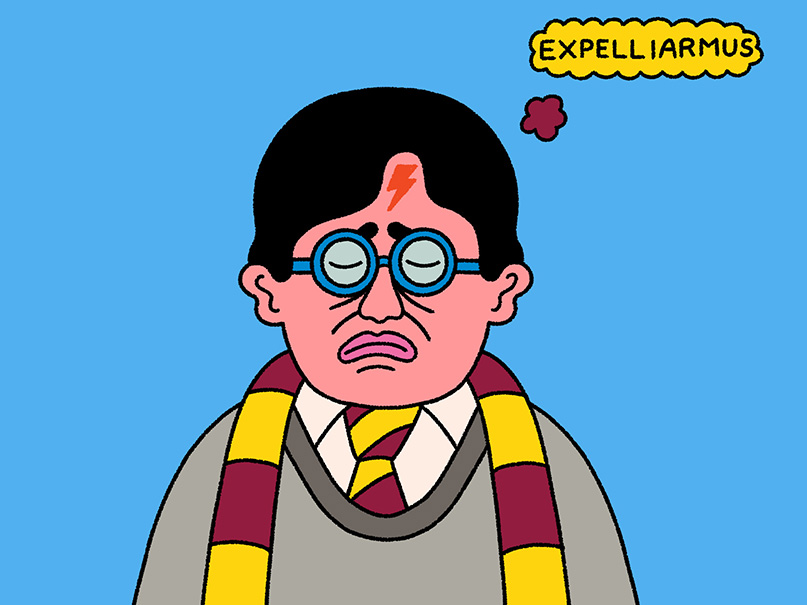
I have found one of the least magical places in England. It is Saturday afternoon and I am standing outside a giant warehouse on the side of an A-road, 20 minutes from Watford Junction Station, within earshot of the M25. The colour scheme of the car park is a testament to the vast gradations in the word grey. I look around and am immediately moved by the urge to punch William Blake in the face – where is our green and pleasant land? What mendacity.
But on the other side of the warehouse doors, once my bag has been searched and I have been frisked, I am promised something more – something that might arouse a patriotic smirk in even the most thin-lipped cynic. Once I get inside, away from this depressing car park, I will find mountains of paraphernalia, a monument to this nation’s most important export; evidence that British hegemony did not die with the British empire, but instead lasted all the way into the 21st century; proof that England provided the West with its modern moral vocabulary. I am, of course, at Warner Bros Studio Tour London – The Making of Harry Potter.
The final book in the series came out in 2007. The final film in the franchise was released in 2011. Not content with the story ending there, the enterprising minds behind Potter transformed the studio space into a sprawling walk-through exhibit the following year – on a busy day, 6,000 enthusiasts traipse through to inspect the props and the sets and the costumes, to learn how they transformed the 6ft 1in Robbie Coltrane into Hagrid the 8ft 6in half-giant, and Daniel Radcliffe into the most recognisable child in the world. Magicians never are supposed to reveal their secrets. Warner Bros stares this maxim right in the eye, and laughs.
The train to Hogwarts goes from Platform 9¾ in London’s King’s Cross. I am instead on the 14.54 LNWR service from London Euston. It takes me to Watford, where I wait in the drizzle for a shuttle service. There is an adult woman in a Slytherin robe standing beside me. Behind, a couple – one of whom was holding a wand. At least four people are vaping. I think someone needs to turn my inner child off and on again – the wonder hasn’t kicked in yet.

And then it arrives – not the wonder, but the purple double-decker “Knight Bus” (named after a minor plot point in Harry Potter and the Prisoner of Azkaban) to transport us from south-west Hertfordshire to the wizarding universe in JK Rowling’s imagination. When the theme music – you know, that tinkly, minor-key John Williams annoyance – starts playing over a tinny speaker as we bomb down the A41, I cannot help but laugh. This has the effect of making me the least popular person on the Knight Bus – the Potterverse is no joke to these people. An Irish family a few rows from me begins arguing about what Hogwarts House they might be sorted into, and whether they personally would have joined the student-organised anti-fascist militia group Dumbledore’s Army. Yes, yes, no, not sure, yes “if I was forced to”.
Inside (finally!) I get to work. First up, a huge dragon with milky cataracts suspended from the ceiling. If dragons were real – I am circumspect enough to know they are not – you might believe it was taxidermied. Which is to say, the dragon really is convincing. I walk through sets: the kitchen of the Burrow, where the impoverished but pure-blooded Weasley family live, the wizarding version of Britain’s fallen aristocracy; the Gryffindor common room, where I spent my childhood learning how Harry, Ron and Hermione forged the most magical bond of all (friendship); and 4 Privet Drive, home to the muggle Dursleys. With its linoleum, doilies, tassels and wallpaper, Privet Drive serves as Rowling’s verdict on England’s Daily Mail readers – that villainy resides in the souls of aspiring suburbanites more acutely than anywhere else.
But this is an irony-free zone. I glance down Platform 9¾ at the Hogwarts Express and see a small boy in a pointy hat, wizarding robes and Potter glasses inspecting the train’s wheelsets with the earnestness of a real locomotive engineer on an actual job. In Gringotts Wizarding Bank – not enough has been written about Harry Potter as an ode to 18th-century British mercantilism – I watch a mother and son gasp in astonishment at the marbled floors and vaulted ceilings. Buckbeak the animatronic hippogriff, a horse-falcon hybrid, is almost cute. Dobby the house elf is visceral, fleshy and insipid – huh, just like in the movies? Maybe I am starting to feel the wonder creeping up on me.
No. I resist, and maintain studied detachment. Harry Potter is a children’s franchise, an emotional and intellectual universe designed to be parsable for nine-year-olds. Though this is easy to forget at the Harry Potter studios given the huge numbers of childless adults also here. I listen to a man ask his wife if she would “like a picture with the Sword of Gryffindor”. And there are too many people well into midlife wearing Hogwarts scarves to count (Gryffindor most popular, Ravenclaw least). Arrested development may be a charge all too easy to levy, but I cannot help but detect several cases of it here in Diagon Alley. And down in the potions classroom. Or in the Forbidden Forest (scary, though, as those giant spiders are).
But here, on the outskirts of Watford, I am not just standing in an ugly warehouse full of fake owls and Quidditch merchandise, surrounded by awestruck children and credulous foreign tourists. This is an exhibition for films about wizards, yes, but it is also a monument to the very last piece of British moral suasion, the country’s last lesson to the world. In Harry Potter, JK Rowling invented a new lexicon for fantasy fiction. With it, she beamed into the consciousnesses of the world a postwar Western ethical grammar: Harry Potter beats Voldemort because he is brave; Voldemort loses to Harry Potter because he is a Nazi; the rules-based order can resist even the most egregious attempts to thwart it; bad people lose to good ones. And all that.
Talk about magical thinking. This century is responsible for many things – making a mockery of Harry Potter’s metaphysics is not highest on the charge sheet. But it has happened. And so, as I peer into Dumbledore’s office and take pictures of Hagrid’s hut (very quaint, not to be sniffed at), I want to grab the merry passers-by by their shoulders and shake them out of it. Don’t you SEE? This tour is not proof of Britain’s sustained vast soft power, but a fossil of it. A mausoleum. “Let not England forget her precedence of teaching nations how to live,” said Milton in the 17th century. In 2026 it is not clear what England would even say, or if anyone would listen. Whether delivered by a boy wizard or not.
I am becoming swivel-eyed, hysterical, so I leave, corralled through the gift shop. There are robes, quills, owls, cups, trunks, hats, scarves, pieces of parchment, jewelry, wands, pens and a vast array of other destined-for-landfill tat. And then, I am spat out again into that car park on the side of the M25. Everyone is vaping. Everyone looks too serene. But the liberal centrism and Western unipolarity of Potterland is as unreal now as the flying broomsticks and portkeys and Latinate spells. We are back on the Knight Bus. Watford Junction awaits. The theme tune plays – there are still too many adults here for comfort. It was a worthwhile fantasy once. For children.
[Further reading: Chess is fiction’s favourite metaphor]
Content from our partners



Related
This article appears in the 28 Jan 2026 issue of the New Statesman, How we escape Trump
Join the debate
Subscribe here to commentWhat a miserable piece of writing. If you don’t like Harry Potter (and you are perfectly entitled not to) don’t complain about Harry Potter. The “theme park” is the studio. Film studios look like warehouses. There’s not a lot you can do about that. Likewise, if you visit in January it’s likely to be grey and damp. Classist observations about people vaping just identifies you as a bit of a miserable git.
okay. harry potter sucks because its creator and author is a terf shithead who will die unconscionably wealthy AND also somehow fucking miserable. that better?
Loved reading this