
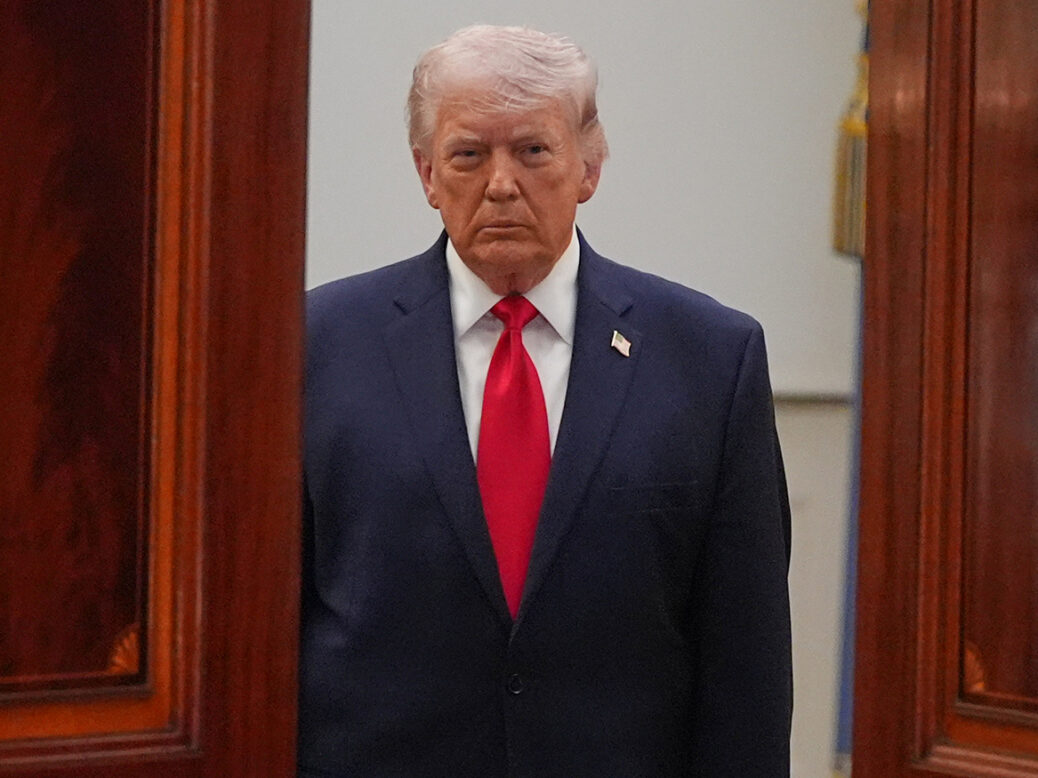
Donald Trump’s latest comments on the war in Iran – the one that he started in February alongside Benjamin Netanyahu – raise yet more questions about the president’s grasp of global politics. In a broadcast to the American people, he claimed that it is now up to Britain, and other non-combatant countries, to sort out the mess in the Strait of Hormuz. He has also suggested that the US could withdraw from Nato.
It is yet another blow in a Brit- and Euro-bashing campaign by key US administration figures as they rage against the consequences of their actions. Last month the American vice-president, JD Vance, reassured angry US voters that European countries were “suffering more than we are”.
This, most likely, won’t play out well for British politicians who have previously enjoyed basking in the Mar-a-Lago limelight. Already, something is happening. In polls of Britain’s parliamentary voting intention, Reform remain in first place. But the party has experienced a measurable dip over the past two months that is now consistent enough to be described as more than simply a blip, anomaly or fluke.
In a poll of polls put together by Politico, Reform has fallen from 29 per cent in late January to 25 per cent at the end of March. The party still has a clear lead, though the electoral implications of those numbers are quite different. Under first past the post, 29 or 30 per cent might be enough to break the traditional Labour-Tory duopoly and win a plurality of seats in the House of Commons at a general election. Twenty-five per cent would be enough to nuke the Conservatives but still come out with only a few dozen seats (by way of comparison, in 1983 the SDP won 25.4 per cent of the vote and got just 23 seats).

The war in Iran goes some way to explaining this dip in popularity. In early March, defence and security rose to become the third most important issue to voters, according to YouGov. The economy and immigration were neck and neck for most of 2025. No longer. The economy is now the most important issue for voters by ten points as the energy-price shock starts to be felt by ordinary people in their daily lives. And Keir Starmer has used every opportunity to remind voters that Nigel Farage – who has been a close ally of Trump for a decade – was initially enthusiastic about the war. While he is still deeply unpopular, the Prime Minister’s personal approval ratings have improved (albeit marginally) since early March. All of the indications so far are that the war is changing British public attitudes, and not to Reform’s benefit.
This piece first appeared in the Morning Call newsletter; receive it every morning by subscribing on Substack here
[Further reading: Trump’s dead-end war]
Content from our partners



Related


Join the debate
Subscribe here to comment