
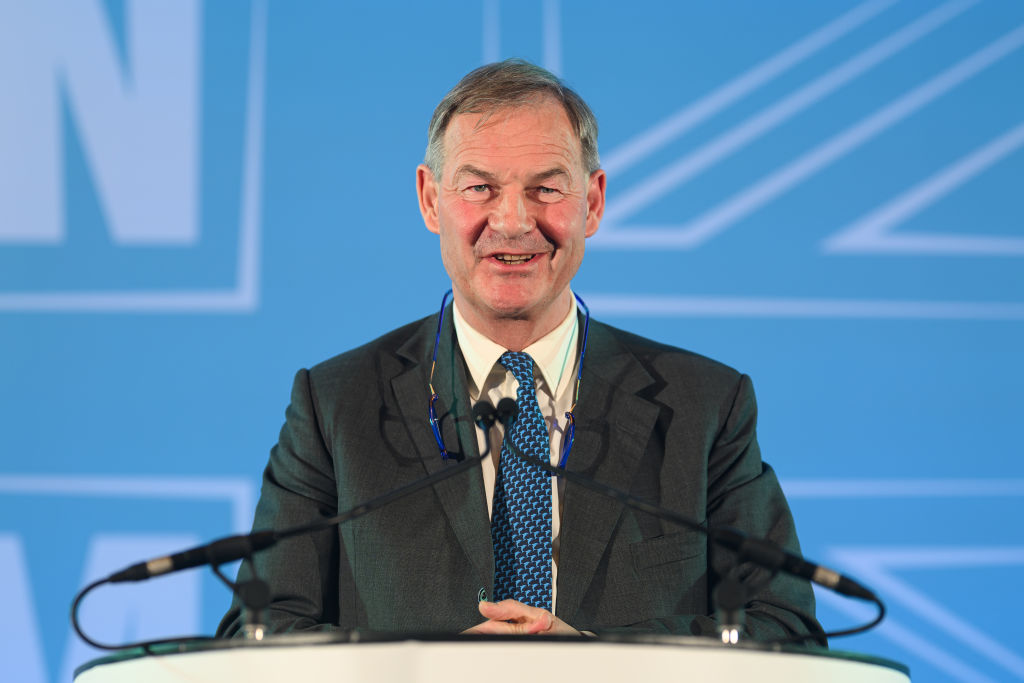
In February, Rupert Lowe announced that his pressure group Restore Britain would formally become a political party. Within a few weeks it claimed to have over 100,000 registered members. It has one MP, no local associations, and a platform designed to appeal almost exclusively to those who feel Nigel Farage has lost his edge. What it does have is a large and energetic social media following, which in 2026 might be all a political party needs.
Labour spent much of February consumed by a procedural row over whether Andy Burnham could stand in a by-election. The answer depended on the views of the party’s National Executive Committee, a body made up of assorted representatives from trade unions, constituency parties and socialist societies. In the end, that machinery ground on, and Burnham was mangled by it.
Both Labour and Restore Britain are, in the language of British democracy, political parties. It’s not obvious that they have anything else in common.
Political competition in Britain has always been shaped by the society sitting beneath it. The postwar system that came to define modern British politics reflected this with unusual clarity. Labour was created to represent the industrial working class and the Conservatives came to represent everyone else. That sharp class divide produced a distinctive set of political institutions – mass memberships, local associations, seaside party conferences, stable electoral coalitions – that came to define what a political party was supposed to look like.

And for decades this form of political competition worked. In the 1950s, the Conservative Party alone had nearly three million members. Constituency associations were serious local institutions, embedded in the social fabric of the communities they represented. To join a political party was not an act of consumer choice but an expression of identity, a statement about who you were, where you came from, and which side of the fundamental dividing line of British life you stood on. The party structure mirrored the class structure. Each reinforced the other.
Over time, these foundations weakened. Britain’s postwar industrial economy declined, class identities loosened and new fault lines – immigration, nationalism, education – began to cut across the old dividing lines rather than along them.
At the 2024 election, for the first time in its history, Labour performed better with managers than with manual workers. The class system that underpinned British politics has gone, replaced not by a new alignment but something more like an absence, a fragmented, volatile social order that no longer provides stable foundations for political life. The old parties have failed to respond, weighed down by the very institutions that once made them formidable. This is the “zombie era”: an old political order collapsing, its shell still in place.
Labour is in many ways the most exposed to this new order, an organisation explicitly designed for a world that no longer exists. The trade union block votes, the Constituency Labour Parties, the laborious internal machinery were all built to represent an industrial working class that barely exists and certainly no longer votes Labour. But the Conservatives’ supposed flexibility has hardly helped them, as they’ve lurched between electoral coalitions for more than a decade.
Against these incumbents, a new kind of political organisation has emerged. As with much of 21st century British politics, Nigel Farage is its pioneer. Over the past decade he has moved from one shell of a political party to another, finally perfecting the form with Reform UK: a party initially set up as a literal corporation, run by one man, and built almost entirely around a single issue. Reform’s social roots are, at present, limited to a branded pub.
The Greens have arrived at a similar destination by a different route. Zack Polanski has hijacked a legacy institution and repurposed it, pivoting the Greens away from their foundational environmentalism to fill the gap left by the Corbyn-era Labour Party. Farage and Polanski share a method, not an ideology: both understood how social media had lowered the barriers to political organisation, making it possible to build a mass following without anything in the way of organisational infrastructure.
Both have amassed huge memberships. But what does party membership even mean in 2026? Not much more than paying a few pounds and sharing something on TikTok. British politics has become a landscape of pop-up parties, each representing an ever narrower slice of the electorate.
Social media may have lowered the barriers to political organisation, but AI is removing them entirely. Until recently, even the most stripped-back of political campaigns still needed some human infrastructure – people to draft policy, manage communications, run a campaign. That constraint is disappearing. An AI model can read a government data release, draft a response and circulate a press release before a legacy party has scheduled the meeting to discuss.
Some campaigners are already going further, using AI-generated “synthetic” audiences to test messages and model public opinion. An artificial room full of ‘Stevenage Women’ can be created in seconds. The machinery of a political party is becoming something one person can run from a kitchen table.
This is a description of what’s already beginning to happen, not some sort of wild futurism. The barriers that once made building a political party so difficult – money, expertise, sheer human bodies – are falling away. Very soon we will live in a world where a single person can stand up a political campaign with nothing more than a social media account and an AI subscription.
The zombie era of British politics will not last forever. But what comes next is not a return to the stable, socially rooted party system of the postwar period. The same technology that allowed Farage to build a mass party from almost nothing continues to accelerate. The barriers to political organisation are still falling.
The result is a politics of permanent fragmentation, where parties form and dissolve around issues, personalities and viral moments, is not a passing phase. It is the direction of travel, and there is no obvious force that might reverse it.
Content from our partners

Related
Join the debate
Subscribe here to comment