
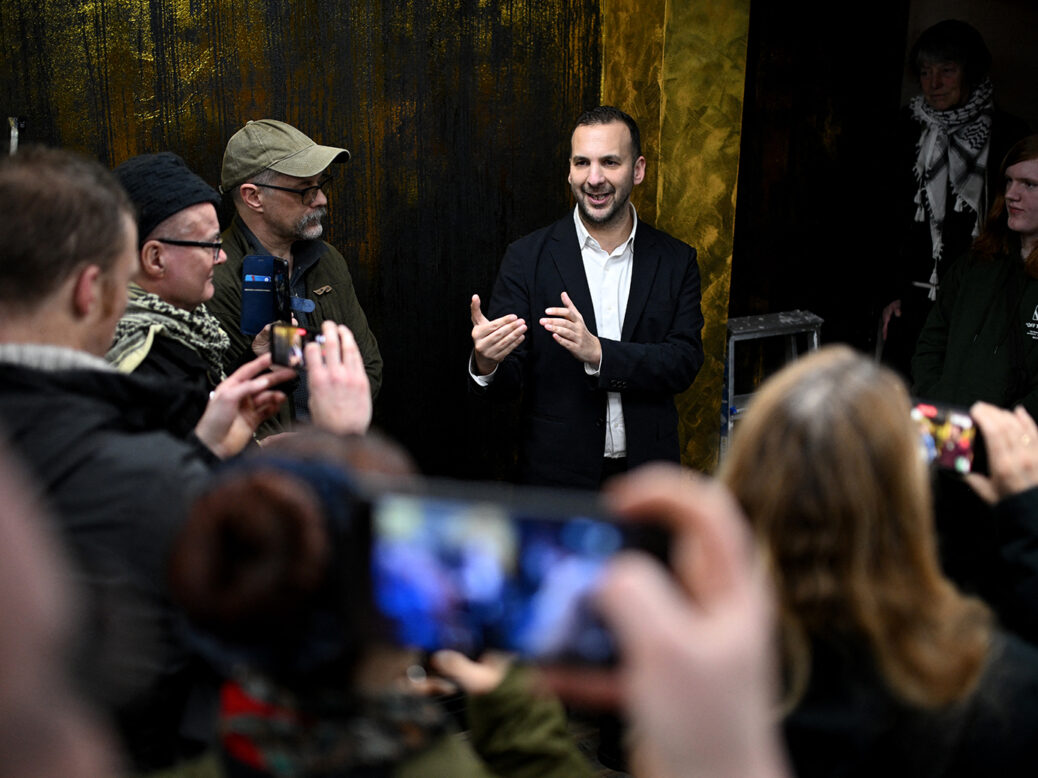
How green are Green voters? Zack Polanski’s party has enjoyed a surge in the polls in recent months, translating into its by-election victory in Gorton and Denton. But will success come with compromise?
New polling by Merlin Strategy on behalf of Looking for Growth suggests that a significant portion of the party’s voters are open to policies long seen as incompatible with its environmental mission. More Green voters support drilling in the North Sea (38 per cent) than oppose it (33 per cent), and 29 per cent of the party’s voters support fracking in principle. Even when asked about fracking near where they live, opinion is split rather than emphatically hostile.
Whether Britain should bring back fracking was one of the defining political questions of the early 2010s. Backed by elements of the Conservative government and many Conservative councils, it initially had tentative public support. But by 2015 opinion had hardened. A clear majority were against. So much so that by 2022 the Labour Party felt confident committing to a ban.
Now, though, in the wake of renewed pressure on energy prices, opinion appears to be shifting again.

On drilling for oil in the North Sea, Britons are supportive by 57 per cent to 15 per cent against. The concept of fracking has the support of 41 per cent to 30 per cent opposed. And when voters are asked about fracking near where they live, opinion is not emphatically against. In fact, it is split – 36 per cent in favour to 35 per cent opposed.
Compared to surveys from more than a decade ago, that local figure stands out. It points to a softening in resistance to change on the doorstep. Anything to cut costs, anything to offer some relief – that is where public sentiment now sits.
But it is the Green numbers that are most telling. They show that this is not just a shift among the usual voters, but something broader. Even among those most associated with environmental opposition, there is a willingness – however tentative – to reconsider.
What does that tell us? A few things. There is, clearly, a collective exhaustion with the high cost of living, such that even local fracking is not a non-starter for more than a third of the country. But more than that, it says something about the Greens themselves.
They are no longer just an environmental party with a tightly defined, ideologically consistent base. With a larger share of the electorate behind them, their voters are more diverse, more economically driven and less singular in focus. The appeal is less all things green, and more a broader, left-leaning, protest-oriented politics – Labour-adjacent, but distinct.
Polanski may talk of “eco-populism”. But the polling suggests something simpler underpinning it. Green voters are not immune to the same pressures as everyone else. And as those pressures mount, even long-held positions begin to soften.
[Further reading: Zack Polanski parks his tanks on Labour’s lawn]
Content from our partners



Related

Join the debate
Subscribe here to comment