
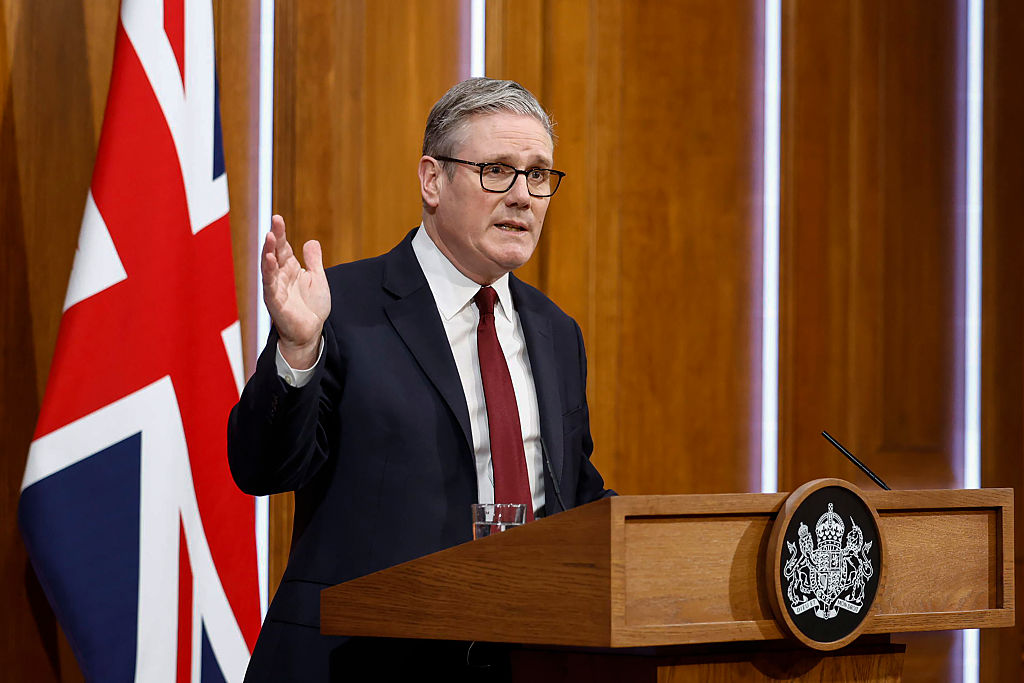
Between COBRA meetings and calls with world leaders, Keir Starmer appeared before the House of Commons Liaison Committee on Monday afternoon. Made up of the chairs of the various Commons select committees, the committee invites the Prime Minister to appear before it several times a year for 90-minute question-and-answer sessions in which the work of the government can be scrutinised.
Under Boris Johnson, Liaison Committee sessions were sometimes unpredictable affairs, with the then prime minister occasionally appearing underprepared on major parts of his own government’s programme.
On Monday, Starmer was, as expected, quite well briefed. He stumbled on a point of fact only once, when asked by committee chair Meg Hillier to name specifically the countries that would benefit from defensive protection linked to the UK’s decision to grant the United States use of some British military bases. It was otherwise a competent, if somewhat bland, performance. Starmer was largely able to close down difficult lines of questioning either by promising an answer at a later date, referring to ongoing reports or inquiries that limited what he could say, or committing to write to MPs with further information.
But here are four things we learned:

Too soon to tell on energy support
The PM said a COBRA meeting on Monday afternoon to discuss the government’s response to the economic challenge of the Iran war would feed into a statement by the Chancellor in the House of Commons on Tuesday. But he said it was too soon to tell what action may be needed when the current energy price cap expires in July. He was also asked about comments in The Sunday Times by his cost of living tsar Richard Walker, the former Iceland boss, calling for a “profits cap” to stop supposed price-gouging as a result of the war. Starmer said he had yet to discuss the proposals with Walker – making clear that a profits cap is not government policy – but that the government was still pondering “the appropriate approach” to price rises.
He remains angry about his inheritance
Starmer was repeatedly pressed on defence spending, an issue that is becoming something of an albatross around his neck. It was Starmer’s misfortune to come to power at a time when a historic lack of spending coincided with a series of unpredictable global conflicts and he takes every opportunity to blame the Conservative-led ministries of 2010-24 for the current desperate state of the armed services. He seems to be genuinely angry at the inheritance Labour was left by the previous government. At one point Starmer’s anger bubbled over after he was repeatedly criticised by Bernard Jenkin, the only Tory at Monday’s session, for as yet unfinished defence spending plans. When Jenkin said the PM’s attitude “smacks of enormous complacency”, Starmer snapped back in a raised voice: “this smacks of the fact that for years there was underinvestment by the last Government”.
He has learned to laugh about President Trump
The PM has been repeatedly criticised by Donald Trump since the pair’s public disagreement over the Iran war. The latest example was the President on Sunday reposting a UK Saturday Night Live skit which showed a dithering Starmer struggling to deal with the current international crisis. But the PM seems to be taking it on the chin. When asked, he said his position would not waver despite “pressure” from foreign leaders. He told the committee with a smirk: “I understand exactly what is going on.”
Reviews galore
My slightly facetious conclusion from Monday’s session was that, for Starmer, many of the most contested political issues in Britain today are the subject of an independent review which will report back “in the fullness of time” and that’s “really important” in ensuring that the government can make a decision “in due course”. A little unfair, perhaps. But he is prone to rely on the outsourcing of decision-making when faced with tough questions at these sessions.
In its first few months, the Labour government commissioned over 60 independent reviews, consultations and taskforces to generate recommendations on a range of policy areas. A number are still waiting to report back. While defenders would say these will generate better and more robust solutions to the country’s problems in the long run, the number of decisions which have been subcontracted to non-ministers have exacerbated criticisms within Labour that the government has been too slow and not political enough in its approach. This performance by Starmer did nothing to dispel that impression.
[Further reading: The Labour left is scheming]
Content from our partners


Related

Join the debate
Subscribe here to comment