
Last year I wrote that Reform had eaten the Tory recovery. A disproportionate number of the voters who backed Boris in 2019 and fled Rishi in 2024 stayed home, instead of casting a vote for another party. Since then, a lot of those voters have moved to Reform.
Last summer, if you polled non-voters who said they were certain to vote at the next election, almost half would plump for Reform. Now it’s more like one in three. According to the latest Find Out Now survey, 16 per cent would now vote Green, up 12 points on last year. Yet the number of previous non-voters who say they are sure to vote has not changed. This raises the question: might the Greens be taking Reform votes?
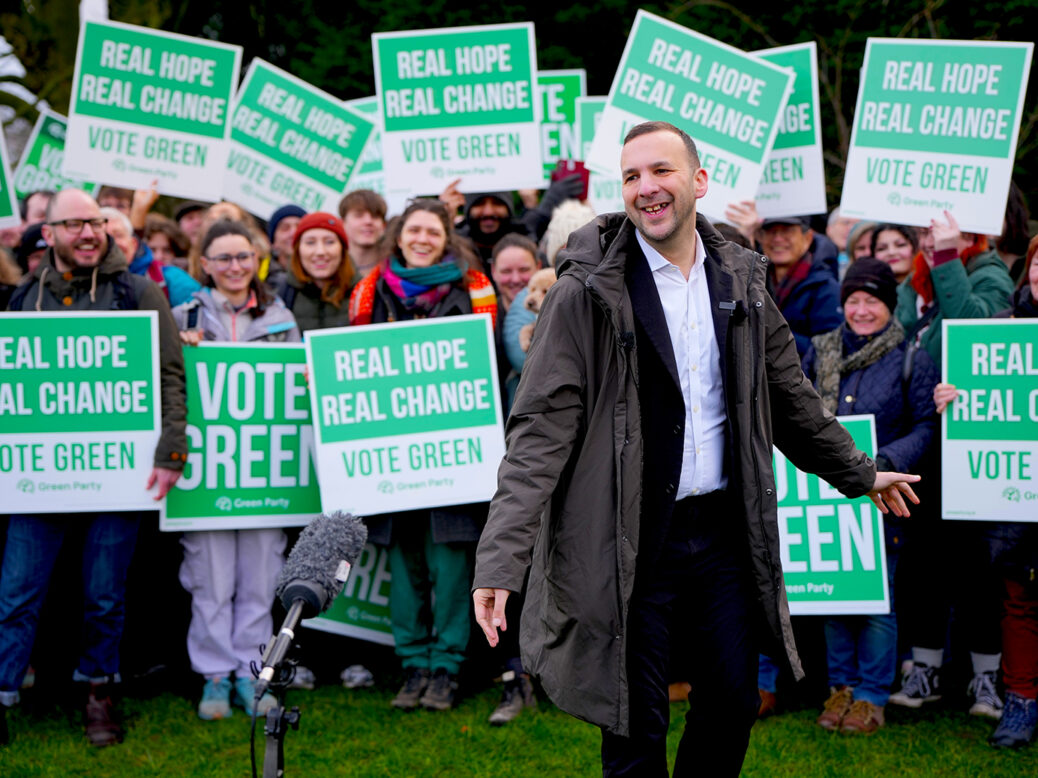
The Green surge, prematurely declared in 2015, now realised a decade later, led to a shock win in the Gorton and Denton by-election. Many commentators have raised the fact that the western side of the seat has a high population of Muslims, a group who are already supportive of the Greens. But organisers at the count told me that in Denton, a more white working-class area, Labour wasn’t in clear second place after Reform. In fact, Labour was neck and neck with, if not behind, the Greens.
For Labour, the implications could not be more severe. Their core vote is splintering across the country. The Greens are a clear second in London, four points off first place. In parts of the north, Labour is in third place. Across the nation as a whole, one YouGov poll this week put the Greens ahead of Labour by five percentage points. According to Britain Elects, Labour’s lead over the Greens is an insignificant two. It’s been narrowing for weeks, and it’s likely to narrow further.

The local elections in May will put the Greens on the front foot. In London, councils like Hackney, Newham, Islington and others could be won by the Greens. Green activists are also feeling hopeful about the chances of their mayoral candidate for Hackney, Zoë Garbett.
These local elections, though somewhat unrepresentative of the nation as a whole, are important for the Green Party narrative. After Reform won the Runcorn and Helsby by-election, and made some gains in the north and middle of England, the party’s poll ratings surged from an average of 25 per cent to 30. There has not since been any doubt about which is the most popular party in the country.
If Greens do well in May, they may become the first-choice option for anyone looking to keep out Reform. But could they also take prospective Reform votes as well? Some voters are looking more to Shake Things Up than pursue a necessarily right or left platform. They may see little difference in a Green or Reform vote. There are more of these voters than make the eye, not least given a not insubstantial number of Green voters would prefer Nigel Farage to Keir Starmer in No 10.
[Further reading: Left populism is here to stay]
Content from our partners



Related



Join the debate
Subscribe here to comment