
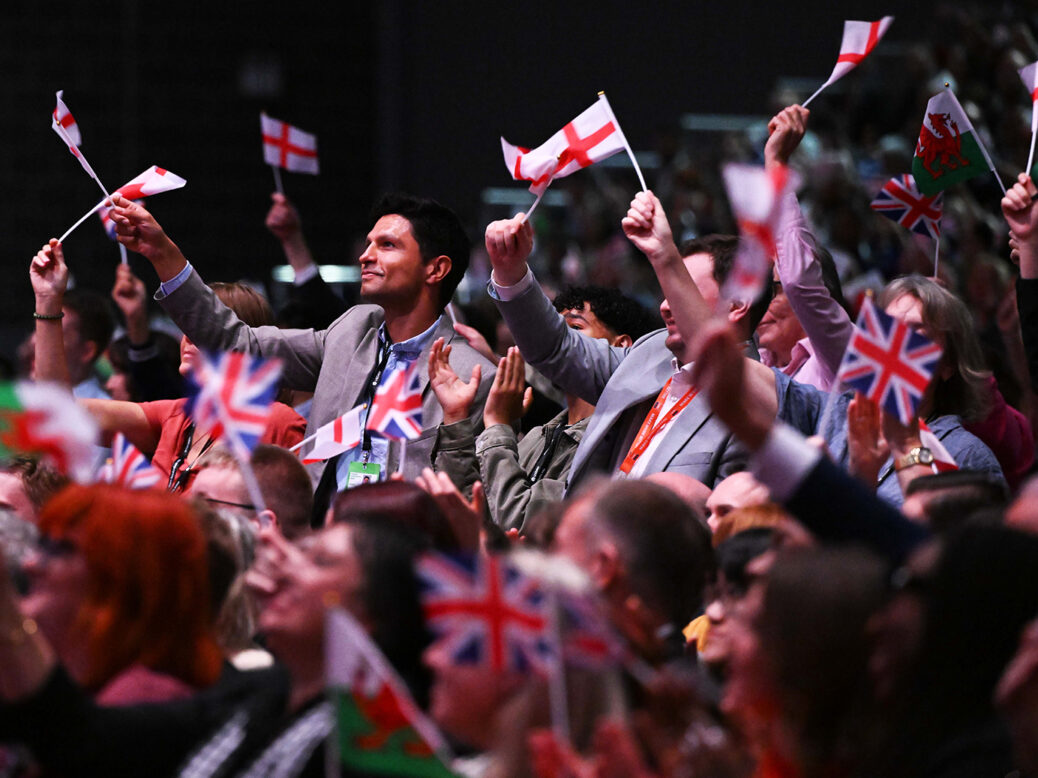
Missed in the conference hall – for the cheering was too loud (literally, delegates said they struggled to hear bits) – was Keir Starmer’s appeal to Conservative voters.
Though with scant reference to the actual Conservative Party in his speech (mentioned only four times, compared to double that for Reform), what words he did have mocked them for their seeming late-in-the-day image evolution to avoid extinction.
“I don’t know if they [ever] believed in grievance politics, but maybe they do now…”
That, before a peroration on flags and national identity, was a pitch. It was a signal to voters that the Tory party is not what it used to be. And, subliminally, that Labour also is not what it used to be.
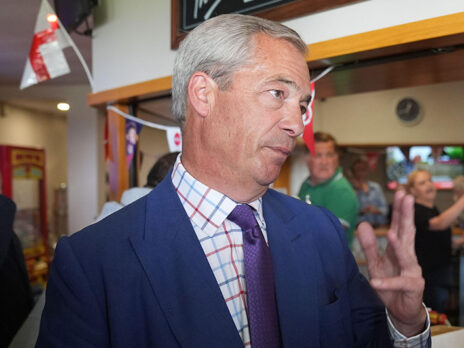
Aimed at opposing Nigel Farage more than Kemi Badenoch, Starmer’s speech – and now clear strategy – admittedly read the mood of the nation. The opposition is Reform, not the Conservatives. And that Conservative voters can now be up for grabs.
The data varies. But the long and short of it is that between four in ten and half of the 2024 Tory base will countenance voting Reform to kick Labour out at the next election. That’s a bulwark of votes who may be elevating the Reform advance right now.
But in that data sits an underappreciated group of Tories who would rather Labour than Reform. They don’t show up in the headline numbers. They’re geographically concentrated. They’re affluent. And in this year’s conference speech, Starmer was eyeing them up.
Rewind back to May – the Runcorn and Helsby by-election, snatched from Labour’s hands by an insurgent Reform campaign. Majority: six votes.
When you drill down into which wards went where – using what data I’ve been able to glean from those at the count and through my own Britain Predicts modelling – amid the falling Labour seats, there was one maverick.
The Tory villages of Guilden Sutton and Mickle Trafford.
I don’t expect readers to know these villages. They’re quaint Cheshire country locales. Good pub lunches, good views. Worth a Sunday walk. And loyally Conservative in council contests.
In that by-election they voted Labour.
It formed part of a wider Labour strategy in the seat: to talk to, essentially, posh Tories and Tory-adjacent voters living similar conditions. Activists joked to themselves after a posting in Runcorn that walking up to a door marked Tory in 2017 was a relief, for they were now Labour’s most loyal base.
And it proved right. In that by-election, those villages brought Labour closer than expected to keeping hold of the seat.
I understand regional organisers at the time weren’t convinced by the strategy, and dismissed trying it with most of the villages.
Appreciably, the headline data doesn’t show this. More Tories prefer Farage to Starmer. But that lead appears weaker once you filter for affluence and geography. Rural affluent Tories aren’t quite so enamoured. And Labour knows this.
They are marginal additions. But Labour will take anything to narrow the gap.
And it’s the first signs, I think, of what Labour envisages as its new coalition. Employed in France as le barrage républicain (or republican front), it’s aimed at seeing off the far right. It has worked, to a limited degree, in France. But it only works so long as the voters see you – that supposedly sane and liberal establishment – as preferential to the radicals on the right. Only then.

It’s a strategy of fine margins. And in the spreadsheets right now, assuming all the tactical votes line up, it will work.
But Starmer’s shouty speech betrayed a country that doesn’t feel Labour has been changing lives for the better. To many, it’s not worth voting for. It is in part why this coalition is more concept than concrete. It is in part why Green votes pile up while Labour loses out to Reform. Until the voters feel change, this “republican front” is nothing.
[Further reading: Crying racism only hurts Labour]
Content from our partners



Related


Join the debate
Subscribe here to comment