
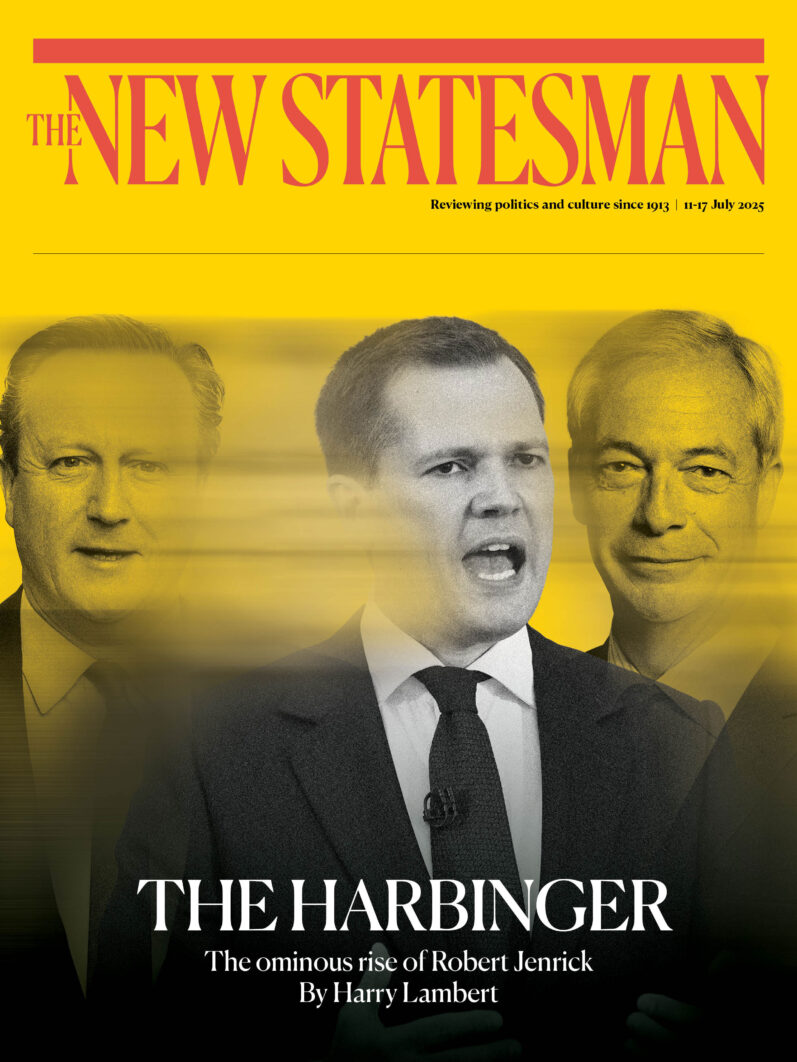
The past week has been fun. Following our cover story urging the government to “Just Raise Tax”, the New Statesman has come in for a veritable cascade of condemnation from the broad conservative right in Westminster. The noble David Frost – he of Brexit fame – took to X to dismiss us as a bunch of “deranged leftists”. The Tory frontbencher Alex Burghart urged people to read the magazine “and weep”, which I feel I can at least partially endorse, while the Daily Mail felt the need to warn its readers about what we – “the socialist bible” – had advocated.
As the very first leader of the New Statesman made clear in 1913, this magazine has “no axe to grind, no panacea to advertise, no theory which we should abandon with regret”. We are, in fact, “bound by no ties of party, class or creed”. The point of this magazine – then and now – is to examine the great social, political and cultural issues of the day with a dispassionate, curious and, yes, progressive eye.
This week’s edition is a case in point. One of the most startling facts of British politics today is the rise of the radical right. Something close to half the electorate tell pollsters they plan to vote for one of either Reform UK or the Conservative Party. This means that there is now a realistic chance that the two parties will, together, have enough seats in parliament to form a majority government after the next general election – with Nigel Farage emerging as prime minister. This, to put it mildly, is not something that would have been seen as even vaguely possible as recently as May 2024. And we worry it is not something enough people are taking seriously.
Hovering somewhere close to the centre of this potential revolution in British politics is the curious figure of Robert Jenrick, the defeated Tory leadership hopeful who has somehow survived his loss in November to emerge as the party’s prince across the water through sheer force of will – and a determination to push the boundaries much further than his own party leader seems comfortable. Armed with a mobile phone camera, a desire to thrust himself in front of the public – supportive or otherwise – and a savvy social media team, Jenrick has carved out a new position for himself in British politics as the first gonzo politician: both recognisably Tory and a harbinger of a new and harsher politics to come. Harry Lambert profiles the man now widely expected to lead the Tories into the next election.

Elsewhere in the magazine, Anoosh Chakelian demolishes some of the myths being spread by Jenrick’s army of online supporters, while Oliver Eagleton breaks down the reasons right-wing populism is gaining ground all over the Western world. Meanwhile, from Washington DC, our US correspondent Freddie Hayward offers an eye-watering insider account of how the American right talk behind closed doors: a grim vision of a future foretold.
As ever, there is much to lift the mood too. The entries for the caption contest alone are a source of great joy for us all here in New Statesman towers. Please keep them coming. Nicholas Harris delights in poking fun at the lost boys still yearning for mummy – or Margaret Thatcher, as she is more commonly known – while George Eaton has great fun with another set of nostalgists in Cardiff, moshing for the Gallagher brothers. Are Oasis really an Irish band, he asks, in what might be our most controversial question of the week.
In a few days the wonderful Tanjil Rashid joins us as our new culture editor. We’d love to hear your views on the shows, people, literature and exhibitions you want to read about. We have also relaunched our weekly culture podcast, which will come out each Tuesday. Please do let us know what you’d like to hear more about (or, indeed, what we spend too much time thinking about). We not only want you to read the New Statesman every day, but for us to be part of your daily life online through our newsletters, podcasts and videos on YouTube – even, yes, on TikTok!
In general, do keep the letters coming in: it has been lovely to see a marked uptick in correspondence since I began as editor. It seems our club of “deranged leftists” has quite a few ideas for dealing with the state of the country, to which our leaders would do well to listen.
[See also: Stop taking Glastonbury so seriously]
Content from our partners



Related

This article appears in the 09 Jul 2025 issue of the New Statesman, The Harbinger
Join the debate
Subscribe here to comment