
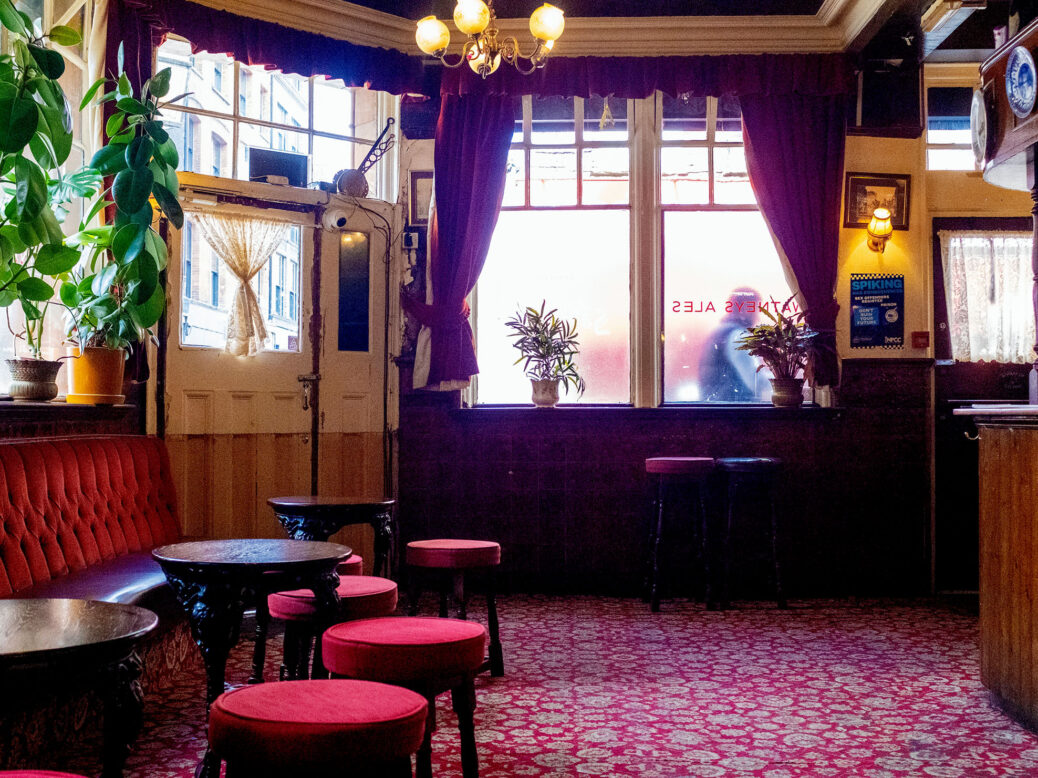
We hear again and again that young people are shunning booze. But if the headlines are routine, the responses are anything but. Each time a new pub closes, the elder cultural commentariat diagnoses extravagant new strains in the Gen Z psyche. The theories proffered are internal, psychological and even spiritual.
As far back as 2018, the New York Times identified Britain’s youth as the “New Puritans”. These “puriteens”, commentators fret, are reinventing Victorian moralism. (So long as you squint at their cocaine consumption, which has risen as the cost of the substance has fallen.) Elizabeth Oldfield, writing in UnHerd, wondered whether Gen Z might “prove to be more responsible, even puritanical.” Others linked the new abstinence to the much-discussed “Christian revival” apparently at play among the youth. The Guardian has wondered if abstinence was a rebellion against rebellion.
It would be nice to meet an abstainer with such philosophical motivations. My friend pulled away from drink after she woke up having sent her ex-boyfriend’s mother a 2am message asking if she’d “ever truly been good enough for Archie, or had everyone just been very polite.” (The response, “Who is this?”, somehow made it worse.) She had mixed three glasses of Prosecco with her standard Sertraline dose. Vast swathes of young people are on selective serotonin reuptake inhibitors or stimulants, and combining them with alcohol produces a hangover that feels like a well-placed kick to the sternum from a thoroughbred.
Millie Gooch quit drinking at 26 and founded Sober Girl Society in 2018. When we spoke she described the cultural water she was swimming in at university. It was the Geordie Shore era, very much an extension of the nineties ladette culture, where getting “mortal” wasn’t just normal but aspirational. Behind the party-girl exterior, Gooch was depressed, anxious, suicidal. Now she hosts events for “BOOZE FREE BABES”.

No factor is more mundane or important than money. In case you missed it, a London pint now costs £7. When you’re carrying tens of thousands in student debt, £50 of drinks that will leave you incapacitated the following day seems a fairly ridiculous proposition. Recent reports found that 55 per cent of Gen Zers regretted overspending on alcohol, and 29 per cent had gone into debt over their drinking habits.
Laura Willoughby has been teetotal for 13 years and co-founded the social impact business Club Soda in order to “help people drink more mindfully”. Her generation, Gen X, became the heaviest-drinking generation of women in history. They were working with surplus: Europe’s cheap wine glut, expanding professional opportunities, the possibility of working your way up. When we met she was frank about the shift. The proposition of the “cheap night out” has collapsed. Alcohol isn’t competing for casual spends with late-night dessert shops and bubble tea bars. It’s in the special treat price bracket now, competing with theatre tickets. And if Gen Z can’t afford both an experience and a hangover, they’re opting for the former.
It’s not like we don’t know what we’re missing. Everyone I know is uneasy about the shift. The “gain” in public health feels more like the loss of a particular species of human connection. For all its catalogued harms, British pub culture represented something genuinely communal. The maudlin 2am confessional. The karaoke that should never have been attempted. The group bonding over collective poor judgment. Dr Dominic Conroy at the University of East London, who researches youth drinking behaviour, frames it carefully: there’s real psychosocial value historically embedded in pub culture. Ritualised socialising, low-stakes confession, shared mistakes that create intimacy. Those functions aren’t trivial. Whether sobriety communities can replicate this remains to be seen. My suspicion is they can’t.
It’s a little galling to be told we’re giving all this up for the sake of abstract spiritual affectation. In fact, that representation feels like an ideological sleight of hand. The prevailing narratives about Gen Z sobriety, whether casting it as puritanical killjoyism or enlightened wellness culture, perform the same essential function: they locate agency and therefore responsibility with young people themselves. Call them morally rigid or admirably health-conscious, either way the choice appears to be theirs.
It conveniently obscures how profoundly economic conditions have contracted the space for the kind of drinking culture previous generations took for granted. When rent consumes half your income before you’ve bought a single pint, when recent data confirms you cannot work your way to wealth no matter how many gig shifts you pick up, when precarity defines every aspect of your professional life, alcohol becomes an unaffordable risk rather than a social lubricant. The pub is expensive. The hangover costs a shift you can’t afford to miss. The night out blows your weekly food budget.
What’s being called choice feels more like constrained circumstance. What’s being celebrated as rational optimisation is actually economic exclusion with better PR. Reframing material deprivation as generational prudence or moral squeamishness deflects attention from the systematic ways life has deteriorated for younger generations – and suppress the outrage that might otherwise follow.
This generation faces structural economic violence dressed up as opportunity. They’re the first in modern history expected to be poorer than their parents. They rent perpetually from landlords who bought property when a house cost three times the average salary rather than twelve. They’re told to be grateful for the flexibility of zero-hours contracts. They watch wealth concentrate upward whilst being lectured about avocado toast. And now, when economic reality prices them out of the pub, we praise their wellness choices. When pharmaceutical necessity makes drinking unbearable, we applaud their mental health awareness. When surveillance capitalism turns every night out into a permanent record that might cost them their next gig, we credit their digital savvy.
The impulse to analyse and optimise isn’t a generational personality trait, it’s a survival mechanism in conditions of enforced scarcity. Previous generations could afford to be messy. They could afford hangovers, regrettable Fridays, lost weekends. They inherited an economy with slack in it. Gen Z inherited one that punishes every miscalculation.
When Gen Z appears to embrace sobriety, they’re working with deficit: student debt that never ends, rent that compounds, jobs that evaporate, futures that shrink. Stop calling it puritanism. Stop celebrating it as wellness. Start recognising it for what it is: a generation making the best of conditions that should provoke fury, not admiration for their coping mechanisms. The revolution, such as it is, tastes like adaptogenic mushroom lattes because that’s what you can afford when property ownership is a fantasy. It feels like remembering your Saturday because forgetting it has become a luxury you can’t afford. Perhaps what we’re witnessing is a generation that would drink like their parents did if their parents hadn’t drunk the economy dry first.
But there’s something else dying here beyond pub culture. The teenager as we understood it only emerged in the 1960s, when prosperity created the space for rebellion and mess and becoming. Youth culture used to announce itself: mods and rockers, punks and ravers, tribes with their own music and meeting places. It required infrastructure. Downtowns to congregate in. Record shops to loiter in. Pubs that turned a blind eye to dodgy IDs.
All of that is gone or going. Gen Z doesn’t have tribes; they have algorithms. They don’t have downtowns; they have logistics networks delivering to rented rooms. The teenager was invented by post-war prosperity. We may be witnessing its death by economic asphyxiation. What replaces it isn’t puritanism or wellness, it’s premature adulthood without any of adulthood’s rewards, all the self-denial and strategic thinking, none of the security, slack or confidence.
The real tragedy isn’t that young people have stopped drinking. It’s that we’ve killed the material conditions that made youth possible, then mistaken their adaptation for evolution.
[Further reading: Queueing in pubs disgraces Britain]
Content from our partners



Related



Join the debate
Subscribe here to comment