
On the wall of the New Statesman’s offices, there is a lovely black-and-white photograph of one of my predecessors in this job, Kingsley Martin, who edited the magazine for a slightly daunting three decades between 1930 and 1960. In the portrait, Martin is leaning back and smiling, looking every bit like a cross between John le Carré and JRR Tolkien. Is it me, or does every Englishman of this time – and class – look the same?
A wonderful old copy of the magazine’s “Jubilee edition” in 1963 lies on my desk featuring a little caricature of Martin alongside many of his contemporaries such as Bertrand Russell and Malcolm Muggeridge. So much has changed since then, of course. A two-door Ford Cortina advertised inside cost £573. And the Sunday Pictorial had just become the Sunday Mirror: “Britain’s most MODERN Sunday Newspaper.”
Yet some things remain the same. On page eight of the 1963 edition, there is a peculiarly modern-feeling cartoon of a couple looking out at the modern Britain they see before them, scarred by ugly strip clubs and bingo halls, satellite dishes and skyscrapers. Underneath the cartoon, a caption reads: “Yeah – just what did people DO 50 years ago?” The pathos is unmistakable.
What must it have been like to have edited the magazine then, I wonder, commissioning – and chuckling – at such cartoons, gripped by a similar sense of decline and degradation that exists today, 60 years on. I thought about this at the weekend, when I awoke to the news of a mass knife attack on a train in Cambridgeshire. Back in 1963, Martin’s successor as editor, John Freeman, would, I presume, have had no choice but to wait for the details to emerge or to have dispatched one of his reporters. Reflection was possible, enquiry encouraged. Today, though, the information arrives the moment you open your phone. No reflection: just doom-scroll.

This was certainly how it felt as I scrolled with mounting doom, desperate to find out the latest even as I tried to get the kids ready and out of the house for that morning’s football. As I drove down to the match, I began to think about how we should cover the attack. What could we add, I wondered. What should we add? Today, unlike in 1963, journalism is not governed solely by print deadlines either.
I get on the phone to the team; we talk about needing to wait for the facts; of needing to act responsibly; of avoiding speculation. But it’s hard; the videos circling online are becoming ever more terrifying. Do I need to rip up the plans for the magazine that have been weeks in the making, I wonder. A feeling of dread about the nature of the attack deepens as the speculation mounts online. The videos become more gruesome. The day is spent on phone calls speaking to experts, trying to work out the responsible way to cover the story. And then, suddenly, the story changes. It is confirmed that there were not two attackers, but one. Then a whole new set of claims begins to build in another direction.
This is the modern reality we live in – a stream of fact and counterfact, video and meme. It is hard enough to cover this world. How must it be to try to govern it? Is it even possible? At times it feels as though this current Labour government is on the verge of being swept away by a flood of public contempt generated by both the state of the world and how it is refracted through our screens.
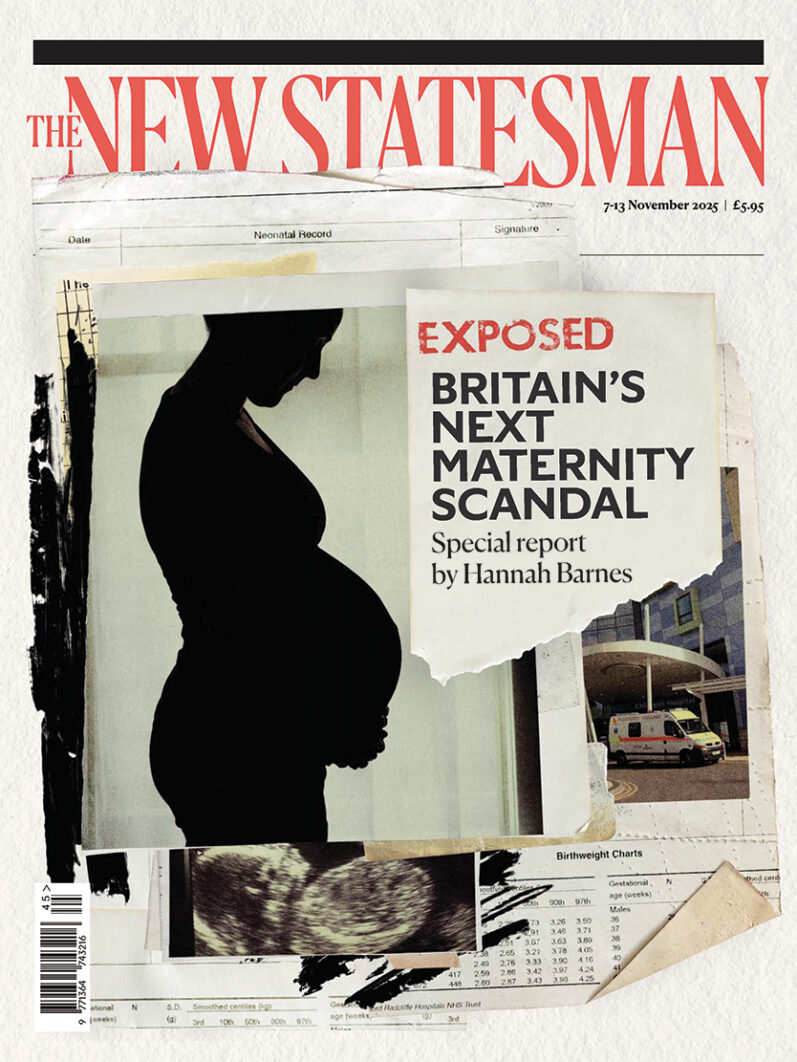
In this week’s magazine, though, we have attempted to show that reflection and enquiry remain the bedrock of journalism, not mere reaction and emotion. We are lucky to have Anoosh Chakelian to help make sense of the train attack. Our cover story, meanwhile – Hannah Barnes’s investigation into maternity services at Oxford University Hospitals NHS Foundation Trust – was four months in the making; a joint endeavour with Channel 4 News; the product of a long, painstaking search for truth. It is not a comforting read. We think it is an important one.
Flicking back to my 1963 Jubilee edition, hoping for optimistic inspiration, I come across a piece by RHS Crossman, who opens his account with a declaration that “the long winter of our discontents seems to be over”. Alas, the same cannot be said today. Not yet.
[Further reading: Britain’s next maternity scandal]
Content from our partners

Related
This article appears in the 06 Nov 2025 issue of the New Statesman, Exposed: Britain's next maternity scandal
Join the debate
Subscribe here to comment