
It is always amusing to see the reaction when I tell people I am going to Belgium on holiday. “Belgium?” they tend to reply, unable to hide their bemusement. Occasionally I might even be treated to a straightforward: “Why?”
This little routine played out again last week as I explained that my wife and I were popping over to Flanders for the weekend with the kids. From where we live in south London, it’s only a short hop to the giant skies and belfries of this rather overlooked piece of our near abroad. We tend to stay either in the little seaside town of De Panne or an hour or so inland, in Poperinge (Pope-eh-ring-eh), near Ypres, where there is a glorious annual beer festival.
This year’s festival was as fun as ever, filled with good-natured, semi-inebriated Belgians and a smattering of similarly merry Engelsen like me. Try as I might, it is hard to avoid getting merry at a Belgian beer festival (OK, fine, I don’t try that hard). The first stall on the left as you enter the festival offers the following beers: a Tripel Blond at 7 per cent, a Tripel Amber at 9.5 per cent and a Dubbel Bruin at 8 per cent. For those who might regard these as a little soft, there is the option of adding a shot of the local spirit, Picon, or a fruit gin. Eesh.
Before the festival on Sunday, my wife and I took the kids on a little tour of Ypres, armed with a walking map and children’s quiz-cum-treasure-hunt provided by the Ypres museum. It was impossible to escape the presence of the First World War, yet you get the sense that the town wants people to know there is more to its history than this. Our little tour (or as much of it as we could manage before stopping for waffles and hot chocolate after a couple of hours) attempted to tell this longer story, with stops at the Grote Markt and cathedral, surviving medieval houses and ramparts.

Overall, it is hard not to come away with a sense of awe at the town’s remarkable postwar renewal. Here is a place once almost entirely destroyed, which painstakingly rebuilt itself from the cobblestones up. I have occasionally stumbled across arguments that claim such works of restoration are in some way déclassé, pastiches of lost glories. Even if I can intellectually understand such arguments, I cannot accept them. They are just not honest, it seems to me. Too clever by half. Ypres is not perfect. The amount of First World War merchandise feels a little distasteful at times. Yet, like most Flemish towns I’ve spent time in, there is a sense of pride and harmony there that feels lacking in most modern developments at home. In Ypres, the buildings seem at one with both their history and their surroundings. There are many lessons to be learned in Flanders.
The most tantalising clue on our little treasure trail around the city suggested there was a depiction of a medieval soldier with his arm chopped off somewhere in Sint-Maartenskerk, or St Martin’s Cathedral. Woah! thought my son. And so, off we went in search of this grisly discovery, which we eventually found behind the altar on the northern wall of the cathedral.
Before I got to this, however, I noticed a dedication from the British Army to Belgium’s King Albert I, near the entrance. The memorial included the fact – unknown by me until then – that Albert was made a ceremonial British Field Marshal for his exploits during the war. I’m not sure why this little tribute caught me off guard as I wandered around the cathedral. Perhaps it is because it felt so otherworldly, an echo from that epoch when Europe – not just England – was that “teeming womb of royal kings”, as Shakespeare put it, still marshalling giant armies under their names.
On reflection, I realised on my return to London, this is not a lost age, but one we are still living in. In Britain, certainly, the connection between the army and royalty remains iron-clad: the King, of course, remains commander-in-chief of the armed forces; his son, colonel-in-chief of the Army Air Corps. Charles’s brother, meanwhile, the disgraced Duke of York, was the regimental colonel of the Grenadier Guards, until he was stripped of that title by his mother in 2022.
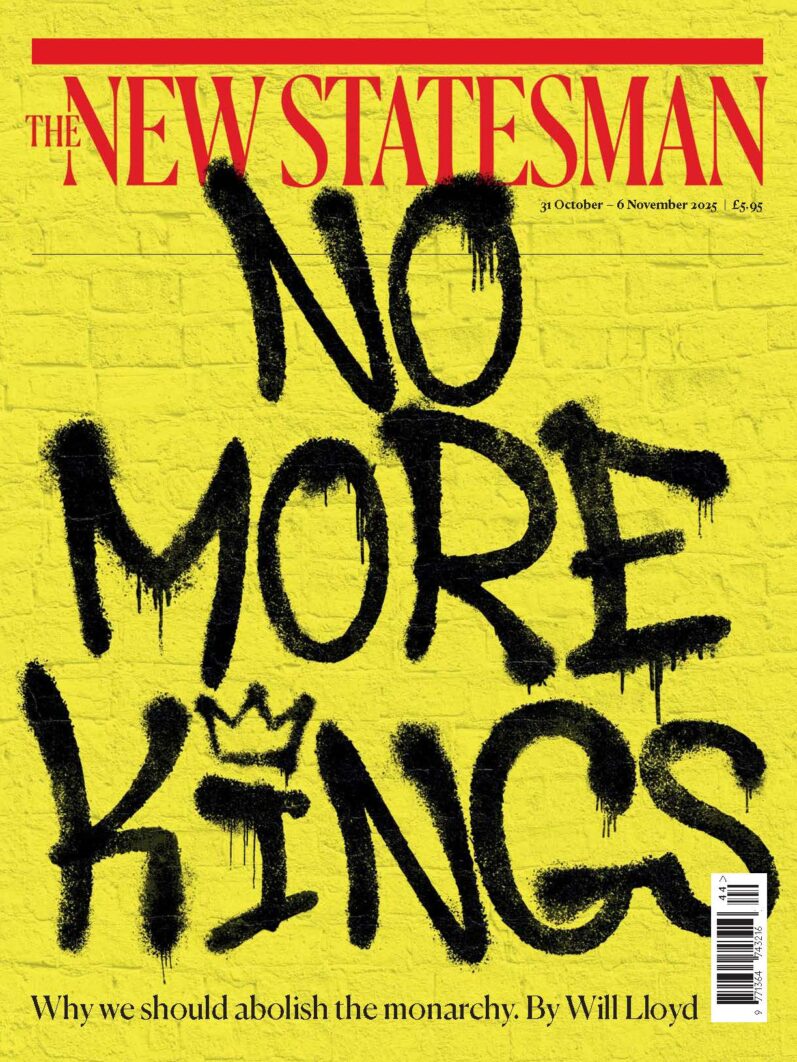
As a youngster I found all of this stuff absurd, but then I got older and my views on the monarchy began to mellow, largely as a result of no longer thinking much about it. I’d rather watch an episode of Bluey with the kids. Yet editing this week’s cover story by Will Lloyd has stirred something of the old radicalism in me. The rumbling revelations about the Duke of York have forced us all to start thinking about it again. And once you start, it is hard to stop.
[Further reading: Abolish the monarchy]
Content from our partners

Related
This article appears in the 30 Oct 2025 issue of the New Statesman, No More Kings
Join the debate
Subscribe here to comment