
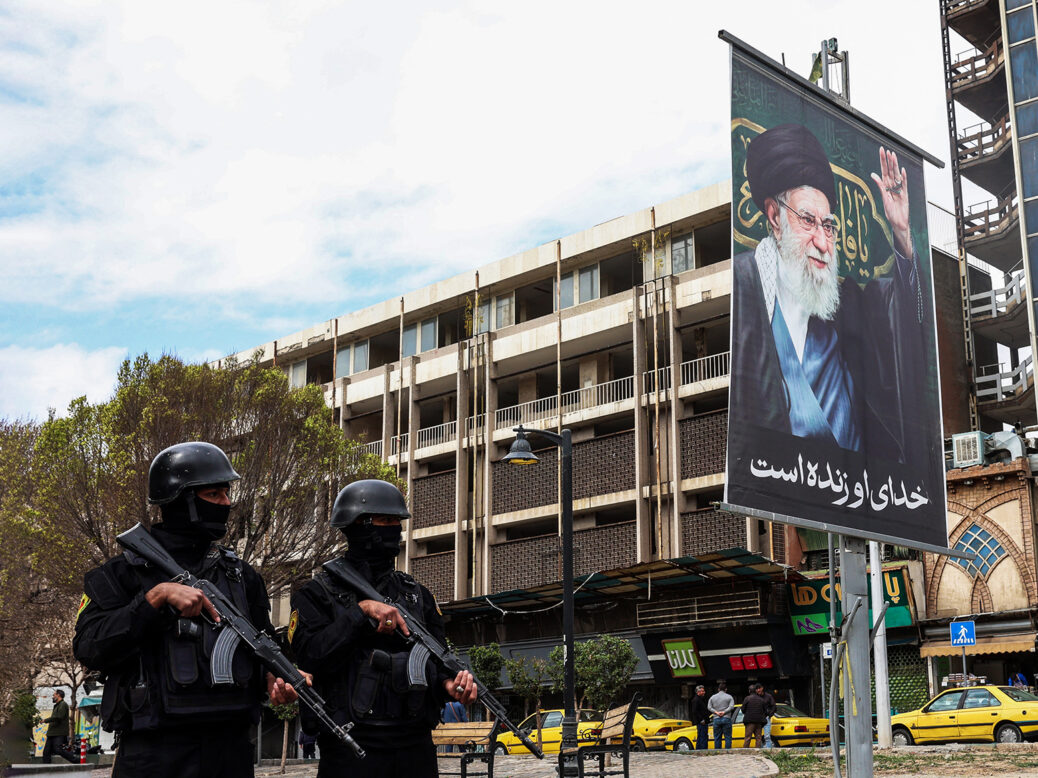
On 1 March I woke at 1am and couldn’t fall back asleep. I was wracked by anxiety, my mouth dry, my heart pounding. I drank some water and checked my phone. Nothing new in the news. I took a melatonin and went back to bed. At 5.30, my two-year-old daughter started calling for us. Before picking her up, I checked my phone again. “Are you awake?” a friend in Germany had texted at 2.30am. “The war started.”
Do humans have premonitions? We’ve all heard stories of people sensing something, a tremor in the body, a turmoil in the mind, without knowing why, only to realise later that the reason was yet to come, that the effect preceded the cause. With animals, there are explanations: they feel shifts in the Earth’s electromagnetic field before an earthquake, hear infrasound, smell the colourless gases released into the air. Humans are denied those subtleties. But we do have strange brains, and a consciousness we barely understand.
In 2026, nothing sharpens human psychological premonitions like being Iranian. In the past ten months my people have lived through two wars and a massacre, and before each, many of us jolted awake at midnight, unnerved by anticipation.
Inside the black hole
Awake with my daughter, I checked the news. Most reports were about a massive explosion in downtown Tehran, near Pasteur Square, where the presidential palace and Ayatollah Ali Khamenei’s compound are located. The blast seemed enormous, smoke rolling into grey yarns, rising high into the morning sky.

I left a message in the family group chat. The tick remained grey. They had already cut off the internet. This is the third time in nine months. First during the 12-day war in June 2025, then during the massacre in January 2026, and now again, on the first day of March. They do it to assert control and spread fear, to isolate people, to prevent them from organising, even commiserating. Since 2019, this has been their favoured response to unrest. They sink the country into a digital black hole, and with it, our friends and loved ones.
For those of us in exile – especially those like me who cannot return – the internet has become a kind of umbilical cord, delivering a sustenance our bodies and souls desperately need. In the past year alone, the men who run the most despised regime in modern Iran have stepped on that cord three times, and held their foot there for days at a time.
Learning to breathe again
Khamenei is dead. The news came in the afternoon. It took a couple of hours of frantic scrolling before enough credible sources had confirmed it for me to believe it was true. Then I collapsed on to my bed. For a good half hour, I couldn’t do anything. God knows how many times I had imagined this moment with friends, concocted elaborate plans about where we would go, what we would drink, how we would celebrate when we finally heard the news. Now that it had happened, none of those friends were anywhere near me to fulfil those fantasies. Even if they had been, I’m not sure any of us would have wanted to.
Here in the basement of my house in upstate New York, as far removed from my life in Iran as one can be, I wanted to do nothing but breathe. To fill my lungs with air, then slowly release it. Not in the spirit of meditation, just to feel that I could breathe fully. In that moment I realised that for decades I hadn’t been able to breathe with the full capacity of my lungs. It was as if a boulder had been lifted from my chest, and that afternoon I was discovering it could expand much further than I had ever known.
An awful familiarity
The elation was immediately tempered by confusion, by fear. Khamenei was killed in the first hour of a war, and a war is what it is. I have seen enough wars to know what follows: piles of bodies, debris and blood; mothers screaming, fathers’ shoulders heaving as they sob; columns of smoke looming above cities like ascending souls of dead giants.
But that half hour of breathing with my full lungs after Khamenei died, that was a happiness unlike anything I’d experienced in my life. I will never forget it.
Amir Ahmadi Arian is an Iranian author, journalist and translator. He is an assistant professor of creative writing at Binghamton University, New York
[Further reading: Trump has betrayed America First]
Content from our partners


Related

This article appears in the 04 Mar 2026 issue of the New Statesman, Trump's global terror
Join the debate
Subscribe here to comment