
Lady Annabelle Neilson, who died in 2018 at the age of 49, was the wife of Nat Rothschild, then the muse of Alexander McQueen and finally the friend of Jeffrey Epstein. “So I am putting a little group of girls together,” she emailed him in 2010, adding on another occasion that Epstein might be welcome at a party “for my very young friend”. Doe-ishly beautiful, youthfully narcotic, and flash-bulbed for most of her life – following these revelations, it seems she followed a recognisable road from vamp to vampire.
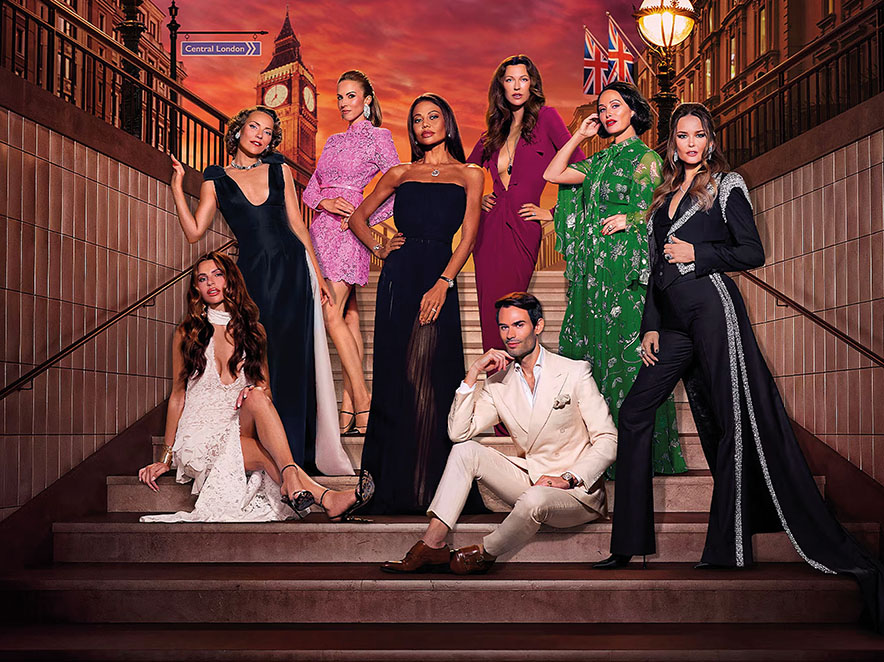
If it weren’t for Lady Annabelle, I probably never would have watched Ladies of London, one of those American, Real Housewives-style, fly-on-the-fresco shows about rich people’s lives. Neilson was one of its stars for the first two series before its largely unmarked demise in 2017. The programme has now been inopportunely revived, with a new cast of Sitwells and marchionesses. Given its previous alliance between the tawdry, the tawdry and the titled, I could not miss it, hoping to better understand the upper-class lowlife that Neilson, Prince Andrew, Lady Victoria Hervey and others have reacquainted the British public with in recent weeks. I was to be disappointed. In searching for the international elite’s dark heart, I seem to have found only its empty brain.
The format, such as it is, is classic: a fake group of friends is corralled into existence to spend a summer together, bitching and feuding and drinking. The group is all-female, apart from Mark-Francis Vandelli, the haughty, snobby one from Made in Chelsea. And the first two episodes stagger along on two “but she said to me” rumours: that Dara, an American architect, whose son is now stepmothered by Princess Beatrice, is in fact a “madame”, and that Dara had in turn described her “best friend” Myka, an “etiquette coach”, as “a bit cringe”. This all blows up over dinner at the end of episode two, before we reset for more gossip and recrimination.
It’s so brainless that I started keeping a note of incidentals and context to keep interested, the bibelots and backdrops of these people’s lives. So: a $33,000 bottle of wine bought in Courchevel; “grape scissors” (apparently a tabletop utensil); that Sloaney habit of giving your expensive house a euphemistic nickname (“the grottage”); some vague familial association with the Haitian Duvalier dictatorship; one of those bald Sphynx cats that only the evil or the unstable keep as pets. There are also some walk-ons from the flunkeys who service these people’s arrogance, including an amazingly inarticulate therapist who says: “The more you upset people, it just means that you’re doing something right, and the more you stand in your power, the more confident you are, the more people are gonna get upset – and that’s brilliant.” Eh?

This is not to say there aren’t characters to be relished. I thought Emma Thynn, Marchioness of Bath, was hilarious, because she claims to be the first black woman to have married into this level of the aristocracy, and keeps mentioning this as if it represented a major leap forward for British race relations. Thynn’s father is a Nigerian oil billionaire, and while she at least has the steel of the determined social climber, there were comparatively tragic wash-ups on display. I adored Martha, Lady Sitwell, a bobbed gift of husky bitchiness, the kind of polo-watching posho who doesn’t look complete without a gin in her hand and a Marlboro Red in her mouth. The boom and bust of her personal finances seems to have tracked her marriages and relationships, leaving her in a genteel social limbo, living in a pokey flat with her pet magpie Hecate, but keeping her fineries in a storage unit on some distant industrial estate.
Sitwell was the only one of this grisly group who activated my usually ready sentimentality. And when I read about these drips in Evelyn Waugh, I at least felt sorry for them. Couldn’t these people sell off a couple of Boudins to save televising themselves like this? Indeed, after a few episodes of Ladies of London, you start to question your every political and historical assumption. If this is how the English upper class behaves in decay, perhaps they need public subsidy, a grant to avoid such humiliating extremes of abasement. But I suppose, the argument would go, we did try that with Prince Andrew.
Ladies of London
Hayu
[Further reading: Louis Theroux stares down the manosphere]
Content from our partners



Related

This article appears in the 18 Mar 2026 issue of the New Statesman, The new world war
Join the debate
Subscribe here to comment