
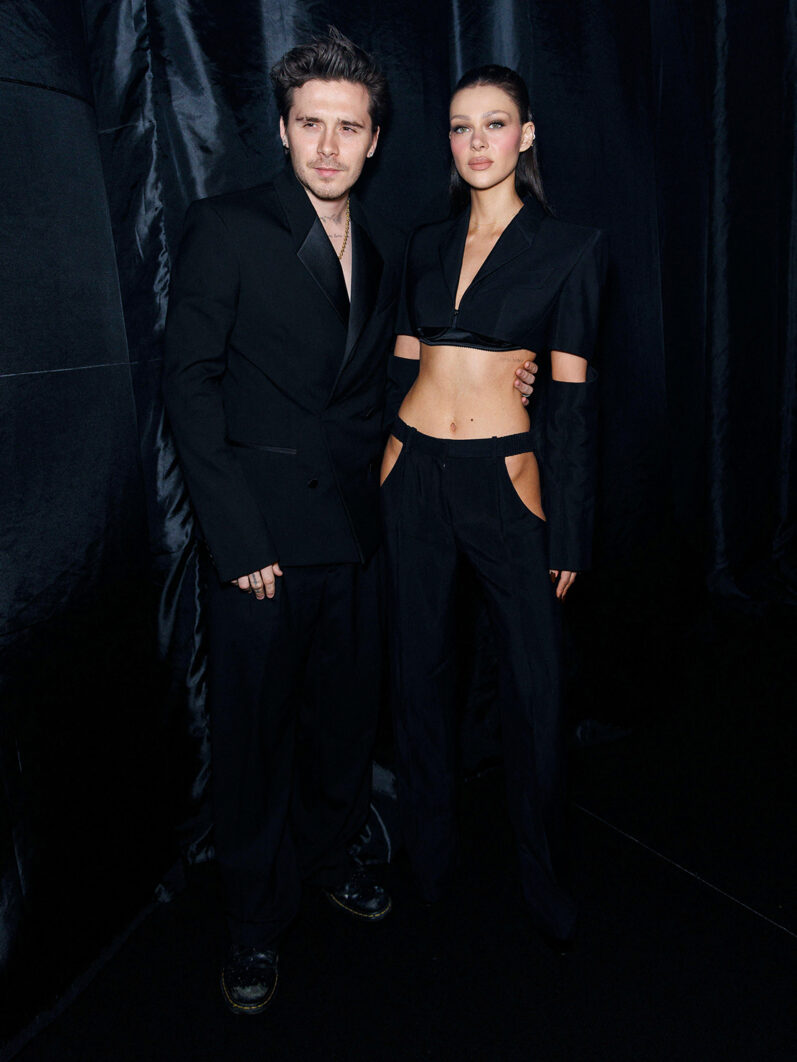
Brooklyn Beckham is making a stand. The public keeps accusing him of leeching off his parents. Now he’s married to the Wendy’s heiress Nicola Peltz and wants nothing to do with them. After months of rumours, he’s gone on to Instagram to explain his side of the situation. The Beckhams, he says, place brand over family. He’s suffered years of forced photo ops and dodged meet-ups. Victoria comes off as a nightmare mother-in-law, backing out at the last minute from designing Peltz’s wedding dress and sabotaging the couple’s first dance to “dance very inappropriately on [Brooklyn] in front of everyone”.
“I do not want to reconcile with my family,” he said. “I’m not being controlled, I’m standing up for myself for the first time in my life.”
Going public is a mistake. Brooklyn isn’t working on equal footing; the Beckhams exist both as a flesh-and-blood family and as a narrative spectacle far bigger than he’s ever been. Soap operas are in decline, and nobody reads multigenerational novels any more; the general public focuses on real people instead. They live vicariously through famous families on TV and in the news, but have no emotional fealty; they attach to and detach from whatever they want. By taking to his Instagram story, all Brooklyn has done is dignify the spectacle; all the spectacle can do is push his parents further into their status as icons.
While onlookers make fun of Brooklyn for flitting from career to career, David and Victoria have spent 30 years moulding themselves into constant pop-culture characters. The couple are always playing themselves, mixing fiction into fact so they can bask in what Susan Sontag termed “a state of continual incandescence”. Large-scale reckonings cannot help them; they’ve eschewed mortal life for the Mount Olympus of camp. Get yourself on to the right plane of celebrity and watch onlookers disregard the line between morality and immorality. Encroach on “anguish, cruelty [and] derangement” – another of Sontag’s camp classifications – and it will harden your persona in ways that can only help you. At this stage it becomes almost chic to torment your children.

We already have a blueprint from the 20th century. In 1977, the world said goodbye to Classic Hollywood A-lister Joan Crawford; a year later, her adopted daughter Christina published what would become the most notorious victim memoir of all time. As the ambitious actress dealt with career downturns and a succession of new partners, Christina’s childhood ricocheted between picturesque and abusive. She accused her adoptive mother of starving her and chaining her to her bed; one night, she alleged, Joan broke into her room in hysterics and beat her with wire coathangers.
When Paramount produced a film adaptation of the memoir, it became an overnight cult classic. Faye Dunaway provided both a laudable impression of Joan and a performance laced with the sort of tangible madness you’d observe in a Tennessee Williams character. The film’s badly written dialogue remains a touchpoint for drag queens; screenwriters added scenes that felt more campy and absurd than anything in the book. Viewers at the time only saw Joan’s star intensify; to look back on the actress in the light of this posthumous legacy is to see fiction continually merge with fact. The accusations were difficult to take seriously because they came so close to her screen persona; in a succession of late-career films, she played stressed, well-meaning mothers sabotaged by evil teenage daughters.
Victoria Beckham is already one of the decade’s biggest camp characters. The Spice Girls were cartoonish cultural products, and 1997’s quasi-fictional Spice World film furthered their collective brand while collapsing the five women into their stage personae. It worked: it’s still impossible to tell where Victoria ends and Posh begins, just as it’s impossible to separate screen-Crawford from real-Crawford. As the coldest, least approachable Spice Girl, it made sense that Victoria was the one to go into high fashion; the industry has never managed to let go of its cutthroat Devil Wears Prada connotations. A recent reality series only bolstered her public identity – a poster campaign in London’s Victoria Station blew her face up to half the size of a tunnel. This, goes the message, is a woman who takes herself seriously.
Follow the persona to its logical end and Brooklyn’s accusations become legible. The campiest characters can never let go of their past successes and fade into the background; as Crawford and her contemporaries aged in the middle of the 20th century, their resistance to walk away from the spotlight inspired a whole slate of “hagsploitation” horror-comedies. You can believe Victoria would have the capacity for cruel absurdities, but you can’t quite believe they’d have a real human impact, or that they could be extricable from fiction.
It’s far easier to create a comedic mythology around these tendencies than it is to take their emotional implications seriously, and people already love poking fun at Brooklyn. This is the running tragedy of his life – the harder he tries to establish seriousness, the harder the public laughs, and the further he tries to move from his parents, the closer he gets. The connections that supposedly privilege him have also destroyed his personhood. He’s been swallowed by his family’s shadow.
[Further reading: Robbie Williams didn’t need Britpop]
Content from our partners



Related

Join the debate
Subscribe here to commentA really important topic.