
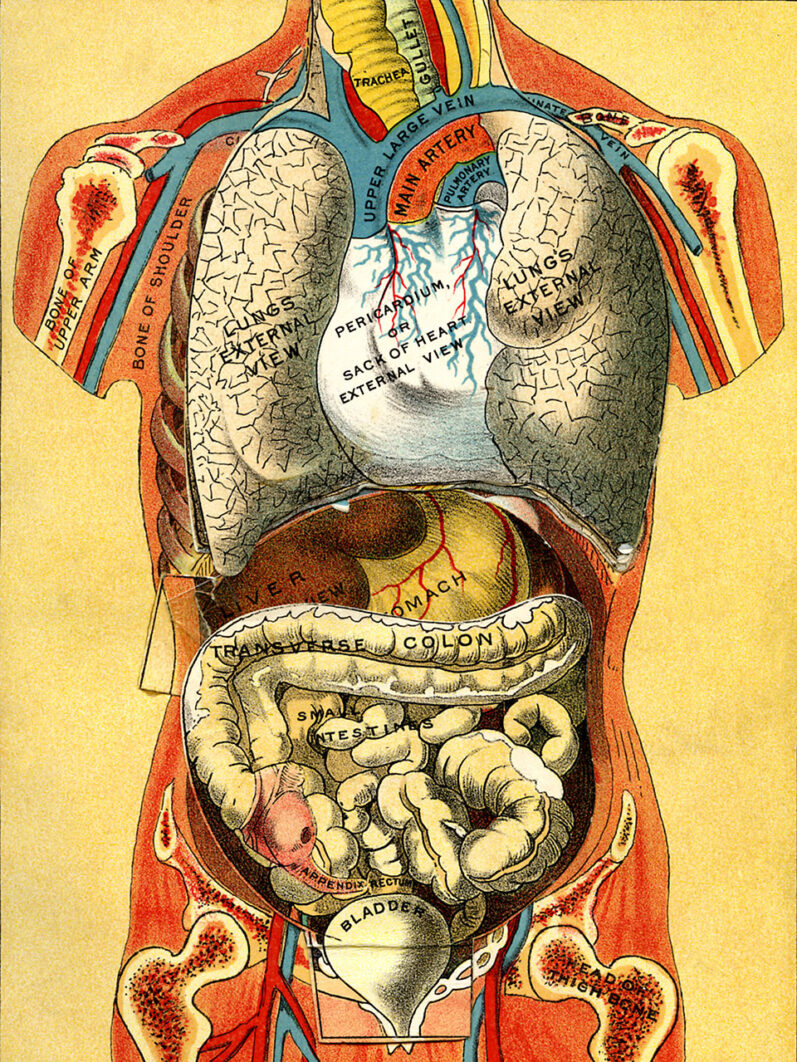
What does your liver sound like? How about your kidneys, or your lungs? We’re thinking here not of the bodily squelch of fluids mixing or air pumping, but of music. What if our organs – or, rather, our relationship to them – could be composed into a symphony?
This is the type of project that can only be found on BBC Radio 4. The presenter and sound designer Maia Miller-Lewis spoke to five people, each with a unique relationship to one vital organ. Then she sketched a soundscape of their stories and handed them over to composer David Owen Norris, who turned them into classical scores – each organ assigned a different section of the orchestra.
It shouldn’t make sense. Explaining how it works is a bit like trying to describe synaesthesia – the phenomenon whereby some people can hear colours or perceive music visually – to someone who has never experienced it. But I’ll give it a go. A woman who wrote a horror novella about donating a kidney translates the uncanniness of her story into the haunting melodies of woodwind. The highs and lows of the strings are inspired by a Chinese-medicine practitioner’s decision to care for her liver to regain her “emotional equilibrium” after the premature birth of her daughter triggered post-natal depression. The lungs are represented by brass, of course. Their light fluttering and guttural rasping traces the journey of a woman whose lungs collapsed in her thirties. A man who has confronted his childhood trauma by learning to be led by his heart – the “connecting organ” – and becoming an “agony uncle” for others turns his experience into a score for voices, part-choral, part-disco. And the brain is percussion, the rhythmic pings of thoughts as imagined by a computer scientist working on neural activity.
These are all brought together so the BBC Concert Orchestra can “perform the movement that is human life”. It’s an eerily surreal yet emotive performance. I don’t think I’ll ever think about my kidneys in quite the same way again.

[See also: Louis Theroux: The Settlers is a deathly warning]
Content from our partners



Related

This article appears in the 30 Apr 2025 issue of the New Statesman, The War on Whitehall
Join the debate
Subscribe here to comment