
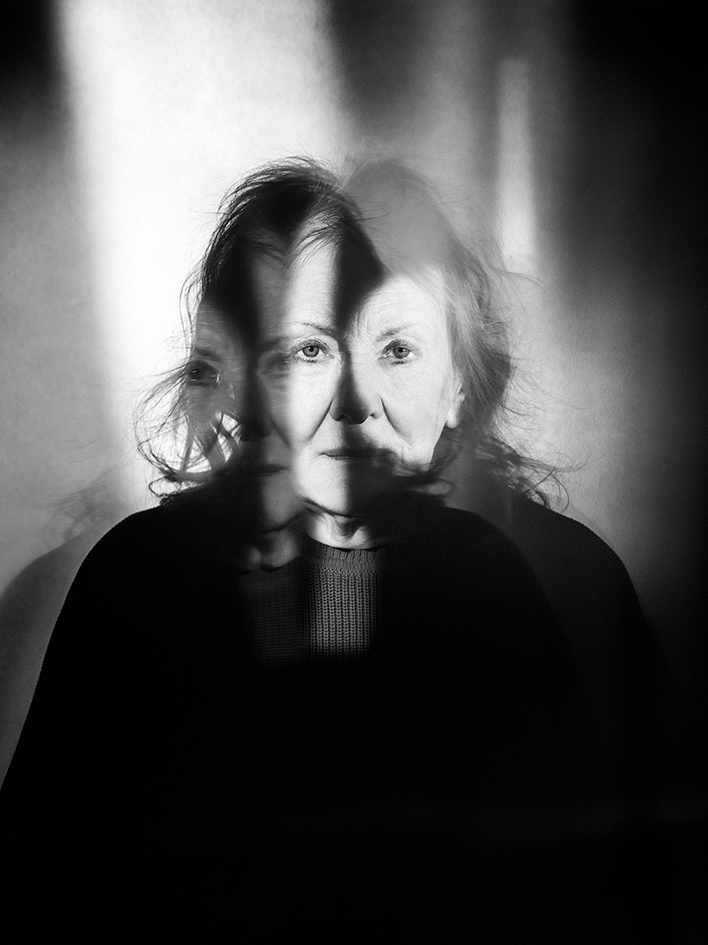
In the summer of 1950, aged ten, Annie Ernaux overheard her mother telling an acquaintance a story that wasn’t meant for her. Her parents had once had another child, a daughter who died of diphtheria aged six, two years before Annie was born. “I never touched you, or kissed you,” writes Ernaux six decades later, addressing the sister she never met. “You are the child of heaven, the invisible little girl no one ever talked about. The secret.”
The Other Girl, first published in France in 2011 and now superbly translated into English by Alison L Strayer, is written in the form of a letter to the dead child. It’s a meditation on what it meant for Ernaux – the 2022 Nobel Laureate in Literature – to grow up surrounded by absence (her sister’s) and silence (her parents’). Even after she learns their secret, it goes unmentioned between them. She pretends not to see her parents sneaking out to the cemetery to plant fresh flowers every week, and even when her father dies, Ernaux pretends to her mother that she somehow hasn’t seen the child’s headstone next to his.
One reads this book with a kind of sacrilegious thrill, as if witnessing a taboo being violated. Ernaux can only bring herself to write the dead child’s name – Ginette – once, halfway through the book: “Even now, on hearing it, I feel uneasy, vaguely repelled.” The sense of transgression is multiplied by the book’s epistolary form: like the ten-year-old Annie, we’re overhearing a story not meant for us.
Ernaux’s genius lies in bringing almost clinical objectivity to the most intimate material, like a surgeon performing an auto-endoscopy. Here she reflects on how her discovery shattered the enchanted myth of her happy family, in which she is her parents’ beloved only child: “Between them and me, suddenly there was you, invisible and adored.” Unable to compete with the sanctified memory of a dead child, she feels excluded from her parents’ affections. It becomes clear that the “other girl” of the title isn’t Ginette, but Annie herself.

Annie’s discovery alters her view of her mother and father. She understands now that they are “parents who have lost a child”, bonded by unspeakable grief. Despite their anxiety over her health – when she survives tetanus aged five, her mother travels to Lourdes to give thanks – she grows up fearing “in some muddled way” that they will let her die like her sister.
It also alters her sense of herself. She believes, on some level, that she’s been “miraculously saved” from her sister’s fate – an idea that induces both “pride and guilt”. She wonders if this sense of predestination explains her literary vocation: was she “chosen for survival” because “there is something in me that the world cannot do without”? This leads to a dark thought: “You died so I would write.”
Ernaux’s many memoirs are as much examinations of the act of writing as they are narratives of events, and The Other Girl leans towards the self-conscious. At one point she considers a number of unsettling metaphors to describe the book she’s writing: is she giving birth to her sister, exorcising her ghost, or resurrecting her in order to kill her again? But the thinness of the material before her – all that remains of Ginette is half a dozen photos and a handful of memories – means that she is often reduced to “chasing a shadow”.
Fitzcarraldo Editions has been doing British readers a valuable service by publishing Ernaux’s backlist in full in the UK, beginning with The Years (2006, translated 2018). The 14th instalment in that project, The Other Girl will be read eagerly by the author’s many devotees, even if it is among her less substantial works in scope (at a mere 58 pages) and achievement. Much of it retraces material that Ernaux treated more fully in earlier works.
At one point in The Other Girl, Ernaux visits her childhood home, long since occupied and refurnished by new owners. The uncanny sensation she describes captures how many readers will feel on encountering this book. Everything we see is strangely familiar but altered: Ernaux’s provincial Normandy childhood from The Years, her parents’ conflict-scarred marriage from A Man’s Place (1983, translated 2020), the anguished mother-daughter relationship from A Woman’s Story (1988, translated 2024). Once again there is the frisson of trespass, of entering a private space not meant for us. And, however briefly, we are grateful to be back.
Matt Rowland Hill is the author of the memoir “Original Sins” (Vintage)
The Other Girl
Annie Ernaux, trs Alison L Strayer
Fitzcarraldo, 64pp, £8.99
Purchasing a book may earn the NS a commission from Bookshop.org, who support independent bookshops
[Further reading: Patricia Lockwood’s dispatches from the brain fog]
Content from our partners



Related

This article appears in the 01 Oct 2025 issue of the New Statesman, Life and Fate
Join the debate
Subscribe here to comment