
If you grew up, as I did, in a New Statesman-reading family in the 1960s, you are likely to have been forged by Joan Aiken, Geoffrey Trease and CS Lewis – just as our own millennial children were by JK Rowling, Cressida Cowell and Philip Pullman. Who are the new writers for the New Statesman readers of the future?
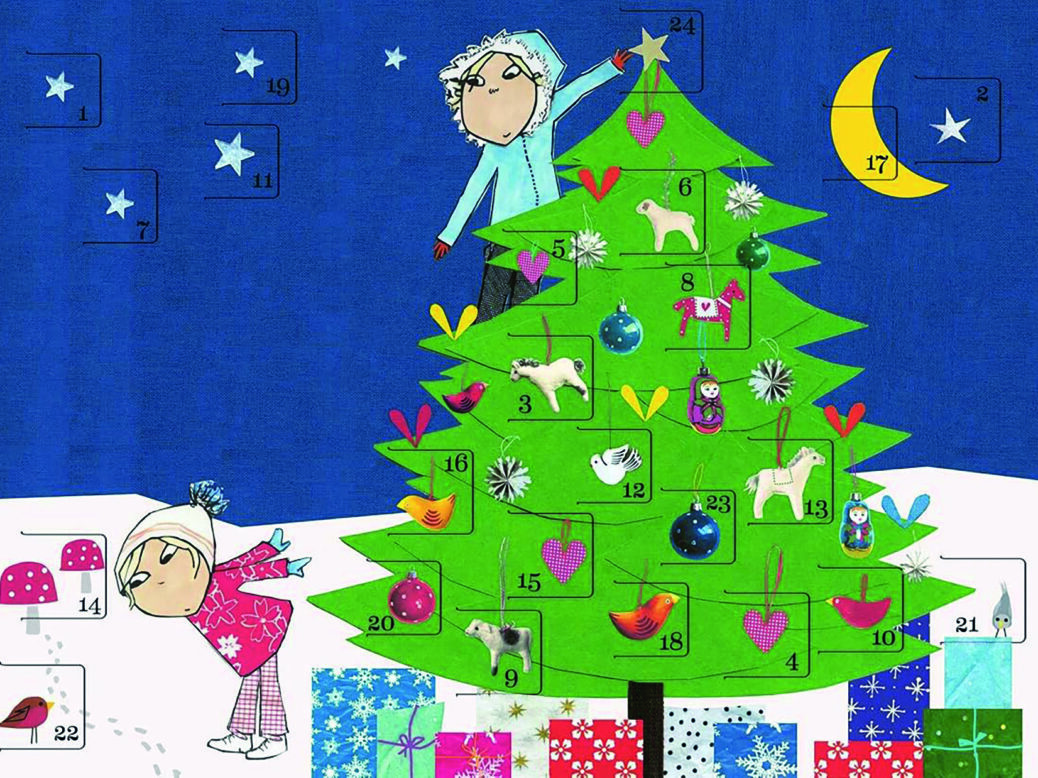
Lauren Child’s I Am Wishing Every Minute for Christmas (Simon & Schuster, £12.99, 3+) capture Lola’s yearning impatience. Charlie suggests ways of delaying gratification via lists, making cards, baking biscuits and more. Funny, instructive and utterly charming in its quirky illustrations and typography, it will help parents as much as children in the nightmare before Christmas.
Another riff on pester power is Oh Dear, Look What I Got! by Michael Rosen and Helen Oxenbury (Walker, £12.99) A child goes to the shop for a carrot, but gets a parrot, gets a pup not a cup and so on. The ensuing chaos will have a 3+ child squealing with laughter. A delicious new classic, it satirises consumer culture while celebrating serendipity.
Feminists should not hesitate to give sons and daughters Granny’s Flag (My Body Is Me Publishing, £5.99, 4+), Rachel Rooney’s little girl learns that her granny’s green, white and violet flag can be more than a den, a cloak or a pirate’s sail because it “holds the history of women who were brave”. At a time when girls’ and women’s rights have rarely been so embattled, Rooney’s text and Ros Asquith’s illustrations are an inspirational introduction to the suffrage movement.

What Feelings Do at Night is by the Polish author-illustrator team Tina Oziewicz and Aleksandra Zajac, translated by Antonia Lloyd-Jones (Pushkin Children’s, £14.99, 4+). It depicts our feelings as troll-like beings. It is as beautiful, funny and weird as Pixar’s cartoon Inside Out was banal. This is my picture book of the year.
Children of 8+ with enquiring minds will enjoy Jonathan Drori’s The Stuff that Stuff Is Made Of (Magic Cat, £16.99) about 30 amazing plants and all the things we make from them. Ice cream from seaweed; ropes and boats from papyrus; space rockets clad in cork. Alas, as Drori also points out, there exists a centuries-long social injustice for those who work on farming this produce. Still, it is a gorgeously stimulating non-fiction book for future farmers, inventors and politicians. Illustrations by Raxenne Maniquiz and Jiatong Liu add to the delight.
Captivating comedy comes in Maz Evans’s The Last Bard (Chicken House, £12.99, 10+). Will is a bullied boy taken by his widowed mum to clear out his grandfather’s messy flat. Here, he finds a copy of the complete works of Shakespeare, and several of the Bard’s characters, from Puck to Lady Macbeth, appear to help him foil his cruel uncle and cousin. Evans’s sprightly inventiveness may encourage young readers to try reading the real thing.
Peter Burns’s Shadow Thieves (Farshore, £7.99) is a propulsive thriller for 11+. Poor, streetwise Tom is whisked off to a thieves’ boarding school and the world of the Shadow League where he learns to climb, fight and steal. His true mission, however, is to rescue his friends from the workhouse. It’s clever, mysterious and the start of a promising new series that is less moral than Harry Potter but just as good-hearted.
The British East India Company lies at the heart of Naeli and the Secret Song (Chicken House, £7.99, 11+), an excellent second novel by the Costa Prize-winning Jasbinder Bilan. When her Indian mother dies in Hyderabad, Naeli receives a mysterious second-class ticket to England and a note asking for her to bring her violin. Dauntless, she tries to track down her missing English father in Victorian London, encountering racism, but also friendship. Bilan celebrates music, east-west creativity and the amplification of British justice by reverse migration.
For teens, The House Saphir by Marissa Meyer (Faber & Faber, £7.99) is a compelling gothic romantasy. Mallory is a con artist who can see ghosts. She earns her living conducting tours of the mansion where Count Saphir killed his first wife. Now his handsome, troubling descendant wants her to rid the house of his ancestor’s spirit. Funny, well paced and suspenseful, it’s a riff on the Bluebeard fairy tale that suggests money and power may not matter more than love and kindness.
[Further reading: The best children’s books for Christmas 2024]
Content from our partners



Related


This article appears in the 12 Dec 2025 issue of the New Statesman, All Alone: Christmas Special 2025
Join the debate
Subscribe here to comment