
What Assad can teach Putin about surviving international isolation
The Syrian regime has been partially rehabilitated, and it doesn't even have Russia's natural resources to bargain with.
ByNew Times,
New Thinking.

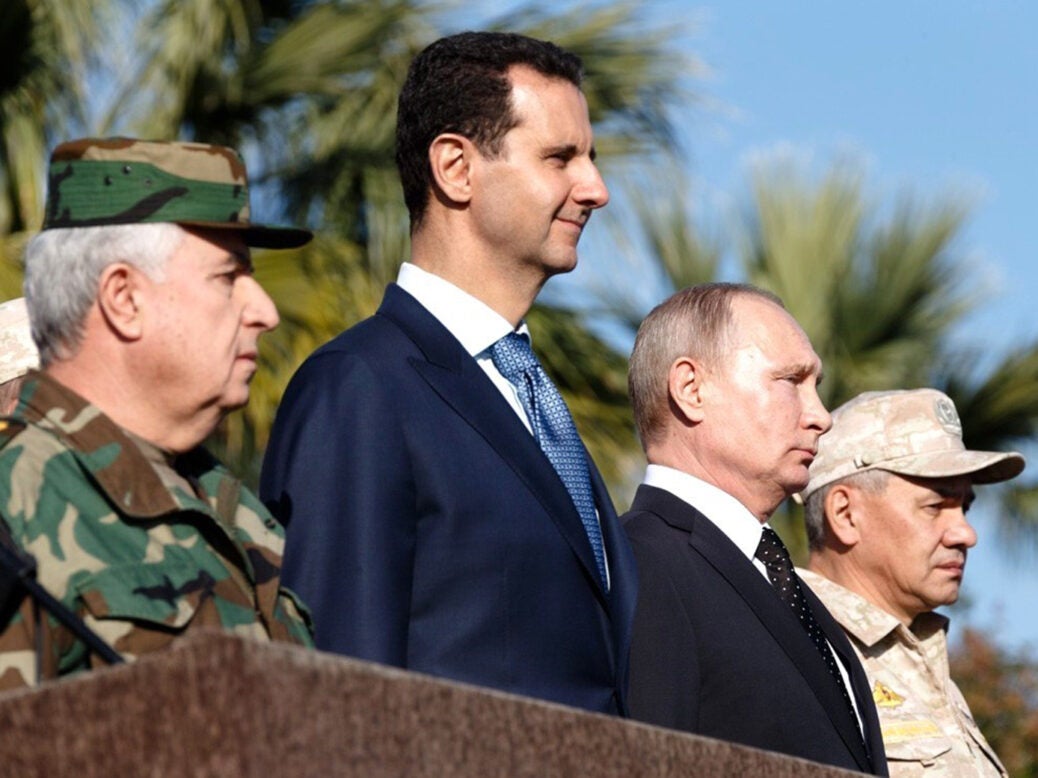 Bashar al-Assad is the president of Syria. Born in 1965, he took office in July 2000 a month after his father, Hafez, the previous president, died. In 2011, as part of the Arab Spring, protests began in Syria calling for Assad to be removed from office. They were violently suppressed, and the confrontation escalated to a civil war. The war continues, but was at its most intense in 2015. Assad, with the support of Russia, has retained control of most of the country. Find our latest news and comment on Bashar al-Assad here.
The Syrian regime has been partially rehabilitated, and it doesn't even have Russia's natural resources to bargain with.
By
In a shock announcement late Sunday, the president announced that US forces will be withdrawn from the Syria-Turkey border.
By
He has secured his warm-water port and sent a message: he doesn't abandon his allies.
By
War has been raging in Syria for nearly four years and much of the country is in ruins, yet Bashar…
ByHow Syria polite dictator won.
By
Sources in Washington report being given an hour to clear Syrian airspace as Russia votes for military intervention.
By