
In Exodus, Moses is tending to his flock when a bush bursts into flames and God’s voice calls out from within its leaves. At Eton, the Burning Bush is an elaborate 19th-century lamppost sitting on a stone plinth, and the voice is a teacher’s. For schoolboys the Bush is symbolic in its own way: during the “five-point challenge” in June, they have to break out of their boarding houses to meet at five places around the school – one is the Bush – while “beaks” (teachers) patrol the area and hand out detention to anyone they catch. Pupils have been known to carry snorkelling gear in order to jump in the river if a beak approaches.
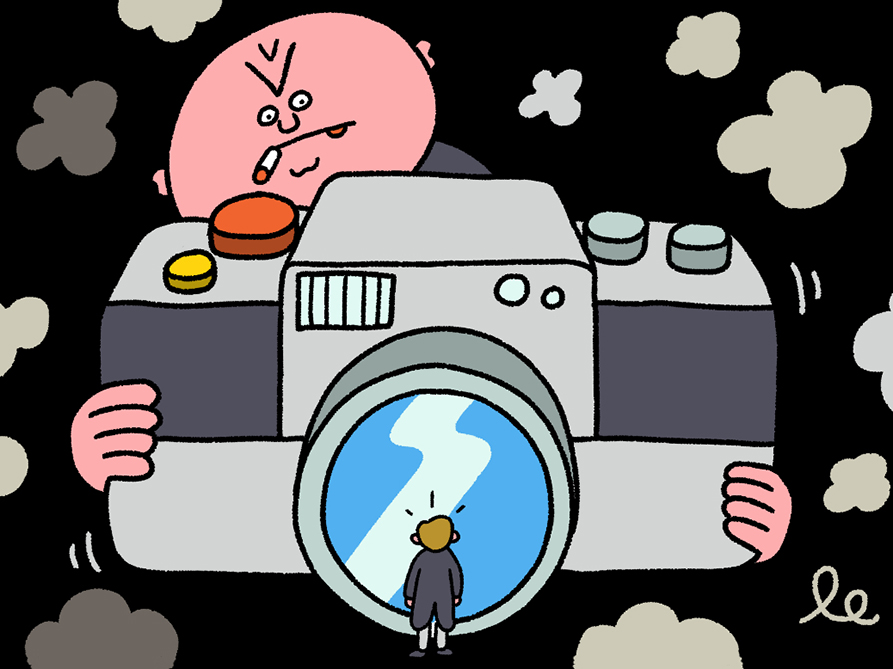
On a rainy Tuesday morning, the beaks were patrolling the Burning Bush, but this time they were looking for journalists. Wardens were carefully watching under their umbrellas for anyone trying to sneak an unauthorised look at Prince George, second in line to the throne and Eton’s newest “F-Blocker” (first year). His Highness is expected to join Manor House, William’s old house, found just a few feet from the Bush. As I approached the Victorian brick building, I was firmly corralled into the “media area”, a sodden football pitch on the edge of the grounds. “You’ll get a great view from here!” a smiling woman said, gesturing towards a line of cars.
The major broadcasters had been there since around 7am and were all drenched. “Nothing’s happened,” complained a GB News reporter, “and nothing will happen.” Eton staff and the Palace had been “very, very strict” about what access journalists could have, another hack said. “It’s 7am until 2pm, then clear off and leave them alone for the next five years.”
Some very excited royal bloggers were clustered under a tree. An Italian journalist showed me a selfie she’d got with Kate Middleton. “I couldn’t believe it!” She’d met Prince Edward in a church recently, but her hands were shaking so much she couldn’t take a picture. He suggested they ask the vicar to take it. “He’s so kind,” she said. “Such a kind man.”

The Italian was standing with a man who runs a Facebook page dedicated to filming the King’s Horse Guards. He has posted videos from the changing of the guard at Buckingham Palace, but the Horse Guards at Whitehall get more views. He has a million followers across his channels. Five days a week, he stands and watches the guards on horseback for two hours and films any interactions they have with the public.
He showed me some of his videos that did well: a man dancing in front of a horse, someone tickling a horse’s nose. “People like this kind of stuff.” A friend of his got 98 million views the other day for a video of a man bowing to a guard. “Normally Japanese people bow, but this was special because he was European,” he explained. Seven or eight people regularly film the guards with him, he said – and 30 or 40 more come occasionally. The Italian journalist nodded. “We know who we are.” Italians, she said, liked the royal family even more than the British did.
Under a Sky News umbrella, a journalist was doing a bit to camera about Eton’s famous alumni: 20 prime ministers, Prince William, Prince Harry. “Eton perhaps doesn’t offer everything when it comes to teaching about the lives of ordinary people,” she said. “For that part of his education he’ll have to look way beyond the gilded gates of Eton College.” In the distance, in the Berkshire town dominated by the world’s most famous school, you could see the red-brick towers where, somewhere, a 13-year-old future king was getting ready for his first day.
Being an F-Blocker isn’t easy, even if you’re second in line to the throne. Eton’s culture is strictly hierarchical, and F-Blockers are squarely at the bottom, sometimes forced to cook for older boys or collect their laundry. Old Etonians tell stories of torment: the day all F-Blockers in one house were forced to run down a long corridor while getting smacked with cushions and, in one case, a keyboard. Or the time a boy was dared to down two shots of ink and had to have his stomach pumped. Or when the boys dragged all first years out of their beds for “F-Block Fight Club”. They were each allowed one weapon – belts, pens, rulers – and instructed to battle it out.
Being a royal isn’t necessarily protection against that kind of thing. One Etonian remembered a fellow schoolboy a bit lower down the line to the throne being “a bit of a loser, really”. Another used to know Prince William’s house captain. “He used to pin his arms down and say, ‘Who’s King?’ Don’t think William liked it very much.” Eton’s charming streets aren’t safe either. If you’re running late, you might take a shortcut through an old alleyway called Judy’s Passage, but an F-Blocker risks getting “greensleeved” – shoved into the mossy wall. At all times you’re in danger of a “booking” – your books getting smashed out of your hands, ideally on a busy road.
The beaks are not much nicer. Pupils’ academic rankings used to be read out in an assembly after exams, although teachers coincidentally stopped doing that around the time Prince Harry graduated (with a B and a D at A-level). Still, if your work is poor, you get a “rip”, meaning the teacher rips your sheet and you bring it to a senior master to explain yourself. (Now Eton’s work is done on iPads, this is largely metaphorical.) If your work is even worse – say, AI-generated or plagiarised – you might get “the bill”, delivered in the middle of a lesson by prefects who apparently relish the job. The bill means a hearing with the deputy head, who might dole out a detention – writing lines in the world’s oldest classroom – or, worse, a “closegating”: reporting to a teacher once an hour from 8am until 8pm wearing full dress (stiff white collar, waistcoat, black tailcoat and pinstriped trousers).
You might get a suspension for bullying, or for a really good prank. Old Etonians speak, misty-eyed, about the time a bunch of porn magazines were found glued to the ceiling of the dining hall as everyone arrived for breakfast. Some hijinks were uglier: in 2011, Ian Bone, the founder of the anarchist group Class War, came to Eton for an anti-elitism protest. He kept chanting through a megaphone, “We’re in the belly of the beast,” one old boy recalled. Several teenagers responded by taking out their wallets and lighters and burning banknotes in front of him.
But what would you expect? You can’t demand that boys given everything since birth should be any better than that. None of the strict rules on dress, phones and timekeeping are really about instilling a sense of humility. Eton knows that would be pointless to attempt. “You should never feel guilty about going to Eton – you should be proud that you have made the most of the opportunity,” the head teacher, Simon Henderson, told graduating boys in his leavers’ speech last year. He urged them, however, to recognise the responsibility of their privilege. “If you choose to behave like the tabloid press expect you to behave, then perhaps you deserve what comes your way.”
Today, Eton held off the tabloids. Only a select few reporters were allowed to watch Prince George arrive, with his smiling parents, to shake the headmaster’s hand before changing out of his suit and into Eton tails for a photo. Meanwhile, along Eton’s rainy streets, many more tiny, nervous boys got out of Mercedes and Land Rovers, lugging tennis rackets and golf clubs as big as their bodies, flanked by men in suits and sleek women with stretched faces. They hadn’t yet acquired the easy arrogance their education would instil in them. Some older boys, meanwhile, were lounging in cafés or buying last-minute waistcoats and white ties. I asked one if he was excited to go to school with a prince, and he laughed. “I really don’t care.”
[Further reading: The National Trust and its discontents]
Content from our partners



Related
This article appears in the 10 Sep 2026 issue of the New Statesman, The World According To Ed
Join the debate
Subscribe here to comment