
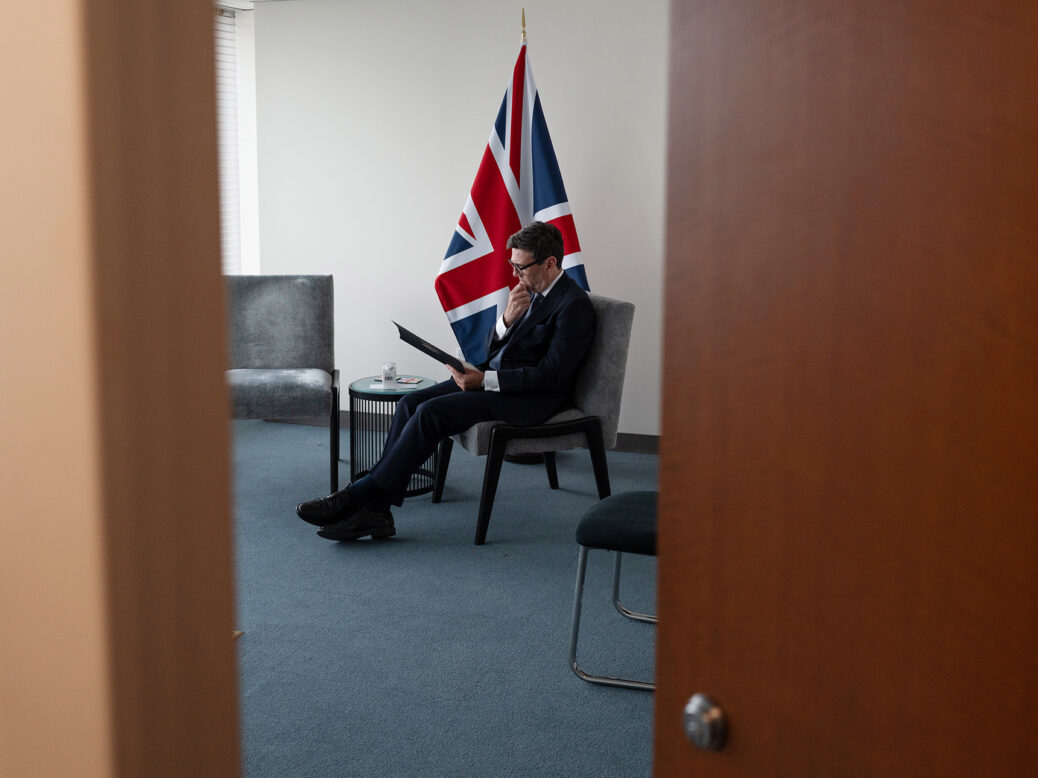
Andy Burnham doesn’t like to be rushed. Out and about, he likes to stop for a chat with members of the public. Advisers and aides wait, smiling, while anxiously looking at their watches. As mayor of Greater Manchester, he was famous for letting meetings run over. It is sometimes known as “Andy time”. Louise Haigh jokes that, even as Prime Minister, when Burnham is out of the country – as he has been this week at the Commonwealth Heads of Government Meeting in Antigua – the only big difference is that cabinet ends on time.
Burnham has also made taking his time a political strategy. At every stage of his journey from Manchester to No 10, he has paced himself, refusing to be drawn on policy areas, cabinet appointments or anything else until he is ready, even if that means kicking the can down the road in the short term. Last month’s Budget was another, long-planned and carefully strategised kicking of the can.
In their very first weeks in their jobs, Burnham met with John Healey and agreed that their first fiscal event should be small and stable, giving households and businesses a small bit of “breathing space”. There was a commitment to hit the target of 3 per cent of GDP on defence in the spending review, but no money behind it yet, while welfare, social care and the other major challenges facing the country were put off until later.
But this was perfectly fine, we were told, because it was part of a longer-planned process. On the steps of Downing Street on his first day as Prime Minister, Burnham told us we would have to wait until “later this year” for his comprehensive plan for the country: a Ten-Year Plan “laying out a path from where we are now to where I believe we all want Britain to be”. The Budget would not be a big event, as I wrote in the summer, because the Ten-Year Plan – along with an ambitious paper on rewiring the state – would set the direction first, and then next year’s spending review would be the major fiscal event allocating all the money.

Yet, with expectations high, some familiar with the process are already worried that the Ten-Year Plan may be another kicking of the can. I can reveal that it may not be the long, comprehensive document that we might have expected, and will be the beginning – not the end – of a long consultation process.
It will be a speech, delivered by the Prime Minister before Christmas, to tick the box of a plan delivered “later this year”, accompanied by a document that may be “slimmer than expected”. It will mark the beginning of a six-to-nine-month process of consulting with the public, think tanks and everybody else about government priorities – as well as kickstarting work across government to define what some of its plans will look like in more detail. That process, in turn, will set the priorities for the spending review, itself a procedure that will take months. Suddenly, critics fear, we are looking at a government spending well over a year discussing its plans without taking the major action to address them.
No 10 would argue that criticism is unfair. Planning for the long-term is important, and done all too rarely in government, even though these new, much longer timelines may surprise people. This is Burnham’s opportunity to build upon some of the priorities he has already set out and dreamed about long before he entered No 10, such as devolution and greater public control of utilities, and to show the country where it is going.
Burnham has told colleagues he wants it to be a plan that gives people hope, and that spans their whole lives: it will be structured around their life stages, from growing up to growing old.
If the Burnham crew argue it is taking the time to get things right, and running towards the thorny issues, the government’s internal and external critics now worry it is turning into a talking shop, taking only the most incremental of actions. The question both camps might ask, however, is how long Burnham can get away with apparently ducking the major issues.
One answer, ironically, is that Healey’s small Budget was one of the most popular of recent years. Its sharp, clear political trade-offs – taxing the bankers more to give most households £100 off their energy bills – saw it poll as the fairest since 2021. Could it be that the British public doesn’t mind so much if the huge questions on welfare, social care and defence are put off?
Hayden Munro, Burnham’s well-liked director of political strategy and the former campaign director of ex-New Zealand prime minister Jacinda Ardern, recently briefed colleagues on No 10’s strategy. It is about the politics quick fixes – the very things Burnham is pushing on his TikTok. Tackling noise on trains, extra costs when booking flights, parking charges: small, everyday things that add up. People in Westminster might roll their eyes, but recent polling by More in Common showed that Britons actually prefer action on smaller, tangible changes they can see sooner – even though the numbers show they are no better off in the round. This is “Andy time” now. Burnham is delivering small fixes for today, but some in his party are worrying about tomorrow. The question isn’t just whether the public will let Labour get away with putting off difficult decisions, but whether that’s the right thing to do. The party, it argues, is in government, mid-term, with a huge majority and should be doing things, not just consulting and talking about them. If it doesn’t, they worry Labour will be wasting its opportunity to make a difference. No rush, Andy.
[Further reading: Will the public back Labour’s new immigration rules?]
Content from our partners


Related
This article appears in the 05 Nov 2026 issue of the New Statesman, Nigel Farage's bastards
Join the debate
Subscribe here to comment