
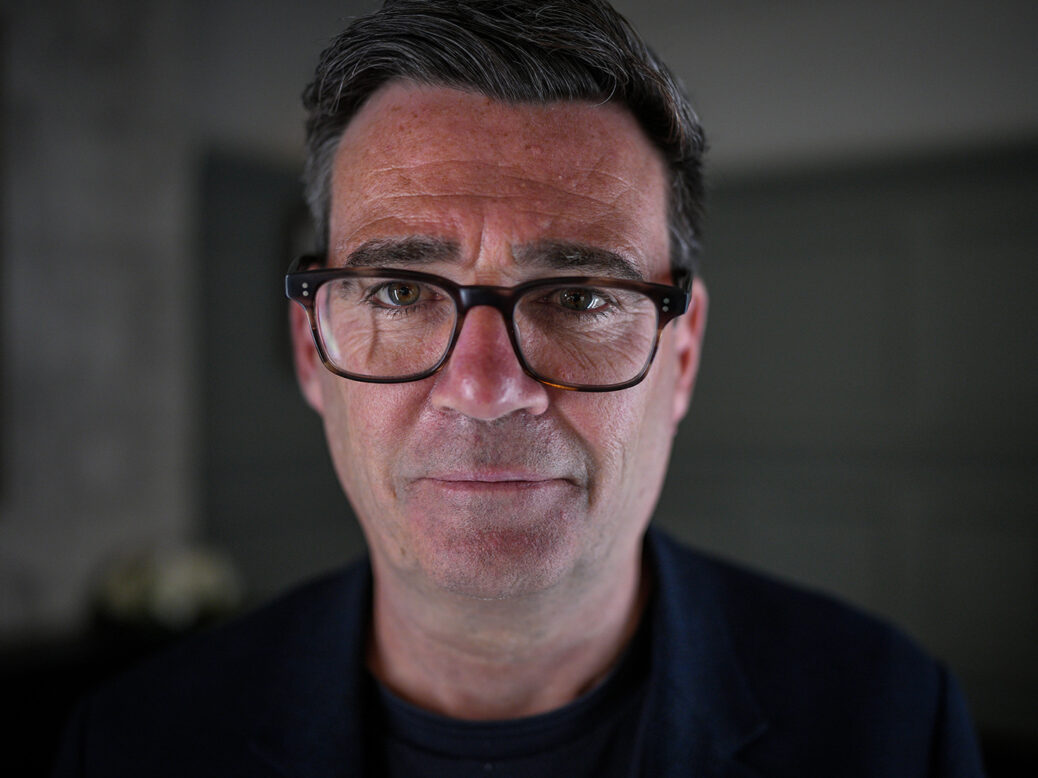
If the history of British politics was based on each prime minister’s first hundred days, things might look very different. Gordon Brown (father of the nation) and Theresa May (imposing her iron will on a divided party and country) would be remembered as political colossi destined for famous victories. Margaret Thatcher, reeling from a divisive first Budget, was on her way to becoming an abject failure who would be lucky to get a footnote in the history books.
On 27 October, Andy Burnham marked his hundredth day as Prime Minister, and the milestone’s usefulness as a measure of success, imported as it is from the political culture of Washington DC, seemed as dubious as ever. The real verdict on whether the Burnham project is a success or not will come further down the line, starting with the aftermath of John Healey’s Budget, which was delivered on day 101 of this government.
But we can at least say that Burnham has not messed it up so far. While the improvement in Labour’s position since his Makerfield gamble might seem modest, he has done things that the deeply gloomy Parliamentary Labour Party (PLP) thought impossible just six months ago. They are ahead in the polls, thanks to a “Burnham bounce” and a Green slump. Labour is now reaching for the crucial 30 per cent mark, while Reform recedes and scraps with the Tories for second place. People no longer hate the Prime Minister.
Whether that holds – and whether more miracles await – remains to be seen. The cabinet, the PLP and even Fleet Street are all adjusting chaotically to the new era of politics. This is an altogether different experience from Keir Starmer’s premiership, but is turbulent in other ways. The pluralism and openness that Burnham advocated on the road to No 10 – and that worked so well when he was mayor of Manchester – is already clashing against the conventions of Westminster.

“Under Keir, cabinet was usually a glorified presentation by a minister. The PM would sit there stony-faced, nodding, everyone would nod along, then leave and brief all their disagreements to the newspapers,” said a source. “Under Andy, it’s a more open political discussion.” At this early stage, there have been fewer leaks than under Starmer. It could just be good behaviour from ministers trying to impress the new boss. Or perhaps Burnham’s primus inter pares approach is working.
In the spirit of open debate, a few cabinet disagreements have already played out on the public stage, most noticeably on indefinite leave to remain, in which the Housing Secretary, Angela Rayner, and the Energy Secretary, Miatta Fahnbulleh, took a different position to the Home Secretary, Shabana Mahmood. All very well, until some of the nasty backbiting – one Mahmood ally calls Fahnbulleh “an important person who is used to being an unimportant person” – graduates from Westminster gossip to full-blown ministerial fallouts. Divided cabinets rarely thrive, and the strength of Burnham’s self-confident, unguarded approach could become a weakness if political winds change.
Then there is the press. Starmer was so cautious in choosing his words to coincide with the government’s agreed line on a given issue that its spokespeople could, when questioned by journalists, fall back on that favoured stock phrase: “You have the prime minister’s words.” It’s quite the opposite under Burnham, a PM who cannot open his mouth without appearing to commit news and generate new government positions on the hoof, the latest being that Britain could return to freedom of movement with the EU after a referendum. His spinners are developing strange workarounds to calm down excitable hacks. The PM, we are told, is “starting a conversation” rather than committing to a policy, or stating a “personal position” that is different from the settled will of the government he leads.
Burnham has now opened several debates he admits cannot be resolved in this parliament – social care, electoral reform and, that most sensitive issue, the UK’s future relationship with the European Union. The sceptics accuse him of deferring the decisions on big issues. The believers say we now have a PM who understands his voice is the loudest in the country – and he can use it to change politics, its mood and the range of acceptable opinions. In the decade since Brexit, public displays of pro-European conviction were considered eccentric and politically taboo. Within a hundred days, they are the accepted opinions of the British PM. Burnham is at least engaging in the “pitch-rolling” his predecessor often failed to do.
Starmer spoke like he was his own spokesperson, never deviating from agreed lines. Accusations of a robotic, unfeeling approach followed. Worse, his voice was so unenlivening that he slipped into the background of political conversation. It is extraordinary on reflection that Starmer, the first Labour prime minister in more than a decade, was less recognisable to the public than Nigel Farage, who dominated headlines during Labour’s first two years in power. This is no longer the case with Burnham. He has, to take another import from America’s political culture (this time from the former Donald Trump spinner Steve Bannon) “flooded the zone” of political news, even if the results are sometimes messy.
After a hundred days of Burnham as PM, we can say Labour is happy with the trade it has made and the country is open to persuasion. Now comes the hard part.
[Further reading: Britain is giving Andy Burnham a chance]
Content from our partners



Related
This article appears in the 28 Oct 2026 issue of the New Statesman, Bin the Budget
Join the debate
Subscribe here to comment