
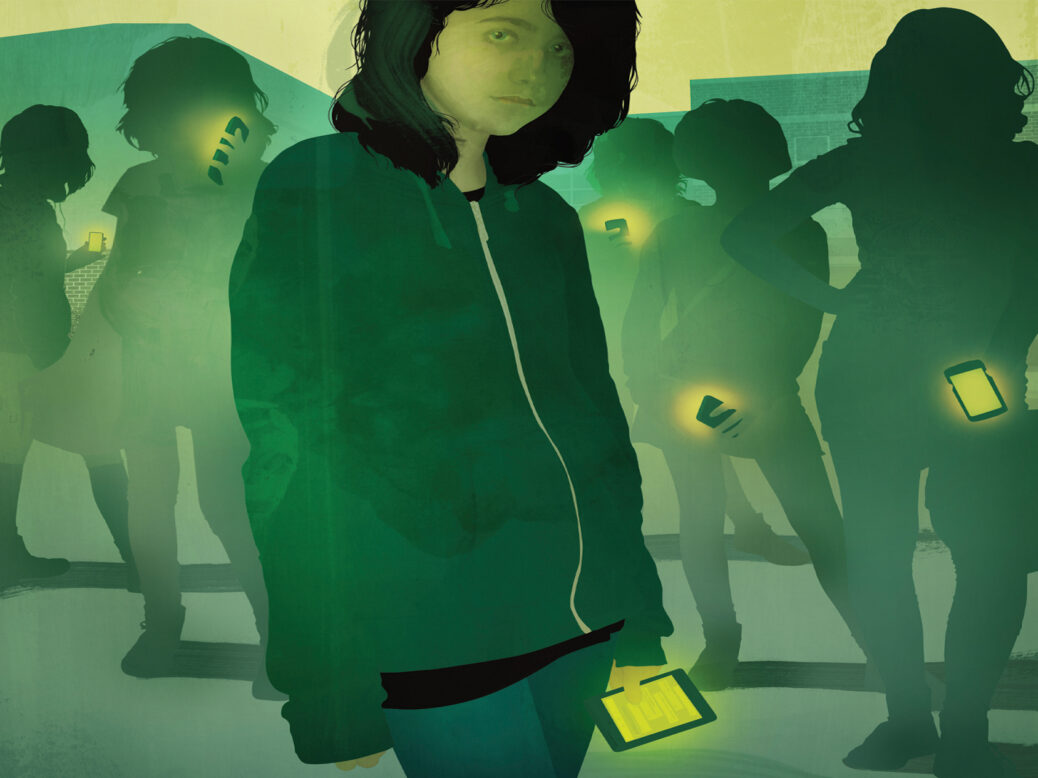
Thirteen years ago and straight out of university, I flew halfway across the world to work as a teaching assistant at a South Korean boarding school. The school was in its third year and had been conceived as a luxurious, state-of-the-art alternative for Korean parents who wanted their children to get the top-rate British education famed across the world without sending them abroad. To entice parents to entrust their kids to what was effectively an experiment, every pupil enrolled the year it opened was given their own iPad preloaded with an array of edtech apps – a statement of the modern, cutting-edge ethos of this new educational endeavour.
The intervening decade and a half since those first pupils got their iPads has seen a vibe shift in the attitude towards tech and schools. Maybe it’s the pandemic, which saw millions of children across the world become guinea pigs for virtual learning for months at a time, or the more recent fears about AI that have triggered a backlash and renewed appreciation for the analogue world.
Either way, the class signifiers have switched. Now, tech is pervasive in state schools across the UK, while the most privileged pupils – at Winchester College, which has reverted to good old pen and paper, and the schools where Silicon Valley evangelists send their own children – are reverting to learning in a world before screens. And panic is spreading – among parents, education experts, doctors and even children themselves.
The most recent intervention comes in the form of a letter, sent on 12 October to the Education Secretary and Health Secretary and signed by more than 150 healthcare professionals, warning of the risks of too much screen-based learning in schools. These GPs, ophthalmologists, audiologists, paediatricians, speech and language therapists detail the eyesight problems and issues with language development they are seeing in young people raised on reasons. Other groups have also flagged the risks of sleep disorders and reduced concentration.

How widespread is the problem? According to the letter: “recent analysis has revealed that nearly a million children are spending nearly every lesson on screens, and that many children are spending longer on screens in the classroom than they are recommended to spend across an entire day”. It adds that “around £900 million is spent annually on edtech” in the UK, noting the lack of evidence with regard to both its safety and its educational value.
“No drug, food product, or toy is given to millions of children without a single safety check. Yet, astonishingly, edtech devices and platforms currently used by millions of pupils in schools and for homework every day of the week face no equivalent child-focused health scrutiny,” it reads.
“They’re procuring ed tech without giving a second thought about the impact on children’s health,” says Dr Rebecca Foljambe, a GP and anti-screens campaigner who signed the letter. “The impacts on health don’t seem to have been thought through at all.”
In 2024 Foljambe founded the Health Professionals for Safer Screens campaign group after becoming alarmed at the number of children showing up at her surgery with issues she believed were linked to addictive screen use. Since then, warnings about the mental health impacts of social media use among young people have reached a fever pitch. One of the last acts the Starmer government made was to promise a ban for under-18s. A statutory prohibition on smartphones in schools has been in place since June 2026, although in practice many schools had already issued their own bans. And behaviour is changing too: an Ipsos poll from September 2026 found the vast majority of young people (aged 18-34 – the generation raised on smartphones) were making some attempt to limit their own screen use, from turning off notifications to removing distracting apps to employing the “do not disturb” mode.
But while personal devices have been removed from schools and social media has, by its most hyperbolic detractors, been compared to cigarettes, the use of edtech has mostly slipped under the radar. Partly, this blind spot is down to the evangelistic promises associated with these products – personalised learning, the gamification of education to inspire even the most disengaged pupils, training young people in the technologies of the future. But it also has a much more prosaic cause: money and resources.
UK schools have among the biggest class sizes in the developed world, with an average of 27.9 pupils in a key stage 2 class (ages 7-11) and 26.2 for key stage 1 (ages 5-7). A report from September 2026 by the National Education Union warned that schools have £4.5bn less in real-terms funding than they did in 2010. Thousands of teachers are leaving the profession, and while pupils numbers are also going down (due to changing demographics), inflation, maintenance backlogs and demands for teacher pay rises, plus increasing provision for Send pupils, have all strained school budgets.
“In underprivileged schools there’s been mission creep – tech replacing teachers,” Foljambe warned, adding that “posh schools are becoming analogue”. Eschewing tech – iPads, interactive whiteboards, AI tutors, homework sent via apps – has become a status symbol, a statement that this school can afford the real-life teachers it requires and doesn’t need to rely on digital versions. The discrepancy can affect children their whole lives, instilling a reliance on technology with all the health and developmental challenges it might bring on the most vulnerable children while the most privileged are protected.
The omnipresence of screen issues in educational settings has even crept into nurseries. “Walk into many nurseries and there’s a gigantic screen on the wall just playing Bluey or baby yoga,” Foljambe told me. The impact that is having on language development is particularly alarming, with speech therapists seeing children just about to start school who have the language proficiency of a nine-month-old. Those impacts are exacerbated for those whose home lives are also dominated by technology, while parents trying to raise screen-free children – a growing middle-class trend – might not realise how their efforts are being undermined.
There are always dire warnings when new technology is introduced, particularly when it relates to children. There are clinicians (and parents) who are much more relaxed about screen use and debates about the extent to which the rise in certain disorders is linked to any single factor. (The data around mental health and social media use, for example, is mixed and suggests correlation rather than outright causation.)
And edtech is not without its supporters in the education community. Sixteen years ago – just before the school I worked at in South Korea opened its doors – the wildly popular Freakonomics podcast put out an episode on a revolutionary experiment in New York’s public school system. Known as “School of One” (now “Teach to One”), it upended the classroom model and instead used technology to give each pupil a personalised curriculum tailored to their abilities and enables individual tutoring. It was heralded as the “future of education”, and early intendent analysis showed pupils making progress significantly above the national average.
But while certain programmes may have their benefits, the widespread rollout without data or testing has raised alarm. Foljambe referred to a “revolt” among parents who are “sick of fighting a losing battle” and pushing for the government to intervene, on behalf of their children’s health as well as their education. She shuddered at the thought of schools “thrusting an iPad into the hands of small child as if it’s a Christmas present.”
I think back to that school in South Korea, the pupils handed iPads as a way to cement its credentials as an institution on a par with Britain’s top public schools. Whether they still rely on technology there or not, I doubt that gesture would resonate the same way now. Not when Winchester is back to good old-fashioned pen and paper.
[Further reading: The welfare state isn’t for everyone]
Content from our partners



Related


Join the debate
Subscribe here to commentAs embourgeoisement fades from the memory there will be no need for mass education to a high level. The children of the middle class had a good run after the Robbins Report of 1963 and took up the vast majority of new university places and soldified their position in a growing economy. The children of the working class never really took to the opportunities that were available because of a lack of knowledge of how the system worked and relatively poor schooling compared to the equivalent middle class schools. As the economy stagnates the mass university education of the 1990s onward will be a memory because it cannot give most of these graduates a good well paid job and workimg class children are averse to debt. It doesn’t matter if you’re educated with pen and paper or screens, the wealthy will make sure their children are first in the queue for the few well paid jobs of the future. It was ever thus. Social mobility was always a mirage.
The “vibe shift” is less vibes and more evidence informed. Direct/Explicit instruction has become more dominant (that is the teacher teaching from the front responsively and adaptively to their students) rather than discovery/inquiry based learning (where the students must discover the learning whilst their teacher acts as a guide).
We’ve also had a general movement away from edu-tainment thanks to the focus in knowledge-rich curricula, rather than 21st Century Skillz. Lots of this is thanks to the coalition government’s education reforms (which looking at PISA results and state secondaries seem to have had a positive impact overall, particularly when compared to Wales and Scotland).
The overhaul in hoe teacher’s are trained in terms of content has massively improved now as well, engagement with evidence and a ficus on how student’s learn has meant a much more informed and able workforce than previous (‘make it fun’ initiatives).
That being said educational myths still abound, particularly in the media, regarding learning styles, which has been thoroughly debunked), which suggest students learn best in fundamentally different ways eg visual, audio, kinesthetic. This amd other myths often hamper the attempted public discourse in education.