This government’s efforts to keep a tight lid on the details of Wednesday’s Budget has succeeded in creating a sense of calm. But does the chancellor realise that the storm is already here?
Living standards are falling. The lack of real wage growth since 2008 has collided with three global events which have pushed up inflation: supply chain issues following the Covid-19 pandemic, Putin’s invasion of Ukraine, and Trumps’ attacks on Iran. Purchases that we once took for granted are becoming unaffordable for a growing number of people. According to the Resolution Foundation this has resulted in a kind of economic lurch: the equivalent of 13 years of “normal” price rises in just five.
The Bank of England has tried to temper the last few years of inflation by raising interest rates, one of the few tools it has at its disposal – a blunt one at that. But with inflation currently driven by geopolitical events overseas, interest rates do more to harm than to help. The higher the rates, the harder it becomes for this government to invest in the things that will protect us from future price shocks, like homegrown renewable energy so we’re less exposed to the changing price of fossil fuels.
Rate rises have other effects too. Households coming off five-year fixed mortgages will find that the average rate now being offered is more than double, eating up any disposable income they had left. For families forced to borrow to cover rising energy and food bills, they also see the cost of their credit card bills and personal loans rise. Meanwhile commercial banks and energy companies rake in record profits that, at the moment, don’t seem to make their way back to consumers in the form of lower prices.

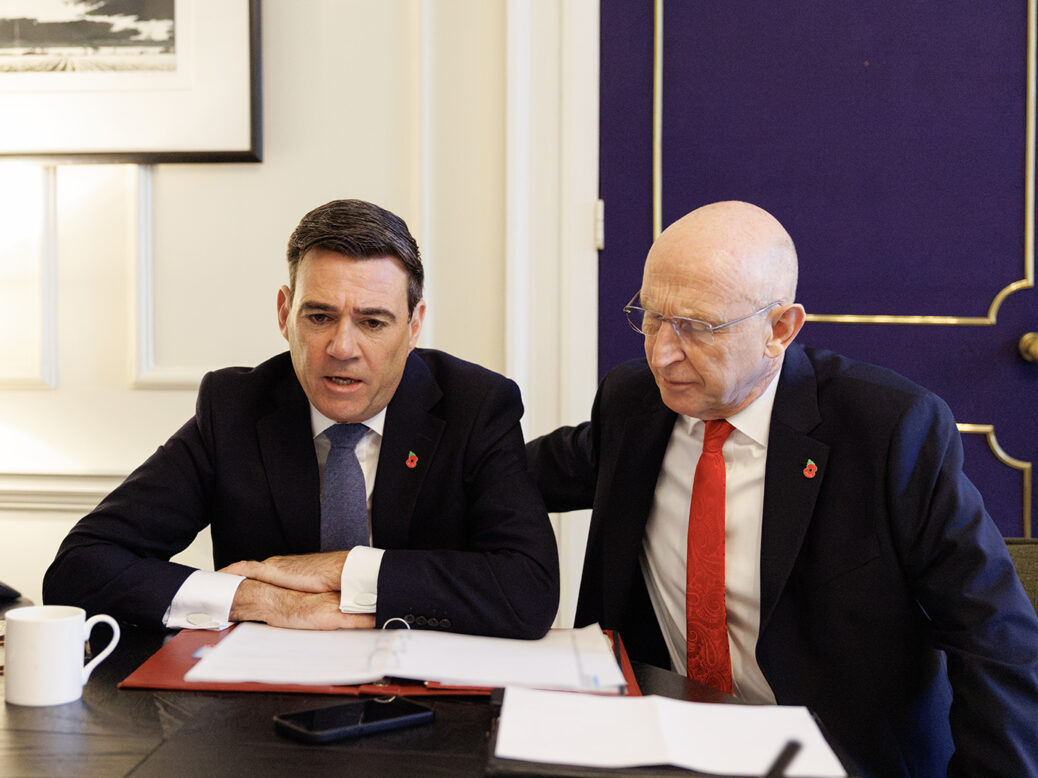
Andy Burnham understands the danger this poses. That is why he has staked his premiership on tackling the cost of living, promising “breathing space” today and committing to bring our essential services back under public control to stabilise prices in the medium-term.
But it doesn’t appear that his chancellor got the memo. Healey is rumoured to be planning to restore the tax on bank profits to its 2023 level. Banks, at the moment, benefit both from billions in taxpayer-funded support and high interest rates enabling them to keep savings rates low while charging borrowers more. This week the New Economics Foundation found that restoring the surcharge on banks would reclaim only three per cent of the big four bank’s projected profits. With only tiny tax changes like this expected, any help with the cost of living at this Budget will be small and highly targeted.
This is both a political and economic misstep. The test for any incumbent government is how well they have done at raising living standards. The time left to do this is running out. The chancellor might be buoyed by recent statistics showing a boost to GDP, but in the eyes of voters, it’s a simple pass-fail metric: are they better off than they were in 2024? We only need look to the US Democrats’ last defeat or Trump’s midterm prospects to understand how much the price of a pint of milk still matters.
To avoid the same fate, this government should be using the Budget to deliver an emergency cost-of-living package, funded through reforms to capital gains tax and a proper windfall tax on banks. Interventions should focus on the essentials, like an affordable block of essential energy for every household, rent controls, free bus travel for under 25s or expansion of free school meals.
Modelling by the Joseph Rowntree Foundation has shown that a package of this kind could materially improve people’s lives, returning real incomes to growth and sidestep the impact of the ongoing conflict in the Middle East. Directly lowering prices in this way would also tackle inflation, make it less likely for the Bank of England to put up interest rates, and reduce the cost of government investment in protecting us from the price shocks of the future.
Healey may pull a cost-of-living rabbit out of his hat and surprise us all. But if, like his predecessor Rishi Sunak, he opts for small interventions, targeted only at the poorest, millions will be left exposed to the coming price shock. Energy bills could rise by up to 25 per cent in January, hundreds of pounds higher than their 2022 peak. And like Sunak in 2022, the only option left to the chancellor will be to return to the dispatch box in a few months with a better offer.
I’m reminded of what energy expert Gareth Fearn recently posted: “The whole deal of the neoliberal period was: your wages won’t go up as much, the public realm is sold off, but you get cheap stuff. Once the ‘cheap stuff’ part of that bargain dries up you are going to have to expect that there will be problems!” The neoliberal bargain is starting to show cracks.
Content from our partners



Related