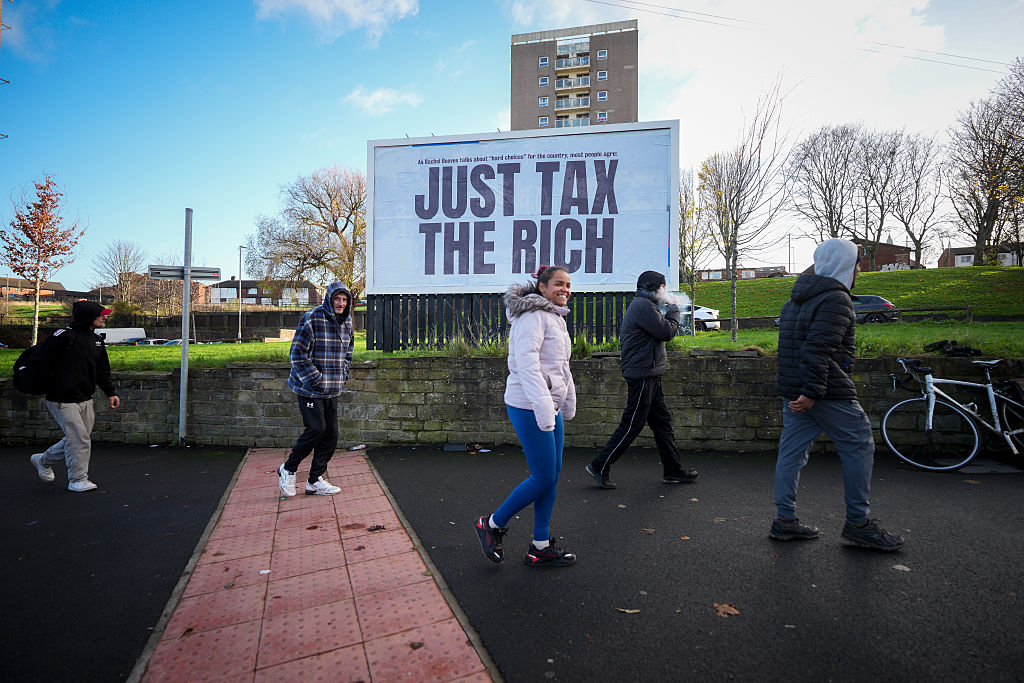
Andy Burnham has promised to transform the nation. Conspicuously, he is not ruling out raising taxes on wealth to do so. But in the debate about wealth taxes, less attention has been paid to a different question: how well are we collecting that money right now?
The answer is concerning. HMRC is potentially leaving billions uncollected. The tax authority is slowly improving how it collects taxes from those it defines as ‘wealthy’, meaning people with assets of over £2m or an income more than £200,000. Officially it estimates that it fails to collect around £2bn a year from this group.
But this doesn’t tell the whole story. The amount of revenue it collected from the wealthy through compliance and enforcement work has hugely increased in recent years, from £2.2bn in 2019-20 to £5.2bn in 2023-24. HMRC now recovers more in these taxes than it estimates
was lost to non-compliance in the first place. The better it gets at taxing the wealthy, the more it learns about further potential revenue that has so far gone untapped.
Over half of that tax HMRC estimates it fails to bring in comes from what it calls “legal interpretation”: cases where a taxpayer’s reading of the rules and HMRC’s don’t match. The remaining amount is down to error and carelessness, and deliberate evasion and avoidance.

HMRC’s historically poor performance in enforcing existing wealth taxes is due to a combination of low resourcing, poor data integration and skewed incentives. Resourcing is a major challenge: HMRC staff are outgunned. Fewer than 1,000 tax officers oversee 850,000 ‘wealthy’ taxpayers. Most of these staff are generalists without deep expertise in the technical aspects of wealth taxes. Meanwhile, over 70 per cent of wealth taxpayers communicate with the tax authority via professional advisers rather than directly like most of us. This puts HMRC staff at a disadvantage.
Data is also a challenge for HMRC – a common sticking point across modern government. The fundamental problem is that HMRC doesn’t properly know what assets anyone has, unlike incomes, which it follows closely. Normally, assets only become visible when they are sold or passed between people. HMRC has no single database of wealthy people. And despite now swimming in data coming in from places like Companies House and the Land Registry, it’s a struggle to join this all together into a usable form for charging people the right taxes.
Finally, there are too few sanctions to offer a credible deterrent against people either making honest mistakes or deliberately underpaying their taxes. HMRC prosecuted only 25 wealthy individuals in 2023-24, and in recent years has never prosecuted more than 30. The total amount levied in penalties on wealthy people fell from £16.2m in 2018-19 to only £5.8m in 2023-24.
HMRC faces challenges – but also an opportunity. Solving some of these problems could mean this government can collect billions more in tax revenue – without the Chancellor needing to change a single line in the tax code. So, what should John Healey change at the Budget, if these problems are to be fixed over time? Recent research from the New Economics Foundation (NEF) has called for the Treasury to announce a “High Wealth Compliance Programme” with three aims.
First, the Chancellor should invest in HMRC’s capacity to tax wealthy people by hiring more staff to the relevant teams and bringing in more specialist skills like data science, investigations and litigation. The cost of extra staff would be more than covered by the generation of extra tax revenue: HMRC compliance work with wealthy individuals costs around £350m annually but brought in £5.2bn in the last year of data.
Second, the programme should build a single wealth database, with the aim of making Britons’ “invisible wealth” visible to the government (where possible) for the first time. This database would bring together all the data on people’s wealth held in various branches of government and combine it with data from banks that the government gained access to after reforms at last year’s Budget.
Third, ministers need to rebuild a credible deterrent against wealthy people failing to properly disclose the income or wealth they owe tax on – either by mistake or by design. More regular prosecutions, and more visible investigations and sanctions, would help reset the expectation that everyone is responsible for ensuring they pay their fair share.
Our new Prime Minister has shared his lofty ambition to bring an end to 40 years of neoliberalism, and the autumn Budget will be the first indication of how likely he is to achieve this. Compliance and enforcement may not be the most thrilling terms, but they matter hugely to this project for two reasons. First, if HMRC were to improve its performance on taxing wealth – as it is gradually trying to do – that would bring in much-needed revenue to Treasury coffers and take some pressure off John Healey’s already intensely difficult fiscal balancing act. Second, improving HMRC’s collection of existing taxes would also improve its ability to match future ministers’ ambitions if they sought to introduce new or better ones, especially on wealth.
Politicians of all parties should surely agree that the UK is better off when everyone plays by the rules our democracy sets itself – and this includes making sure that wealthy people pay their legal fair share of tax.
This article first appeared in Spotlight on Economic Growth: Rethinking New Paths to Prosperity
Content from our partners



Related