
This summer’s heatwaves are another reminder that climate change is already reshaping daily life. Buildings designed for a cooler climate are being tested by rising temperatures, while households and businesses continue to feel the effects of recent energy price shocks.
The Climate Change Committee has warned that the UK is already experiencing hotter, longer and more frequent heatwaves which will become more extreme, and that action across the built environment needs to accelerate.
That challenge is particularly acute for Britain’s six million historic buildings which must frequently contend with a range of planning constraints, including being within conservation areas and being listed. These buildings are among the UK’s greatest cultural and economic assets. They provide homes and workplaces, support jobs and tourism and give many towns and cities their distinctive character.
Adapting these buildings to ensure they play their part in a low-carbon future and remain comfortable and affordable places to occupy is essential to their long-term conservation.

Buildings that lose their use quickly become vulnerable. Rising temperatures, volatile energy costs and changing expectations around comfort are all adding pressure. If historic buildings become too difficult or expensive to occupy, investment falls away and maintenance is delayed. Disrepair follows.
Adaptation is conservation
Historic buildings have always evolved in response to the needs of successive generations. Georgian houses were adapted to include electricity, bathrooms and central heating. Heating changed from open fires and coal to gas boilers.
The next stage of that evolution will include heat pumps, renewable energy and measures to improve comfort and energy performance. However, the urgency today is greater because climate change is accelerating and emissions need to fall quickly. Our responsibility is to make these changes in ways that respect the character, fabric and significance of historic places.
The UK already has many examples of what good adaptation looks like. Chester Cathedral has integrated solar panels into a Grade I listed building. Bath Abbey’s restoration introduced underfloor heating while conserving its historic fabric. At South Molton Street in Mayfair, Grosvenor is retrofitting a terrace of listed Georgian buildings, including ten listed properties, creating new affordable homes, while cutting their operational carbon emissions by around 70 per cent.
These projects demonstrate what can be achieved with expertise, investment and careful design. The challenge now is scale. Clear, repeatable approaches are needed for building types and interventions we already understand well.
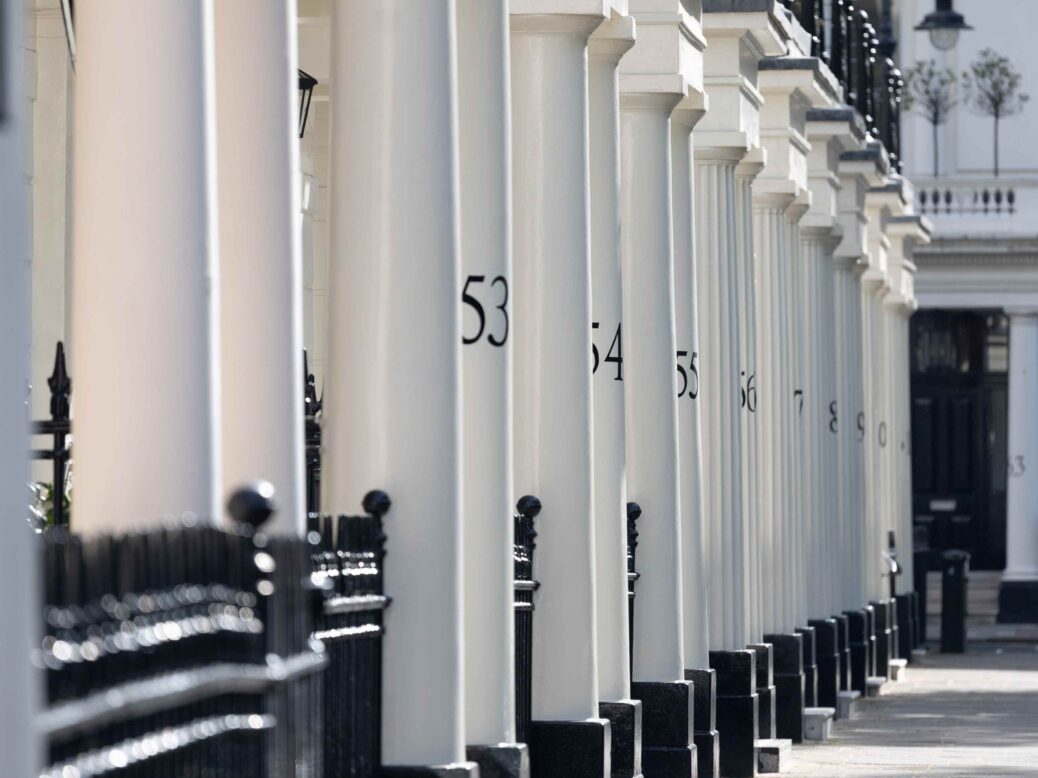
London illustrates the opportunity. Around half of the capital’s pre-1919 homes are terraced properties, often found within conservation areas. They share many of the same construction methods, roof forms, window arrangements and materials.
That consistency should allow for policymakers to develop clearer approaches for common building types. A homeowner considering secondary glazing, roof insulation, draught-proofing, solar panels or a new heating system should be able to understand the likely requirements before beginning the process.
This would also help local planning authorities. Government figures show that 93 per cent of listed building consent applications are approved, while only around one in three is determined within the expected eight-week period.
Processing thousands of similar low-risk proposals individually consumes specialist capacity that could be focused on sensitive buildings and complex proposals. A more proportionate system would establish clear parameters for well-understood interventions while retaining detailed scrutiny where professional judgement
is genuinely required.
We have the tools
Listed Building Consent Orders allow a blanket consent to be granted for specified categories of work, subject to clear conditions. A National Listed Building Consent Order could establish a consistent baseline for carefully defined low-risk measures across England. Local Development Orders can perform a similar role through the planning system, which would be particularly powerful for properties in conservation areas where planning permission is often required.
Used together, these mechanisms could give property owners greater certainty and help councils make better use of scarce expertise. Eaton Square in Belgravia shows what a more strategic approach can look like. Working with Westminster City Council and Historic England, Grosvenor is bringing forward a Local Listed Building Consent Order covering118 Grade I and Grade IIlisted buildings across the square. This will provide a single consent covering more than 3,500 windows, the installation of solar panels and the installation of awnings to provide passive cooling.
This example shows how these tools can simplify the process for residents, put less pressure on conservation officers and provide a consistent standard of intervention. If we want adaptation to happen at scale, the easiest option for a homeowner should be to follow a clear, pre-agreed route rather than the prospect of navigating a complex, uncertain and often costly process.
There is growing recognition of this approach. The culture, media and sport committee recently called for a “reuse first” mindset towards historic buildings and supported wider use of consent orders.
The draft London Plan also encourages boroughs to use Listed Building Consent Orders and Local Development Orders to streamline appropriate changes to historic buildings. Furthermore, this strategic approach supports an enormous economic opportunity. Research commissioned by Grosvenor estimates that heritage retrofitting at scale could generate around £35bn of economic output and support 205,000 jobs across the UK. It is also crucial to the UK’s net zero pathway, with heritage properties accounting for a significant share of emissions from the built environment.
Historic buildings have survived because they have changed with the people who use them. The shift from coal to gas, and now towards low-carbon heating, is part of that same history of adaptation.
The difference today is urgency. We know they can adapt. The task now is to make it easier for that adaptation to happen well, consistently and at scale.
Related