The Prime Minister has made “good growth in every postcode” the north star of this government. That is an ambition I can personally identify with.
I began my career almost five decades ago as an apprentice in Manchester and have seen both the power of industrial growth and the consequences when investment does not reach every part of the country.
Reliable and affordable energy is the foundation of economic activity. Every factory, warehouse, port and manufacturing plant depends upon it. Britain remains an industrial nation, with sectors such as steel, chemicals, glass and refining supporting millions of livelihoods and providing highly skilled jobs across the country.
Britain’s success on its clean energy journey will depend on whether we can turn decarbonisation into an industrial growth strategy. The countries that succeed will not simply reduce emissions, but attract investment, create jobs and build new industries in the process.

This involves striking a delicate balance between energy security, affordability, decarbonisation and industrial competitiveness. And that means acknowledging uncomfortable realities, taking difficult decisions and making significant investments for the future.
But after nearly 50 years in this sector, I have learned that waiting for perfect certainty is rarely a successful strategy and uncertainty is best navigated through pragmatism and resolve.
For example, industries such as steel, chemicals, refining and glass manufacturing require high temperatures and continuous industrial processes that can’t be electrified. These industries support thousands of jobs, often in communities where manufacturing remains at the heart of the local economy.
As renewable generation grows, Britain will still need reliable power when the wind’s not blowing and the sun’s not shining. Homes, hospitals and businesses cannot wait for the weather.
Consumers are also paying companies billions to switch off because there is not enough demand where renewable electricity is generated or grid infrastructure to transport it elsewhere.
The more I look at these challenges, the more I come back to hydrogen as an essential solution.
Hydrogen offers one of the most credible pathways to reducing emissions while keeping production, investment and jobs in Britain. It also provides clean, reliable, non-weather dependent supply that helps maintain energy security while supporting decarbonisation. And rather than wasting that excess renewable power, it can be used to produce green hydrogen to be stored and used later by industry or power stations when demand increases.
In this way, hydrogen is much more than another low-carbon technology. It is the enabling solution that helps make the whole energy transition work.
If the Government wants to achieve its clean energy ambitions while maintaining energy security and industrial competitiveness, hydrogen must be part of the answer.
The encouraging news is that industry is ready to invest, but what investors need now is confidence.
That means providing urgent clarity by publishing the new Hydrogen Strategy and launching the Hydrogen Transport and Storage Business Model competition, the framework for making a regional investment decision on Britain’s first hydrogen cluster.
Without clear direction from government, momentum risks stalling further just as international competition for investment intensifies and we risk losing more jobs and critical British industries.
And if Britain is serious about building a hydrogen economy, there is an obvious place to begin: the Humber.
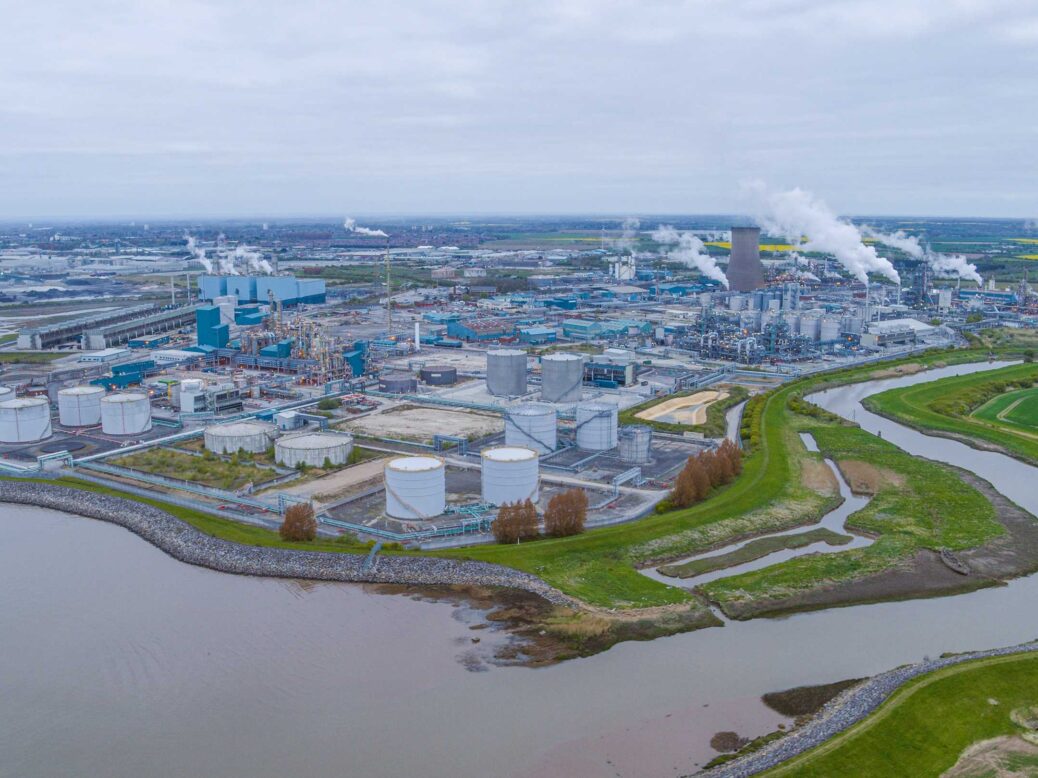
For more than half a century, the Humber has been at the heart of Britain’s energy and industrial story. And today, it offers a unique proposition and a compelling answer to one of the central opportunities facing government: how to deliver good growth, decarbonisation and energy security at the same time.
Humber Hydrogen is the plan to deliver the integrated network connecting hydrogen production, storage, power generation and industrial users across east Yorkshire and north Lincolnshire that strengthens energy security, supports industrial competitiveness, attracts investment and creates skilled jobs. Few places are better positioned to deliver.
Good growth does not happen by accident. It requires purposeful decisions about where government backs industry, infrastructure and investment, and the region best placed to deliver.
Good growth needs hydrogen. And hydrogen needs the Humber.
Humber Hydrogen: the obvious choice for Britain’s first hydrogen cluster
Home to the UK’s largest industrial cluster, the Humber supports hundreds of thousands of jobs and already has significant industrial demand, established infrastructure and a skilled workforce. East Yorkshire also contains around 65 per cent of Britain’s potential new-build hydrogen storage capacity, with the salt caverns at Aldbrough offering hydrogen storage at scale.
As Britain’s largest industrial emitter, it also offers a clear pathway to industrial decarbonisation at scale, supporting the government’s climate policy ambitions.
Independent analysis shows that locating Britain’s first hydrogen cluster in the Humber could unlock £17bn of economic growth, support up to 54,000 jobs during construction, sustain around 900 long-term, skilled operational roles, provide 700 young people the apprenticeships that will lead to the jobs of the future and contribute nearly £6 billion in tax revenues.
Pheobe Fradley, a Process Operations Apprentice at Easington Terminal, said: “Hydrogen and low-carbon projects have the potential to completely transform the Humber. They can bring skilled jobs, investment, and long-term opportunities to the area while supporting the UK’s energy transition.”
She added: “For my generation, this investment is vital. It shows there is a future in engineering and energy that is sustainable, innovative, and forward-thinking.”
Humber Hydrogen also has the support of local workers and the GMB trade union, reflecting a shared belief that the Humber can become a leading centre for low-carbon industry, a driver of regional growth and a pillar of Britain’s energy security.
Dave Douglas, Chair of the GMB Manufacturing and Energy Workers Panel, said: “GMB Union has long called for government investment in our industrial heartlands. The Humber Hydrogen Project provides the perfect opportunity to reinvigorate a city once built on heavy industry and shipping through providing good, unionised jobs that deliver a twenty first century future for individuals, their families and their communities whilst simultaneously providing a just transition route for energy and manufacturing workforces.”
For more information, visit www.humberhydrogen.co.uk
Related