The UK has much to be confident about and many of the foundations required for success. Across every nation and region, businesses are developing technologies, products and services with the potential to transform industries, create skilled jobs and drive long-term economic growth.
Supported by world-class universities, leading research institutions and a strong culture of entrepreneurship, the challenge has never been a shortage of ideas. The opportunity ahead of us now lies in helping more of those ideas move successfully from development to deployment, from invention to commercialisation, and from promising ventures to high-growth businesses capable of scaling and creating long-term value.
NatWest’s latest research, Turning the UK’s untapped innovation potential into regional growth, highlights the scale of the opportunity, analysing more than 12,000 businesses that have collectively received almost £20bn in public innovation grants over the past 15 years. Of these firms, the report finds that almost four in ten have yet to secure follow-on equity investment, demonstrate clear signs of scaling, or achieve an exit. Together, they form what our report describes as the UK’s “untapped innovation cohort” – businesses that continue to innovate but have yet to achieve a tracked commercialisation outcome.
Crucially, this opportunity is spread across the whole country.
The report finds substantial untapped innovation cohorts in every nation and region of the UK, with the proportion of firms yet to achieve commercial scale ranging from 32.2 per cent in London to 47.4 per cent in the West Midlands. Similar patterns can be seen across Scotland, Wales, Northern Ireland and every English region.

For many years, innovation policy has largely been viewed through a national lens, but innovation and regional economic development go hand in hand. The UK’s next generation of growth businesses will not be concentrated in a single city, sector or investment hotspot. The opportunity to translate innovation into growth exists across every nation and region.
The objective should not be to recreate the same innovation model everywhere. It should be to help regions build on their existing advantages and develop distinctive innovation economies of their own.
When innovative firms grow where they were founded, regions are better positioned to retain skilled jobs, attract investment and strengthen local supply chains. Successful commercialisation allows communities to capture more of the value generated by innovation and in doing so build stronger foundations for long-term growth.
At NatWest, we see this opportunity first-hand. As the UK’s largest business bank, supporting 1.5 million businesses, around one in five UK start-ups and thousands of entrepreneurs through our “Accelerator” community, we have a unique perspective on the strengths of the UK’s innovation economy and the challenges that businesses face as they seek to grow.
Our research found that businesses consistently identified three factors that help firms make the transition from research and development to sustainable commercial growth – and these factors are highlighted daily in our interactions with entrepreneurs and businesses. First, they need faster routes to market. Second, they benefit from strong innovation ecosystems that connect businesses to talent, infrastructure, investors and commercial networks. Third is the access to the capabilities needed to scale, including finance, leadership support and commercial expertise.
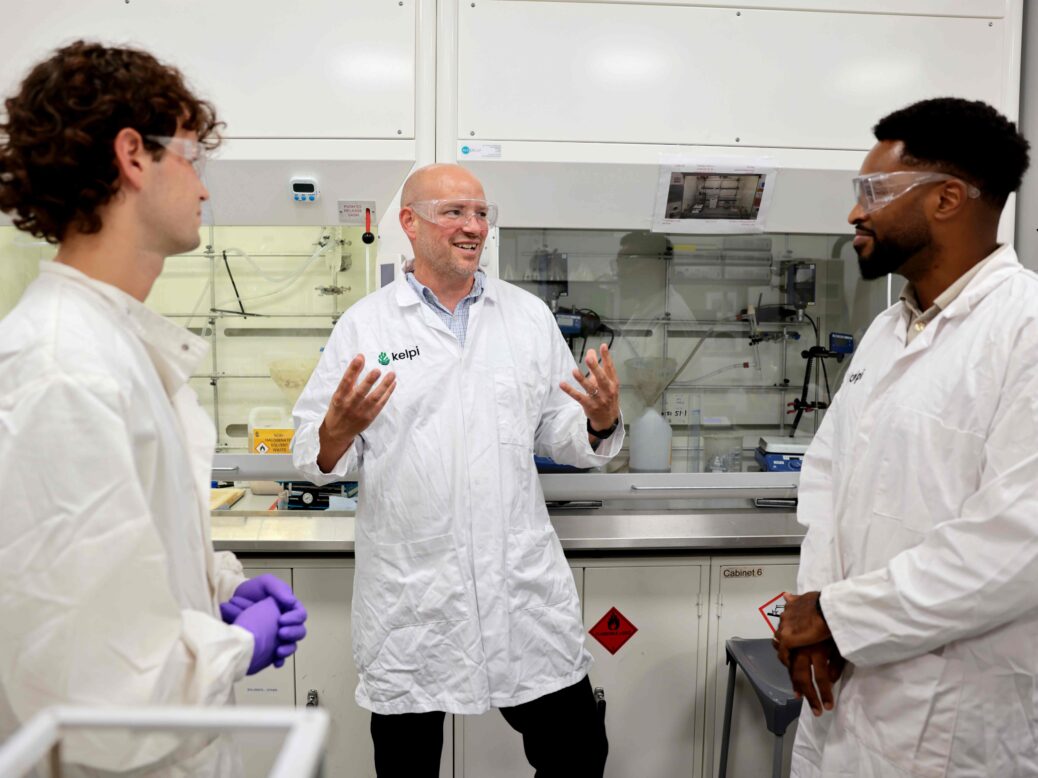
The experience of Bristol-based climate technology company Kelpi illustrates these challenges. Kelpi’s story highlights how faster and more predictable routes to market are crucial for businesses to attract investment, build confidence and focus on scaling their products and services.
This is where strong innovation ecosystems become increasingly important. We know that successful innovators rarely need a single intervention. They need access to finance, networks, expertise and support at different stages of their growth journey.
Increasingly, the places that succeed are those where universities, businesses, investors, local leaders and support organisations work together to help firms commercialise and scale. At NatWest, our approach reflects this reality.
Through our Venture Banking proposition based across the UK’s key innovation hubs, our Accelerator network and university partnerships, plus innovative funding solutions, including intellectual property-backed lending, we aim to create the conditions and connections that support businesses across the UK from idea to growth and scale.
We’re helping founders access expertise, networks, customers and capital in the places where they are building their businesses. And, if we can help more businesses move from innovation to impact, the reward will not simply be more successful companies; it will be stronger local economies, greater regional prosperity and a more balanced model of growth across the UK.
Kelpi’s Story
Founded in 2020, Kelpi has developed a patented seaweed-based coating that can replace the plastic layers commonly used in paper, card and fibre packaging. The business has built significant momentum, employing 19 people and working
with major international businesses. It has raised more than £7m in private investment and secured Innovate UK support to develop its technology.
The company has created highly skilled jobs in Bristol, developing technology with global commercial potential from within one of the UK’s clean-growth ecosystems, demonstrating how successful commercialisation creates local employment, investment and growth.
But Kelpi’s experience highlights some of the barriers that innovative businesses can face as they move towards commercial scale. To access the food packaging market, the company requires food-contact approval. While equivalent pathways in the US operate to fixed timelines, UK approval processes can take significantly longer and offer less certainty.
“Time is our enemy because we’re constantly working against a declining cash runway,” explains Kelpi CEO Hugo Adams. “I’d like to see clearer timelines, more transparency and a more collaborative approach that helps companies solve these problems rather than risking putting them out of business before a decision is even reached.”
Related