
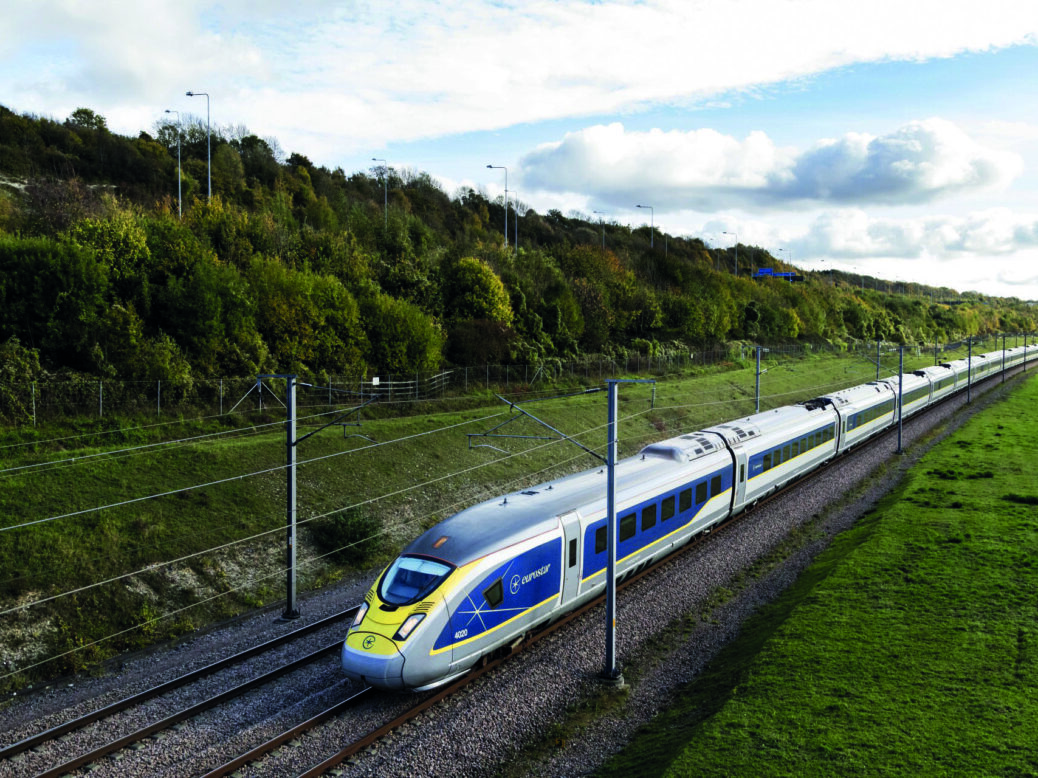
Eurostar’s first departure from London to Paris more than 30 years ago was far more than the inauguration of a new rail service. It opened a new chapter in the relationship between Britain and its European neighbours: France, Belgium and, from 2018, the Netherlands.
The Channel Tunnel was an extraordinary feat of engineering. But infrastructure matters ultimately because of what it allows people to do. Eurostar turned that infrastructure into something even more powerful: human connection.
I have always believed that better connections create opportunity. They allow people to meet, businesses to grow, ideas to travel and societies to understand each other better.
Today, more than eight million people travel between London and Paris every year, making it the world’s largest international city-to-city travel market, while millions more travel across a Eurostar network that now reaches five countries.
Much has changed over those three decades. Cheap aviation transformed European travel. The pandemic brought international rail almost to a standstill. Yet demand is stronger than ever: more than 20 million people travelled with Eurostar in 2025 alone.
As a new UK government led by Andy Burnham makes its first decisions about how to generate growth in a new political era, there is an opportunity to think bigger about what international rail can contribute, economically and socially.
International high-speed rail is already an economic winner. The question is whether the right choices and ambitious thinking can be made to turn it into even more of a powerhouse.
Britain is part of Europe – culturally, geographically, economically and through the millions of personal and business relationships that cross its borders every year.
The question is not whether those connections exist, but how easy we make them, the economic and social value derived, and how we create the conditions for them to grow.
Business travellers fill the equivalent of five Eurostar trains every day – around 4,800 seats. Tourists carry pounds and euros across borders, supporting hotels, restaurants, cultural institutions and countless other businesses while travelling sustainably.
For me, this begs a critical question: what could the next chapter look like? Eurostar’s recent report, Fast Track to Growth: Boosting Britain through international high-speed rail, gives us a glimpse.
It estimates Eurostar’s contribution to UK growth could rise from £2bn in 2025 to £2.8bn, supporting 40,000 British jobs through Eurostar and its supply chain, up from 23,000 today, and bringing half a million additional visitors to Britain every year. We are ready to invest to make that growth happen.
Eurostar has committed £1.7bn to a new fleet of up to 50 Celestia double-decker trains, arriving from 2031, and to expand its network, including our ambition to connect London directly with Frankfurt and Geneva.
This investment is not simply about more trains; it is about increasing Britain’s connectivity with some of Europe’s most important economic centres, making it easier for businesses to reach customers, talent and markets across borders.
Our analysis suggests the resulting productivity gains could be worth £420m a year to businesses by 2035.
International high-speed rail can also complement long-haul aviation through creating a genuinely connected European travel network. Americans are already the third-largest nationality travelling on Eurostar.
Imagine arriving in London, Paris, Amsterdam or Frankfurt and being able to continue seamlessly by rail between these great cities before flying home. It could even free up capacity for destinations where flight is the only option from our constrained airports.
And there is a climate dividend. Shifting more journeys between major European cities to high-speed rail can avoid hundreds of thousands of tonnes of CO2 emissions. We already see both leisure and business customers choosing longer rail journeys – such as London to Amsterdam – over flying for this reason.
So what does all this mean for the new government? It is an opportunity to turn private investment into economic growth. The capital, demand and ambition are there. We now need a policy framework that allows that investment to translate into more capacity, more connectivity, more visitors, greater productivity and more jobs. Coordination is the key lever held in Westminster.
Competition can be part of that growth. It stimulates innovation, attracts investment, gives choice to customers and, above all, helps grow the overall market. But competition and investment cannot be considered separately.
A successful market needs a framework that gives all operators the confidence and the capacity to invest for the long term.
International rail is capital-intensive and investment decisions are made over decades. Companies investing at this scale need confidence that Britain offers a clear, stable and long-term framework in which they can grow.
That means sufficient infrastructure capacity; efficient borders; long-term planning; and a level playing field that allows current and future operators to invest and thrive.
Government has a critical role here – not by providing the capital itself, but by creating the conditions that unlock it.
By bringing together government, regulators, infrastructure providers and operators around a shared ambition for growth, Britain can turn private investment into economic value at scale. And that means creating capacity rather than simply managing scarcity.
For a government focused on growth, this is a significant opportunity. Better rail connections mean more visitors spending money in the British economy.
They connect British businesses more easily to other European customers and markets. They support high-quality jobs, develop skills and strengthen British supply chains.
And they attract private capital to infrastructure and transport while helping Britain pursue its sustainability ambitions.
The prize is considerable: stronger productivity; high-quality jobs and skills; greater opportunities for businesses; lower-carbon mobility; more sustainable growth; and a better-connected Britain within the rest of Europe.
For more than 30 years, the Channel Tunnel and Eurostar have demonstrated that infrastructure can change the relationship between nations.
The ambition now should be to create the conditions for the international railway Britain will need for the next 30 years: more investment, more capacity, more destinations and more growth.
Because better connections do more than move people. They create opportunity – and opportunity creates growth and long-lasting value. Now is the moment to work together and deliver on this huge potential for the UK.
This article first appeared in Spotlight on Economic Growth: New Paths to Prosperity

Related